Sankarea: Undying Love
さんかれあ (Sankarea)
- Comedy
- Ecchi
- Horror
- Romance
- Supernatural
- Love Polygon
- Episodes
- 12
- Duration
- 24 min per ep
- Aired
- Apr 6, 2012 to Jun 29, 2012
- Status
- Finished Airing
Synopsis
Zombie fanatic Chihiro Furuya has dreamed since childhood of having an undead girlfriend. When his beloved cat Baabu is killed in an accident, he puts that obsession to work by attempting to brew a resurrection potion. During his experiments, he repeatedly notices Rea Sanka, a wealthy girl who vents her frustrations into an old well, and the two gradually connect—especially as Rea pushes him not to give up on saving Baabu. The key ingredient turns out to be poisonous hydrangeas from Rea’s family garden, helping Chihiro finally complete the concoction.
Hoping to flee the pressures of her life, Rea secretly drinks the potion, believing it will end her suffering. It doesn’t kill her, but its effects remain, and after a fatal accident she returns as a zombie. With Chihiro’s help, Rea struggles to navigate an unlife marked by strange new appetites and the unsettling complications that come with her transformation.
Otaku Consensus
Sankarea earns its following through a patient three-to-four-episode opening, a mostly faithful treatment of Mitsuru Hattori’s manga, and Shinichi Omata’s evocative use of light, shadow, silence, and sound. The prevailing criticism is that its identity blurs once the setup gives way to a more conventional romantic-comedy rhythm, leaving its horror, ecchi, and dramatic elements competing for direction rather than building toward a unified payoff.
Why You Should Watch
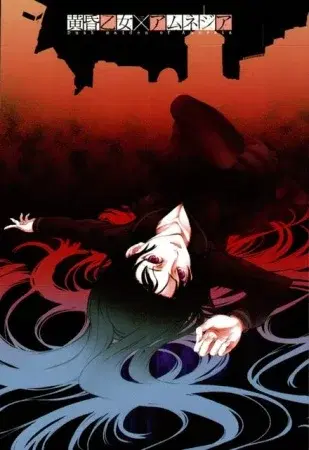
Sankarea is for viewers who want supernatural romance with macabre texture, not a survival-horror campaign. Its strongest stretch is the patient three-to-four-episode setup: Shinichi Omata’s direction lets silence, shadow, and uneasy sound carry feelings that a louder ecchi comedy would flatten. After that, it becomes a looser school-life romantic comedy, so the appeal lies in watching intimacy, class pressure, and bodily anxiety keep interrupting the jokes. It scratches the same itch as Dusk Maiden of Amnesia, but trades a sustained ghost mystery for monster-girl domesticity and a more eccentric libido. The 12-episode run is compact, the horror remains mostly atmospheric, and the blood is more likely to unsettle than the scares. Choose it when you want romance that feels sweet and faintly wrong at the same time.
Key Characters
- CChihiro Furuya(VA: Ryouhei Kimura)
Chihiro is compelling because the series steadily tests whether his romanticized fixation can mature into patience, responsibility, and concern for a real person.
- RRea Sanka(VA: Maaya Uchida)
Rea pairs polished ojou-sama manners with an urgent desire for autonomy, giving Maaya Uchida room to move between restraint, vulnerability, and disarming deadpan comedy.
What Makes It Stand Out
- 1
Director Shinichi Omata and director of photography Shinyo Kondou favor low-key lighting, framed shadows, and visual stillness; admirers specifically cite the series’ coordination of light, shadow, and sound as a source of its bittersweet mood.
- 2
The first three to four episodes function as an extended foundation rather than rushing into episodic romantic comedy. Viewer reception consistently identifies this opening stretch as more focused and atmospheric than the looser school-life material that follows.
- 3
Studio Deen calibrates the horror as bodily unease rather than sustained terror. Reviews describe the scary undertones as minimal, although the visible blood makes it a poor fit for viewers who are sensitive to gore.
- 4
The series deliberately mixes zombie fiction with ojou-sama drama, rural scenery, medicine, animal companionship, and an interspecies love triangle. That unusually broad genre stack is both its signature and the source of criticism that it lacks a single firm direction.
Fun Facts & Trivia
- Fun fact 1
- Mitsuru Hattori is the original creator, while Noboru Takagi handled series composition for the anime; even a strongly negative viewer review described the adaptation as mostly faithful to Hattori’s manga.
- Fun fact 2
- The visual production divided environmental oversight across Hirotsugu Kakoi as art director and Hiroshi Katou as both art designer and art supervisor, with Hiroshi Watanabe controlling the color design.
- Fun fact 3
- Kyuuta Sakai designed the characters, while Tomochi Kosaka received a separate prop-design credit—an especially relevant distinction for a series whose medicine and household objects drive much of its visual storytelling.
- Fun fact 4
- The anime aired for 12 episodes from April 6 to June 29, 2012. Its reach substantially exceeds its aggregate ranking: MyAnimeList lists it at popularity rank 370 despite an overall rank of 3450, based on 336,960 votes.
- Fun fact 5
- Its reception is strikingly stable across major databases: the supplied figures place it at 7.26 on MyAnimeList and 70 out of 100 on AniList, where it also has 2,020 favorites.
Studios
- Studio Deen