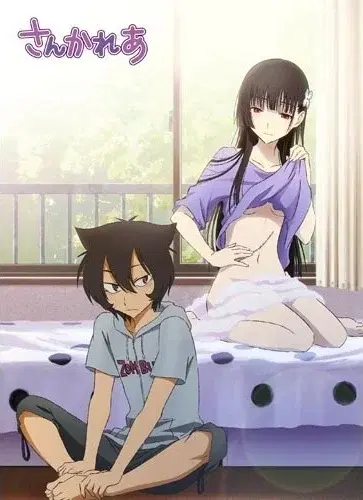
Is This a Zombie?
これはゾンビですか? (Kore wa Zombie desu ka?)
- Action
- Comedy
- Ecchi
- Supernatural
- Harem
- Vampire
- Episodes
- 12
- Duration
- 24 min per ep
- Aired
- Jan 11, 2011 to Mar 30, 2011
- Status
- Finished Airing
Synopsis
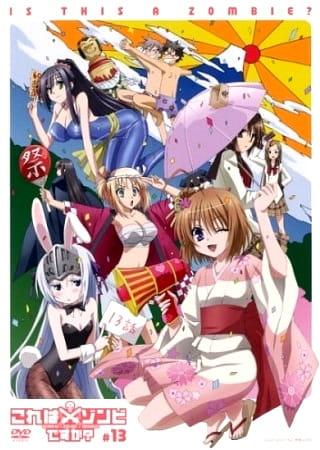
Sixteen-year-old Ayumu Aikawa is killed while snooping around a suspicious house—only to wake up revived by the enigmatic, armored necromancer Eucliwood Hellscythe. Brought back as a zombie, Ayumu finds himself effectively immortal and determined to track down whoever murdered him.
His search takes a bizarre turn in a cemetery, where he runs into Haruna, a loudmouthed magical girl battling a bear with a chainsaw. When Haruna tries to wipe his memory, Ayumu unexpectedly absorbs her magic instead, leaving her powerless and insisting he take her place. Thrust into a new routine, Ayumu is ordered to hunt Megalo—monsters that slip into the human world—while adjusting to a daily life where the supernatural quickly becomes ordinary.
Otaku Consensus
Studio Deen’s 12-episode adaptation lands as a deliberately messy genre blender: Takaomi Kanasaki’s gag timing and Makoto Uezu’s fast scene-to-scene escalation make the masou-shoujo, vampire-ninja, zombie pileup more coherent than it has any right to be, with season 1 earning praise for slipping sincere beats between action-comedy shocks. Its reputation remains sharply polarized: fans point to the brisk pacing and absurd premise as the hook, while detractors most often cite abrasive characterization and humor that can feel random rather than character-driven.
Why You Should Watch
Watch Is This a Zombie? if you want supernatural harem comedy where the harem is lighter than the chaos, and where embarrassment, action, and deadpan absurdity matter more than romantic bookkeeping. It scratches the same itch as KonoSuba-style humiliation comedy and Highschool of the Dead’s gleeful genre excess, but without turning into grim zombie horror or full-time ecchi escalation. The appeal is in its collisions: urban fantasy rules treated like household chores, magical-girl iconography pushed into crossdressing farce, and monster fights staged with a sitcom’s sense of timing. Viewers who like fast-cut light novel adaptations, loud tsundere energy, kuudere contrast, and jokes that weaponize genre expectations will get the most out of it.
Key Characters
- AAyumu Aikawa
Ayumu is remembered less as a power-fantasy lead than as a deadpan humiliation engine, turning the male protagonist role into a running joke about endurance, costume indignity, and supernatural inconvenience.
- EEucliwood Hellscythe
Eucliwood stands out through restraint: her kuudere presence gives the series its rare quiet gravity amid otherwise aggressive comedy and monster-of-the-week absurdity.
- HHaruna
Haruna supplies the show’s loudest tsundere energy, pushing the magical-girl angle toward slapstick combat, chainsaw imagery, and constant verbal friction.
What Makes It Stand Out
- 1
Studio Deen’s adaptation compresses the material into a 12-episode winter 2011 TV run, giving the series a quick-hit rhythm rather than the slower sprawl common to long harem comedies.
- 2
Director Takaomi Kanasaki and series composer Makoto Uezu shape the show around hard tonal pivots, moving from gag escalation to action beats to sincere character moments without treating the genre mashup as a parody-only exercise.
- 3
Its AniList tag profile is unusually dense for a 2011 TV comedy: Urban Fantasy is listed at 100%, Zombie at 91%, Female Harem at 90%, Henshin at 83%, and Crossdressing at 67%, which captures how deliberately overloaded its identity is.
- 4
The production separates visual authorship clearly: Kobuichi is credited for the original character designs, while Shinobu Tagashira handled the anime character designs for Studio Deen’s version.
- 5
The sound side pairs Yoshikazu Iwanami as sound director with Shinji Kakijima’s music, while the ending theme performance is credited to Rie Yamaguchi.
Fun Facts & Trivia
- Fun fact 1
- The anime is based on Shinichi Kimura’s light novel series, with Kobuichi’s original character designs forming the basis for the TV adaptation’s look.
- Fun fact 2
- It aired from January 11, 2011 to March 30, 2011, finishing as a 12-episode TV season rather than an ongoing long-run adaptation.
- Fun fact 3
- Its database footprint shows a split between popularity and prestige: on MyAnimeList it holds a 7.32 score from 355,499 votes, ranks #3019, yet sits at a high popularity position of #376.
- Fun fact 4
- AniList’s numbers are similarly mixed but sticky: a 69/100 score alongside 1,417 favourites, suggesting a niche with stronger attachment than its average rating alone implies.
- Fun fact 5
- Gen Fukunaga is credited as an English executive producer, a notable detail for viewers tracking the show’s international release-side production credits.
Studios
- Studio Deen