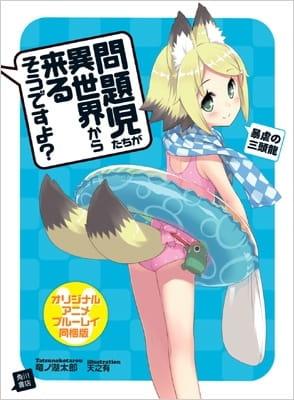
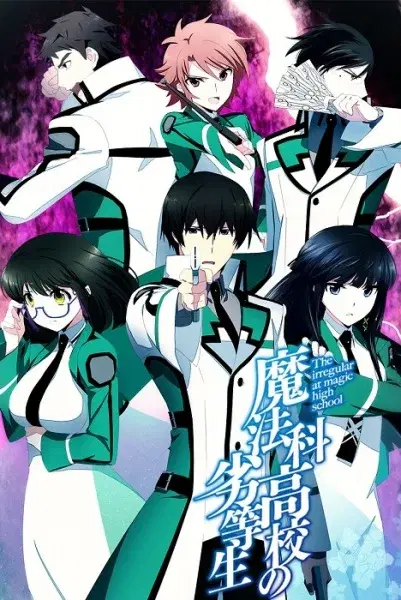
Problem Children Are Coming from Another World, Aren't They?
問題児たちが異世界から来るそうですよ? (Mondaiji-tachi ga Isekai kara Kuru Sou desu yo?)
- Action
- Comedy
- Fantasy
- Isekai
- Mythology
- Episodes
- 10
- Duration
- 23 min per ep
- Aired
- Jan 12, 2013 to Mar 16, 2013
- Status
- Finished Airing
Synopsis
Izayoi Sakamaki, Asuka Kudou, and You Kasukabe are gifted teenagers with psychic abilities—and they’re equally tired of lives that feel far too ordinary for what they can do. Their boredom ends the moment each of them receives a mysterious envelope inviting them to a place called Little Garden.
Suddenly transported to this sprawling new world, the trio meets Kurousagi, who introduces them to high-stakes “Gift Games” where participants wager and battle using their powers. To enter, they’ll need to belong to a community, and Kurousagi’s own group, “No Names,” is in dire straits after a crushing loss to a demon lord that cost them their standing and fertile land. With a taste for challenge and a sense of responsibility toward their new allies, the three set out to help restore No Names’ honor while diving headfirst into everything Little Garden has to offer.
Otaku Consensus
Problem Children Are Coming from Another World, Aren't They? lands as a compact, high-energy isekai whose best asset is its rule-based Gift Game structure: the direction keeps the 10-episode run moving, and the fantasy setting gains texture from mythology, demons, fairy-tale imagery, and gambling stakes rather than standard questing. Fan reception is solid but not ecstatic, with a 7.4 MAL score, 70/100 AniList score, and 6.8 IMDb rating; the recurring complaint is that the short adaptation feels more like a sharp sampler of a larger world than a fully satisfying complete story.
Why You Should Watch
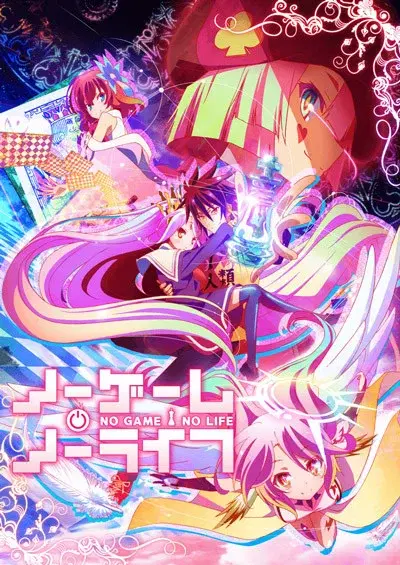
Watch this if you want isekai power fantasy with games, wagers, and mythological spectacle instead of a slow leveling grind or a romance-first harem setup. It scratches a similar itch to No Game No Life in its appetite for contests and loopholes, but its tone is scrappier: delinquent confidence, supernatural abilities, and communities gambling reputation as much as resources. The appeal is in seeing overqualified troublemakers dropped into a world where power has to be expressed through formal challenges, not just raw brawls. At 10 episodes, it is lean enough for a weekend watch, and Diomedéa’s adaptation keeps the show pointed toward punchlines, confrontations, and rule reveals rather than padding. If you like fantasy systems with gods, demons, fairies, vampires, and absurd escalation, this is the kind of short series that invites a source-material dive afterward.
Key Characters
- IIzayoi Sakamaki
Izayoi is the fan-favorite problem child archetype here: a smug, overwhelmingly capable male lead whose appeal comes from treating divine-scale challenges like a cure for boredom.
- AAsuka Kudou
Asuka brings aristocratic poise and command-based psychic power to the trio, giving the show a sharper personality balance than a single-protagonist isekai.
- YYou Kasukabe
You stands out through a quieter temperament and animal-linked ability set, making her the series’ understated counterweight to louder displays of confidence.
- KKurousagi
Kurousagi is more than mascot appeal: the blue-and-pink Black Rabbit became one of the show’s most recognizable hooks, mixing referee energy, comic exasperation, and kemonomimi fantasy branding.
What Makes It Stand Out
- 1
The series uses Gift Games as a formal combat-and-gambling framework, which gives fights a ruleset beyond simple power scaling. AniList’s high Gambling tag at 72% reflects how central wagers, status, and game conditions are to the show’s identity.
- 2
Its fantasy texture is unusually crowded for a 10-episode TV anime: AniList tags register Gods at 91%, Mythology at 82%, Demons at 80%, Fairy Tale at 66%, Fairy at 53%, and Vampire at 52%. That mix makes Little Garden feel like a mythological crossover arena rather than a single folklore-inspired kingdom.
- 3
Despite the setup that could easily become a harem comedy, contemporary reviewer commentary specifically noted that it is “actually not a harem.” The series instead spreads attention across a trio of gifted teenagers and Kurousagi’s community role.
- 4
Diomedéa produced the anime with Keizou Kusakawa as chief director and Yasutaka Yamamoto as director, while Noboru Kimura handled series composition. The result is a brisk adaptation with little downtime, a structural choice that helps the comedy-action rhythm but contributes to the common feeling that the world is larger than the anime can cover.
- 5
One review singled out the show’s odd genre elasticity by jokingly adding “mecha(?)” because the final stretch involves giant robots. That kind of escalation is part of its charm: mythic fantasy rules can suddenly make room for Saturday-morning-scale spectacle.
Fun Facts & Trivia
- Fun fact 1
- The anime adapts work credited to original creator Tarou Tatsunoko, with Yuu Amano credited for the original character designs. Naomi Ide handled the anime character designs, translating those light-novel designs into the TV production.
- Fun fact 2
- The production credits include dedicated prop design by Kenji Masuda and creature design by Masakazu Ishikawa, a useful clue to why the show can move quickly through games, artifacts, monsters, and mythic beings without treating them as generic background fantasy.
- Fun fact 3
- It aired as a short winter 2013 run from January 12 to March 16, finishing at 10 episodes rather than the more common 12 or 13. That abbreviated length is one reason the anime is often remembered as energetic but incomplete-feeling.
- Fun fact 4
- Its reception profile differs by platform: MAL lists it at 7.4 from 325,756 votes with popularity rank #405, while AniList records 70/100 and 1,690 favourites, and IMDb lists 6.8/10 from about 1.3K ratings. That pattern points to broad anime-fandom visibility with more moderate cross-platform acclaim.
- Fun fact 5
- The staff roster names Kunihiko Inaba as art director and Makiko Kojima as color designer, while Masakazu Ishikawa handled creature design. Those roles matter in a series built around a shifting fantasy arena of gods, demons, fairies, vampires, and kemonomimi figures.
Studios
- Diomedéa