Tamako Market
たまこまーけっと
- Slice of Life
- Iyashikei
- Episodes
- 12
- Duration
- 23 min per ep
- Aired
- Jan 10, 2013 to Mar 28, 2013
- Status
- Finished Airing
Synopsis
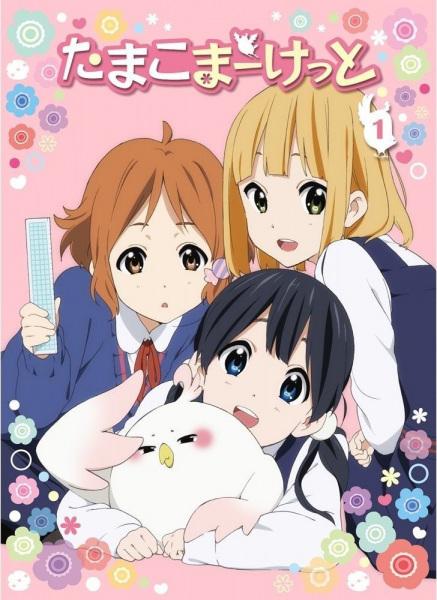
In the Usagiyama Shopping District, a quirky yet tightly knit group of shopkeepers keeps daily life humming along. Tamako Kitashirakawa, a sweet-natured if slightly clumsy high school girl, helps out at her family’s mochi shop, Tama-ya, and spends her days surrounded by familiar faces and small-town warmth.
That routine takes an unexpected turn when Tamako meets Dera Mochimazzi, a talking bird who claims to be a royal messenger from a far-off land. Sent to find a bride for his country’s prince, Dera ends up tagging along with Tamako—only to develop a serious mochi habit that leaves him too heavy to fly home. With Dera settling in as an unlikely houseguest and soon a beloved presence around the district, Tamako’s everyday world grows a little stranger and a lot more lively, even as her friend Mochizou Ooji quietly struggles to confess his feelings amid their fathers’ mochi-shop rivalry and Dera’s unfinished mission.
Otaku Consensus
Naoko Yamada’s observant direction and Reiko Yoshida’s episodic writing turn Tamako Market into a polished study of communal routine, with expressive body language, a lively district ensemble, and a notably well-regarded ending theme. Its gentle pacing is also its chief limitation: the scarcity of sustained conflict leaves the television season feeling slight beside Kyoto Animation’s more dramatically ambitious work, while Dera’s incessant comic bravado remains a divisive ingredient. The result is accomplished iyashikei whose modest scale is either its central pleasure or its ceiling.
Why You Should Watch
Watch Tamako Market if you want slice-of-life that treats a neighborhood, rather than a romance or school club, as its true protagonist. Reiko Yoshida’s episodic structure lets shopkeepers, family customs, friendships, and food traditions accumulate into a lived-in social map, while Naoko Yamada finds comedy in pauses, posture, and people sharing space. It scratches the communal warmth of Aria and the soft character observation of K-On!, but without Aria’s travel framework or K-On!’s band-goal momentum. That low-pressure design is the appeal: twelve episodes provide restorative viewing without manufacturing villains or melodrama. Dera adds a louder surreal counter-rhythm, preventing the series from becoming pure ambient comfort, while Aya Suzaki’s vocal themes connect its pop presentation directly to Tamako. Choose it for meticulous everyday animation and affection expressed through routine rather than speeches.
Key Characters
- TTamako Kitashirakawa(VA: Aya Suzaki)
Aya Suzaki gives Tamako an unforced warmth, with her attention to other people making her less a conventional moe lead than the emotional connective tissue of the entire district.
- DDera Mochimazzi(VA: Takumi Yamazaki)
Dera’s theatrical self-regard and nonstop commentary make him the show’s deliberately abrasive comic counterweight, equally likely to energize a quiet scene or test a viewer’s patience.
- MMochizou Ooji(VA: Atsushi Tamaru)
Mochizou stands out through restraint, with his awkward sincerity supplying a grounded emotional undercurrent beneath the series’ broader neighborhood comedy.
- KKanna Makino(VA: Juri Nagatsuma)
Kanna’s dry delivery, fondness for measurements, and unusual practical observations give the friend group its most reliably deadpan sense of humor.
What Makes It Stand Out
- 1
Director Naoko Yamada uses posture, glances, and physical distance as narrative tools, allowing small social shifts to register without explanatory dialogue or dramatic confrontation.
- 2
Reiko Yoshida’s series composition is intentionally episodic, building continuity through recurring shopkeepers, family rituals, and shared locations rather than a single escalating television-season conflict.
- 3
Yukiko Horiguchi’s rounded character designs are paired with art direction by Ikuko Tamine and photography direction by Rin Yamamoto, creating a soft but spatially coherent shopping district rather than an interchangeable slice-of-life backdrop.
- 4
The regular opening, Dramatic Market Ride, and ending, Neguse, are performed by Aya Suzaki as Tamako; the ending theme became one of the production’s most frequently singled-out elements in fan discussion.
- 5
Dera introduces anthropomorphic and surreal comedy into an otherwise grounded iyashikei format, giving the series a deliberately louder comic register than many healing-anime contemporaries.
Fun Facts & Trivia
- Fun fact 1
- Tamako Market is an anime-original Kyoto Animation production rather than a manga or light-novel adaptation, which gave Naoko Yamada and Reiko Yoshida direct control over its television structure.
- Fun fact 2
- The credits include Miyuki Egami under Literary Arts and Yukari Hayakawa specifically for title-logo design, reflecting the unusually granular design attribution associated with the production.
- Fun fact 3
- Yamada and Yoshida later worked together on A Silent Voice and Liz and the Blue Bird, films that developed the same interest in body language, social distance, and understated emotional communication.
- Fun fact 4
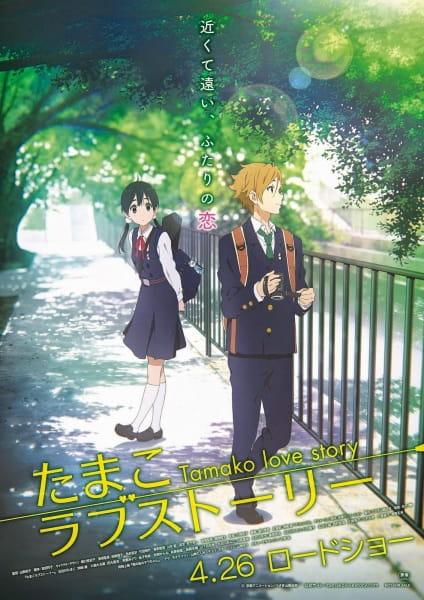
- The series was followed by Tamako Love Story, and later fan discussion commonly points to the film as the more concentrated dramatic and romantic complement to the television show’s episodic community focus.
- Fun fact 5
- Its reception is strikingly consistent across major databases: a 7.41 average from 190,112 MyAnimeList votes closely matches AniList’s 73/100, while 1,862 AniList favourites indicate a smaller but strongly attached audience.
Studios
- Kyoto Animation