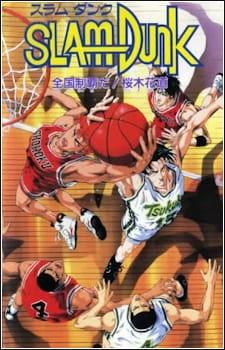
Slam Dunk
スラムダンク
- Sports
- School
- Team Sports
- Episodes
- 101
- Duration
- 23 min per ep
- Aired
- Oct 16, 1993 to Mar 23, 1996
- Status
- Finished Airing
Synopsis
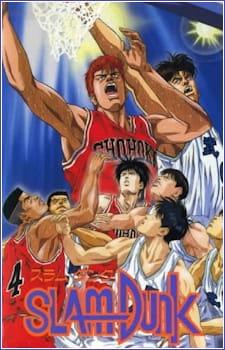
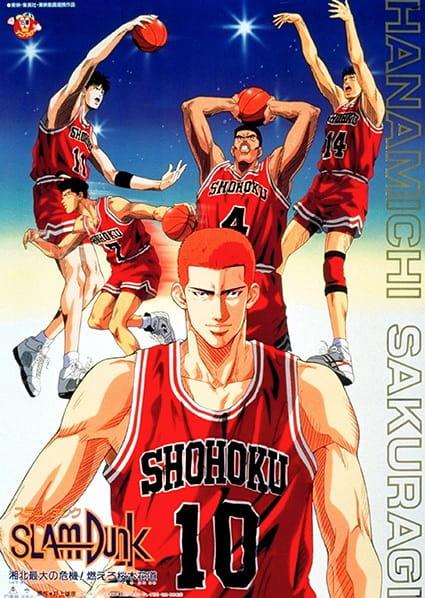
Hanamichi Sakuragi—hotheaded, towering, and instantly recognizable for his bright red hair—starts at Shohoku High determined to end a long streak of romantic rejection. His rough reputation follows him onto campus, leaving most classmates wary, and Hanamichi quickly settles into two stubborn convictions: he can’t stand basketball, and he absolutely needs a girlfriend.
Everything shifts when Haruko Akagi, unaware of his past, strikes up a conversation and asks if he likes basketball. Eager to win her over, Hanamichi blurts out a passionate “yes,” then follows her to the gym where she challenges him to prove himself with a slam dunk. The attempt goes spectacularly wrong, but Haruko notices his extraordinary athletic potential and brings it to the attention of the team’s captain—pulling Hanamichi into the world of high school basketball, where rivalry, teamwork, and unexpected motivation begin to reshape his days.
Otaku Consensus
Slam Dunk earns its classic status through Toei Animation's patient long-form direction, a cast whose rivalries feel lived-in, and basketball sequences that treat court decisions as character writing rather than decoration. Its strongest appeal is the cumulative team dynamic built across 101 episodes, backed by memorable voice work and music; the real caveat is that the old Weekly Shonen Jump TV pacing can feel slow to modern viewers, especially compared with reading the manga.
Why You Should Watch
Watch Slam Dunk if you want a sports anime about ego, discipline, and team identity without the hyper-stylized escalation that defines many later shounen competitions. It scratches the same itch as Haikyu!! in the way teammates sharpen each other, but its 1990s delinquent-school texture gives it a rougher, more combustible personality closer to early Jump drama. The appeal is in the accumulation: practices, grudges, substitutions, and missed opportunities are allowed to sit long enough to matter. Viewers who like Ahiru no Sora for grounded basketball will recognize the attention to roles and fundamentals, while fans of character-driven shounen get a five-man core with distinct emotional temperatures. The tradeoff is pacing: this is a deliberate 101-episode commitment, not a compressed tournament sprint.
Key Characters
- HHanamichi Sakuragi(VA: Takeshi Kusao)
Sakuragi is beloved because his loud self-mythologizing constantly collides with the humbling precision of basketball, turning comedy into visible athletic growth.
- TTakenori Akagi(VA: Kiyoyuki Yanada)
Akagi gives Shohoku its spine: a captain whose seriousness makes the team feel less like a club activity and more like a standard everyone must rise to.
- HHisashi Mitsui(VA: Ryoutarou Okiayu)
Mitsui remains one of the franchise's most discussed players because his presence brings volatility, pride, and unresolved history into the team's chemistry.
- KKaede Rukawa(VA: Hikaru Midorikawa)
Rukawa's appeal is his icy competence: he functions as both an aspirational ace and a constant irritant to teammates who cannot ignore his talent.
What Makes It Stand Out
- 1
Toei Animation's 101-episode TV run, airing from October 1993 to March 1996, gives the series a distinctly old-school sports rhythm: games and practices unfold through extended possessions, bench reactions, and incremental tactical adjustments rather than rapid montage.
- 2
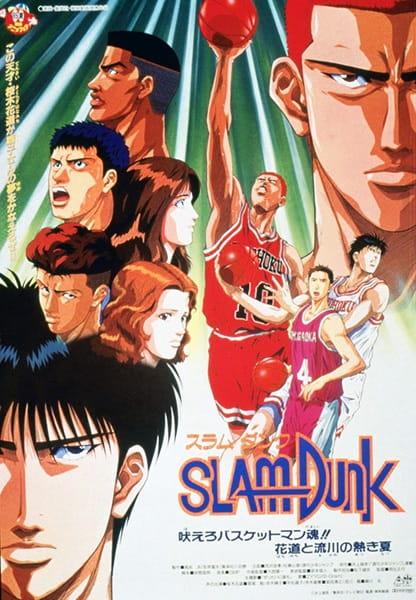
The anime is built around a compact main core of Sakuragi, Akagi, Mitsui, Miyagi, and Rukawa, which makes it an ensemble sports series rather than a single-prodigy showcase; AniList's Ensemble Cast, School Club, and Primarily Male Cast tags reflect that structure.
- 3
Its Basketball and Educational tags are not cosmetic: the series repeatedly frames improvement through court roles, fundamentals, and team decision-making, making the sport legible even when the drama is loud and comedic.
- 4
The writing workload is unusually concentrated for a long TV anime, with Yoshiyuki Suga and Nobuaki Kishima credited across the run, including Suga on the opening episodes and Kishima on episode 101.
- 5
The music and voice cast are a documented part of the show's reputation among fans, with reviews singling out the seiyuu and songs; ED4 features Izumi Sakai, the vocalist associated with ZARD.
Fun Facts & Trivia
- Fun fact 1
- Slam Dunk adapts Takehiko Inoue's 31-volume Weekly Shonen Jump manga, which ran from 1990 to 1996; the TV anime aired while the manga was still ongoing.
- Fun fact 2
- Nobutaka Nishizawa holds two key production credits on the series, serving as both assistant director and chief animation director, linking episode staging with the show's overall visual consistency.
- Fun fact 3
- Masaki Satou is credited with character design, while Takahiro Kagami is among the animation directors and Yoshihiro Kamikubo is credited for background art, giving the series a staff profile rooted in traditional 1990s Toei production.
- Fun fact 4
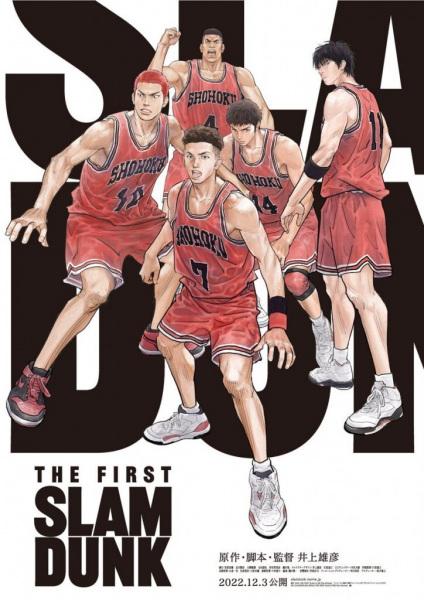
- The franchise's later reputation was boosted by The First Slam Dunk, a film described in contemporary reviews as an intense basketball experience strong enough to win over viewers who normally avoid team sports anime.
- Fun fact 5
- Despite being a 1990s finished TV anime with 101 episodes, Slam Dunk remains highly rated across major fan databases: 8.56 on MyAnimeList with over 152,000 votes and 83/100 on AniList with 3,249 favourites.
Studios
- Toei Animation