Ahiru no Sora
あひるの空
- Sports
- School
- Team Sports
- Episodes
- 50
- Duration
- 24 min per ep
- Aired
- Oct 2, 2019 to Sep 30, 2020
- Status
- Finished Airing
Synopsis
Sora Kurumatani has loved basketball for as long as he can remember, even though he lacks what many consider the sport’s biggest advantage: height. Refusing to let that define him, he throws himself into relentless practice and plays with the conviction that effort and persistence can close any gap.
Hoping to fulfill his mother’s wish, Sora enrolls at Kuzuryuu High School with plans to join the basketball club and chase real tournament competition. Instead, he finds a boys’ team that’s become a hangout for delinquents with little interest in the game, including brothers Chiaki and Momoharu Hanazono, whose own drive has faded. Unwilling to accept that state of affairs, Sora takes them on himself, using speed and sharp footwork to make his point—and little by little, his dedication begins to stir the team’s lost passion back to life.
Otaku Consensus
Ahiru no Sora earns its strongest praise through Gou Zappa’s patient, character-first series composition, which treats basketball as a prolonged test of confidence, discipline, and adolescence rather than a conveyor belt of triumphant matches. Its grounded failures and unusually human ensemble resonated with viewers, but Diomedéa’s limited match animation, drawn-out pacing, and an ending that offers little closure keep the 50-episode adaptation from fully capitalizing on its emotional foundation.
Why You Should Watch
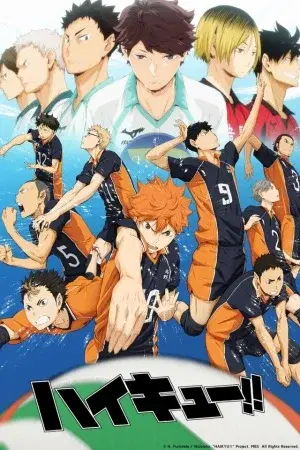
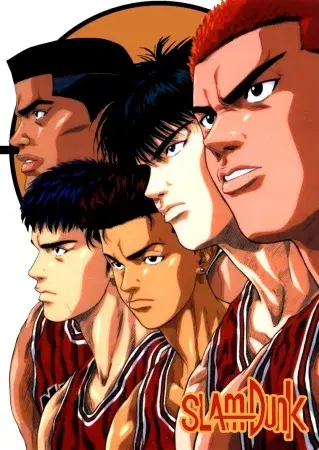
Watch Ahiru no Sora if you want a sports series about enduring failure rather than collecting victories. Its 50-episode structure gives frustration, apathy, romance, bullying, and changing team relationships room to matter, making the club feel less like a lineup of specialists and more like an unstable group of teenagers. It scratches some of Slam Dunk’s delinquent-school-basketball itch and Haikyuu!!’s interest in complementary physiques, but without the same steady supply of polished action climaxes or cathartic wins. The trade-off is unusually grounded coming-of-age drama: players remain inconsistent, effort does not erase weaknesses overnight, and basketball exposes problems that practice alone cannot solve. Viewers seeking fluid spectacle may struggle; those who prefer flawed personalities, slow-earned commitment, and losses with lasting emotional weight will find considerably more here than a conventional underdog campaign.
Key Characters
- SSora Kurumatani(VA: Natsumi Fujiwara)
Sora is compelling because his relentless optimism is repeatedly tested rather than automatically rewarded, preventing him from becoming an effortless shounen morale machine.
- CChiaki Hanazono(VA: Katsuyuki Konishi)
Chiaki’s comic, delinquent exterior sits beside an instinctive understanding of the court, making his wasted potential one of the team’s most revealing contradictions.
- MMomoharu Hanazono(VA: Yuuma Uchida)
Momoharu embodies the series’ fixation on damaged confidence, with physical capability continually complicated by frustration and the memory of giving up.
- KKenji Natsume(VA: Kishou Taniyama)
Kenji brings sharper individual ability and a more confrontational presence to an ensemble otherwise defined by inexperience, forcing talent and teamwork into productive tension.
What Makes It Stand Out
- 1
The adaptation commits 50 episodes to a single long-form coming-of-age campaign, allowing consequences, interpersonal conflict, and wavering motivation to persist instead of being reset after each match.
- 2
Its competitive structure resists the standard sports-anime victory ladder; reviewers repeatedly singled out the scarcity of wins as either a bracingly realistic endurance test or a source of mounting frustration.
- 3
Gou Zappa’s series composition places substantial slice-of-life, comedy, romance, bullying, and delinquent drama between games, which explains why several critics describe it as character drama with sports elements rather than nonstop basketball action.
- 4
Diomedéa favors dialogue, reaction shots, and emotional context over consistently elaborate court movement. That approach supports the drama but also underlies the most common complaint: match animation is serviceable rather than a major visual attraction.
- 5
The cast’s weaknesses are not cleanly corrected by a training montage; poor habits, incompatible temperaments, and lapses in confidence remain active constraints across the extended run.
Fun Facts & Trivia
- Fun fact 1
- Original creator Takeshi Hinata is credited separately from the anime’s production staff, while Gou Zappa handled the demanding task of organizing the story for a 50-episode television adaptation.
- Fun fact 2
- The production used a split leadership structure: Keizou Kusakawa served as chief director, while Shingo Tamaki was the director.
- Fun fact 3
- Yoshino Honda designed the characters, while Michiko Makita and Hideki Fukushima shared prop-design duties; Maho Takahashi served as art director and Miyuki Sunago managed color design.
- Fun fact 4
- The series aired from October 2, 2019, through September 30, 2020, giving it an unusually long near-year television run compared with the one- or two-cour format common to modern sports anime.
- Fun fact 5
- The principal cast includes Natsumi Fujiwara as Sora, Katsuyuki Konishi as Chiaki, Yuuma Uchida as Momoharu, Kishou Taniyama as Kenji, and Mamoru Miyano as Kaname Shigeyoshi.
Studios
- Diomedéa