Pokémon
ポケットモンスター (Pokemon)
- Action
- Adventure
- Comedy
- Fantasy
- Gag Humor
- Organized Crime
- Pets
- Episodes
- 276
- Duration
- 24 min per ep
- Aired
- Apr 1, 1997 to Nov 14, 2002
- Status
- Finished Airing
Synopsis
Pokémon follows Satoshi, a boy who turns ten and sets out to become a Pokémon Trainer—and one day a Pokémon Master—in a world where people capture, raise, and battle alongside mysterious creatures with countless forms and abilities. When the usual starter Pokémon are already taken, he’s paired with Pikachu, a stubborn Electric-type who doesn’t make things easy at first. Their rocky beginning quickly grows into a close bond that launches Satoshi’s journey.
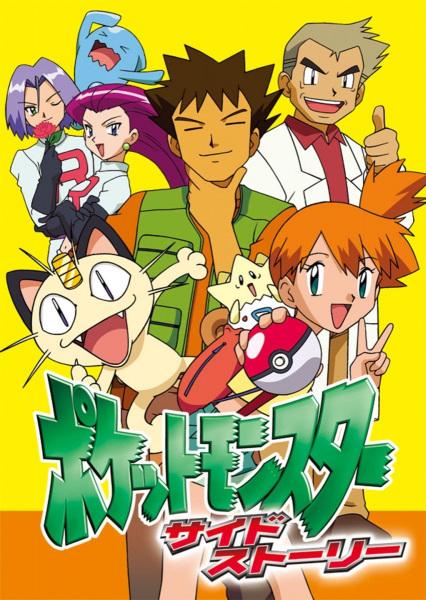
Traveling through wide-ranging regions, Satoshi and Pikachu are joined by Kasumi, a Water-type trainer, and Takeshi, a Rock-type trainer. As Satoshi works toward earning eight Gym Badges to qualify for the Pokémon League, trouble regularly finds the group in the form of Team Rocket, whose schemes to steal strong Pokémon keep forcing them into unexpected battles and narrow escapes.
Otaku Consensus
OLM’s original Pokémon TV run remains one of anime’s most effective game-to-screen translations: Kunihiko Yuyama and Masamitsu Hidaka turn collection mechanics into a durable travel-comedy rhythm built on creature personality, proxy battles, and slapstick escalation. Its strongest reception still clusters around the early seasons’ novelty and accessible kid-adventure energy, while the most persistent criticism is the increasingly predictable episode template, with Johto often singled out by fans as the point where the formula starts to drag.
Why You Should Watch
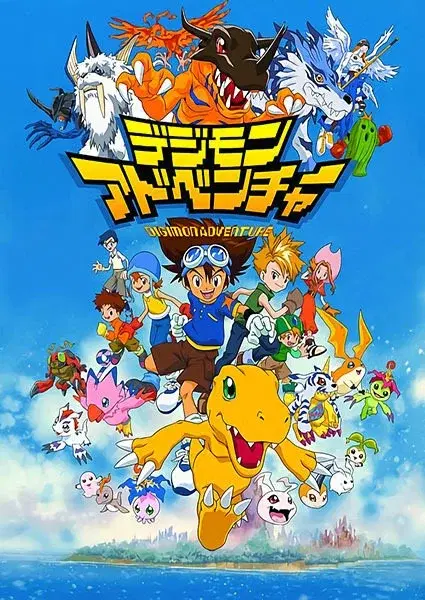
Watch this if you want monster-battling comfort food that privileges routine, mascot comedy, and small weekly conflicts over dense lore or high-stakes serialization. Compared with Digimon Adventure, Pokémon is less apocalyptic and more toy-box episodic; compared with a tournament shonen, its appeal is in the revolving bestiary, comic timing, and the way battles function as personality sketches for the creatures as much as contests. The 1997-2002 run is especially valuable as the blueprint for a multimedia anime franchise: OLM, Yuyama, Hidaka, and the writing team establish the rhythms, visual shorthand, and recurring gags that later seasons either refine or rebel against. If you want a long, low-friction adventure you can sample in arcs rather than binge like a single plot machine, this is the franchise’s foundation text.
Key Characters
- SSatoshi(VA: Rica Matsumoto)
Fans tend to read Satoshi less as a polished prodigy than as a stubborn, kinetic mascot for trial-and-error growth, which is why the early series’ rough edges suit him.
- PPikachu(VA: Ikue Otani)
Pikachu became the show’s emotional shorthand because Ikue Otani’s performance gives the character recognizable moods and comic timing without relying on normal dialogue.
- KKasumi(VA: Mayumi Iizuka)
Kasumi gives the original trio its sharpest counterweight, bringing a more irritable, reactive comic energy that keeps Satoshi’s impulsiveness from dominating every scene.
- TTakeshi(VA: Yuji Ueda)
Takeshi is remembered as the group’s dependable older presence and as a recurring source of deadpan and romantic slapstick, a combination that made him unusually durable across the franchise.
What Makes It Stand Out
- 1
The original TV run is a 276-episode OLM production that aired from April 1, 1997 to November 14, 2002, making it less a compact adaptation than a long-form franchise engine built for weekly ritual viewing.
- 2
Kunihiko Yuyama served as chief director while Masamitsu Hidaka directed, a pairing that helped codify the anime’s recognizable balance of road-show structure, creature-centric set pieces, and broad physical comedy.
- 3
The series’ structure leans heavily into episodic travel and proxy battles, matching AniList’s highest tags: Proxy Battle at 97%, Travel at 95%, and Creature Taming at 94%.
- 4
The reception split around pacing is unusually consistent: early seasons are often praised because the formula still feels fresh, while Johto is frequently criticized by fans as where repetition becomes much harder to ignore.
- 5
Shinji Miyazaki and Tomoaki Imakuni are credited for music, helping establish the bright, immediately legible sound palette that supports the show’s quick shifts between battle energy, comedy beats, and sentimental mascot moments.
Fun Facts & Trivia
- Fun fact 1
- The anime’s creative lineage is unusually direct: original creator Satoshi Tajiri and original character designer Ken Sugimori are both credited, tying the TV series closely to the game franchise’s founding identities.
- Fun fact 2
- The protagonist’s Japanese name, Satoshi, mirrors original creator Satoshi Tajiri’s given name, a detail that reinforces how closely the anime’s central iconography is tied to the franchise’s origin story.
- Fun fact 3
- Takeshi Shudou and Atsuhiro Tomioka are both credited as scriptwriters, linking the early anime to two writers who helped shape its mix of recurring comic structure and creature-of-the-week storytelling.
- Fun fact 4
- Despite its kid-friendly reputation, the show’s tag profile includes Criminal Organization at 79% and Slapstick at 69%, which captures how much of its weekly engine depends on comic villainy rather than pure sports progression.
- Fun fact 5
- Across major database reception, the original series sits in a middle-positive zone rather than universal acclaim: MAL lists it at 7.42 from over 427,000 votes, while AniList records a 73/100 score and 3,691 favourites.
Studios
- OLM