Cardcaptor Sakura
カードキャプターさくら
- Adventure
- Comedy
- Drama
- Romance
- Mahou Shoujo
- School
- Episodes
- 70
- Duration
- 25 min per ep
- Aired
- Apr 7, 1998 to Mar 21, 2000
- Status
- Finished Airing
Synopsis
Fourth-grader Sakura Kinomoto leads a normal life in Tomoeda—until she discovers a strange book called *The Clow*. When she opens it, a sudden magical wind scatters its contents across the town, turning an innocent moment of curiosity into a serious problem.
The mishap rouses Keroberos, the “Beast of the Seal” who goes by Kero, and he explains that the escaped Clow Cards were created by the sorcerer Clow Reed. Each card carries formidable power and can act on its own, which is why they were sealed away in the first place. With the cards now loose, Sakura is chosen as the Cardcaptor and given the Sealed Key to retrieve them before they cause harm.
Guided by Kero and supported by her best friend Tomoyo Daidouji, Sakura takes on her secret new responsibility while still navigating school and everyday worries, setting off on magical adventures to capture every last Clow Card.
Otaku Consensus
Madhouse and Morio Asaka’s CLAMP adaptation remains the rare long-form magical-girl series whose episodic structure feels cumulative: fans and critics consistently single out its gentle pacing, expressive cel animation, music, and relationship writing, especially across the 45-episode Clow Card stretch and the more mysterious final run. Its biggest barrier is also its design: 70 episodes of calm, case-by-case storytelling can feel too leisurely for viewers trained on tighter modern seasons, and some age-gap romantic material reads more awkwardly today.
Why You Should Watch
Watch Cardcaptor Sakura if you want magical-girl comfort with real craft behind the comfort: a show that lets school routines, family warmth, crushes, costumes, and small mysteries breathe without turning every episode into a power-scaling contest. It scratches the same transforming-heroine itch as Sailor Moon and Precure, but Sakura’s appeal is closer to an adventure-game heroine building a flexible toolkit and solving each encounter with observation, timing, and empathy. The 70-episode run is best for viewers who like incremental character growth and domestic detail rather than binge-only plot compression. It is also unusually generous about affection in many forms, including queer-coded and nontraditional relationships, while Tomoyo’s fashion obsession gives the series a visual rhythm most magical-girl shows replace with one stock uniform.
Key Characters
- SSakura Kinomoto(VA: Sakura Tange)
Sakura Tange’s bright, vulnerable performance is central to why Sakura feels less like a mascot-ready heroine and more like a child learning courage through repetition, mistakes, and kindness.
- TTomoyo Daidouji(VA: Junko Iwao)
Tomoyo is beloved because her devotion is creative rather than passive: she turns support into costume design, documentation, and one of the series’ most quietly affecting forms of love.
- KKeroberos(VA: Aya Hisakawa)
Keroberos works because Aya Hisakawa balances guardian authority with mascot comedy, making him both the rulebook and the punchline without reducing him to a toyetic sidekick.
- SShaoran Li(VA: Motoko Kumai)
Shaoran’s tsundere edge gives the series a competitive spark, and Motoko Kumai plays him with enough stiffness and insecurity that his growth feels earned rather than decorative.
What Makes It Stand Out
- 1
Madhouse’s late-1990s cel animation is a major part of the show’s lasting reputation, with critics still pointing to its polished movement, soft color work, and storybook-like everyday staging. The production ran for 70 TV episodes from 1998 to 2000 without losing the gentle visual identity associated with Morio Asaka’s direction.
- 2
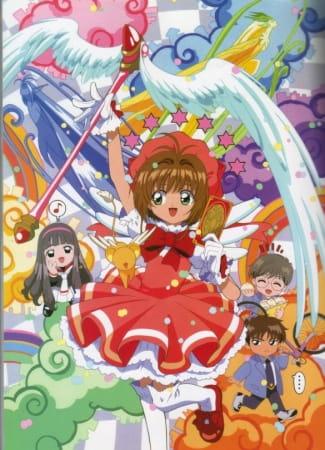
Mokona of CLAMP is credited with costume design, and the fashion element is not cosmetic trivia: Sakura is famous for wearing a wide range of episode-specific outfits instead of relying on one default magical-girl uniform. That choice gives Tomoyo’s role and the show’s visual personality unusually direct narrative presence.
- 3
The series is largely episodic, but reviewers repeatedly note that it maintains a sense of progression through foreshadowing, evolving relationships, and Sakura’s growing command of her tools. This is why the show can feel easygoing without feeling static.
- 4
Tatsuhiko Urahata and CLAMP’s Nanase Ookawa share series composition credit, which helps explain the balance between TV-friendly structure and CLAMP’s interest in unconventional affection. AniList tags such as LGBTQ+ Themes, Love Triangle, and Age Gap reflect how much relationship variety sits beneath the school-life surface.
- 5
Its soundscape remains part of the appeal: fan and critic comments single out the music, opening and ending themes, and voice acting as major reasons the series still plays well decades later. The main cast’s Japanese performances are especially associated with the original version’s warmth and comic timing.
Fun Facts & Trivia
- Fun fact 1
- Cardcaptor Sakura aired from April 7, 1998 to March 21, 2000, giving it a 70-episode run that is unusually generous by modern seasonal-anime standards.
- Fun fact 2
- The anime is a Madhouse production based on CLAMP’s work, with Morio Asaka directing and series composition credited to both Tatsuhiko Urahata and CLAMP’s Nanase Ookawa.
- Fun fact 3
- Its reputation remains strong across major anime databases: the research data lists an 8.19/10 MAL score from 235,632 votes, MAL rank #461, AniList score 81/100, and 7,318 AniList favourites.
- Fun fact 4
- Retrospective criticism often separates the original Japanese version from memories of Cardcaptors, with reviewers recommending the Japanese audio for viewers whose first exposure came through that edited broadcast version.
- Fun fact 5
- All four main roles listed in the research data are performed by women in Japanese: Sakura Tange, Junko Iwao, Aya Hisakawa, and Motoko Kumai.
Studios
- Madhouse