Pretty Cure
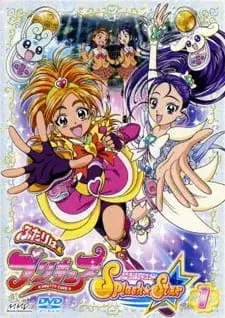
ふたりはプリキュア (Futari wa Precure)
- Action
- Comedy
- Mahou Shoujo
- Episodes
- 49
- Duration
- 24 min per ep
- Aired
- Feb 1, 2004 to Jan 30, 2005
- Status
- Finished Airing
Synopsis
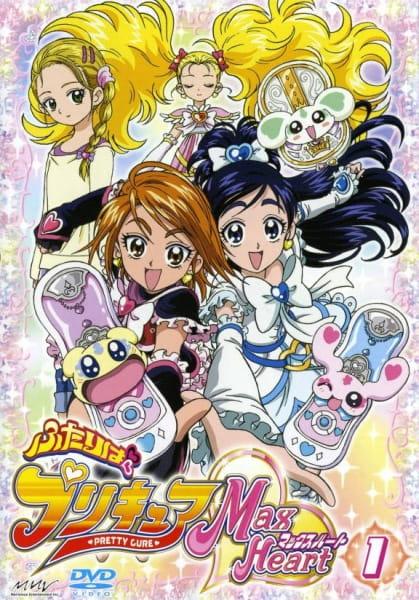
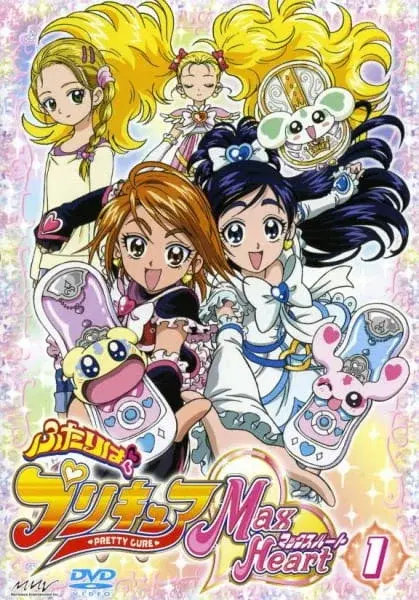
Nagisa Misumi and Honoka Yukishiro couldn’t seem more different at first glance. Nagisa is a lively, well-liked middle school lacrosse player, while Honoka—known as the school’s “Queen of Intelligence”—is quiet and composed, admired for her sharp mind.
Despite their opposite personalities, the two are chosen to become the emissaries of light: Cure Black and Cure White. Guided by the fairies Mepple and Mipple, they take on the Dotsuku Zone, a sinister force that has already invaded the Garden of Light and now threatens the Garden of Rainbows. To stop the encroaching darkness, Nagisa and Honoka must join forces to locate seven Prism Stones and restore the Prism Hopish, pushing back the enemy before more worlds fall into ruin.
Otaku Consensus
Futari wa Precure earns its reputation as a foundational magical-girl action series because Daisuke Nishio’s direction gives the combat unusual physical weight, while the writing treats Nagisa and Honoka’s friendship as a gradual emotional project rather than instant genre destiny. Fans and critics consistently praise its moral clarity, school-life comedy, and standout everyday episodes such as Honoka’s birthday and Chutaro’s lost-puppy story, but the most persistent complaint is the 49-episode pacing: its episodic structure can feel repetitive when watched in large stretches.
Why You Should Watch
Watch Futari wa Precure if you want magical-girl empowerment with the tactile punch of shonen action, without the ornate weapon systems or melodramatic sprawl that later franchise entries can accumulate. It scratches some of the same itch as Sailor Moon’s school-and-superhero rhythm, but Toei frames the fights more like close-quarters brawls: kicks, throws, impact cuts, and teamwork under pressure. The appeal is also domestic and social; lacrosse practice, classroom status, fairy bickering, and small moral dilemmas matter as much as the fantasy conflict. Viewers who enjoy slow-burn female friendship, episodic comfort watching, and kids’ anime with sincere ethical lessons will get the most from it. Marathoners should pace themselves, because its strengths land better as a weekly adventure than as a binge.
Key Characters
- NNagisa Misumi(VA: Yoko Honna)
Nagisa stands out because the series lets her athletic confidence, social ease, and emotional impulsiveness clash in ways that make her feel more like a middle-school heroine than a polished icon.
- HHonoka Yukishiro(VA: Yukana)
Honoka is often singled out by fans for bringing quiet intensity to the duo, with her intelligence framed as practical sensitivity rather than detached genius.
- MMepple(VA: Tomokazu Seki)
Mepple turns the mascot role into a source of needy comic energy, giving the magical routine a more argumentative and character-driven texture.
- MMipple(VA: Akiko Yajima)
Mipple balances the fairy comedy with a softer presence, and her exchanges with Mepple help keep the transformation-side mythology tied to personality rather than exposition alone.
What Makes It Stand Out
- 1
This is the 2004 starting point of the Pretty Cure franchise, produced as an original Toei Animation project rather than a manga or light-novel adaptation. That origin matters: its format is built for toy-era magical-girl television, but its identity comes from action choreography and partner dynamics.
- 2
Daisuke Nishio’s direction emphasizes physical superhero combat more than wand-based spectacle, which aligns with the show’s strong AniList tags for Henshin, Superhero, Martial Arts, and Urban Fantasy. Cure Black and Cure White became memorable partly because their battles feel like contact sports filtered through magical-girl staging.
- 3
Ryou Kawasaki’s series composition leans heavily into an episodic structure, a choice reflected in the 79% Episodic tag and in fan reviews that recommend it as a casual watch. The same structure is also the source of the most common criticism: the central formula can drag across 49 episodes.
- 4
Naoki Satou’s music, paired with Sayaka Mizuno’s music selection and Takahisa Ishino’s sound effects, gives the series a brash early-2000s TV-anime energy. The production’s sound team helps sell the contrast between school comedy, fairy chatter, and sudden impact-heavy fights.
- 5
Among viewer-cited highlights are character-scale episodes rather than only major conflict beats, especially Honoka’s birthday visit from her parents and the story involving her dog Chutaro befriending a lost puppy. Those examples explain why the series is remembered for moral warmth as much as franchise history.
Fun Facts & Trivia
- Fun fact 1
- Izumi Toudou, credited as the original creator, is Toei Animation’s house name for collective authorship on Pretty Cure projects. That credit signals the franchise’s studio-driven development model from the beginning.
- Fun fact 2
- The series ran for 49 episodes from February 1, 2004 to January 30, 2005, giving it an almost exactly one-year broadcast cycle. Its pacing complaints make more sense in that context: it was designed for weekly appointment viewing, not modern binge consumption.
- Fun fact 3
- Daisuke Nishio is a notable choice for director because of his association with Toei’s action pedigree, including Dragon Ball television work. That background helps explain why Futari wa Precure’s magical-girl battles are remembered for punches and kinetic exchanges rather than only transformation glamour.
- Fun fact 4
- Its reception remains solid but not inflated: MAL lists it at 7.16 from 22,547 votes, while AniList has it at 71/100 with 480 favorites. Those numbers match the critical pattern around the show: respected as a franchise cornerstone, but still divisive for pacing.
- Fun fact 5
- The main fairy roles are voiced by veteran performers Tomokazu Seki and Akiko Yajima, while the lead duo is carried by Yoko Honna and Yukana. That casting gives the mascot banter and heroine partnership enough personality to support a long episodic run.
Studios
- Toei Animation