Robot Carnival
ロボット・カーニバル
- Fantasy
- Sci-Fi
- Mecha
- Episodes
- 1
- Duration
- 1 hr 31 min
- Aired
- Jul 21, 1987
- Status
- Finished Airing
Synopsis
*Robot Carnival* brings together nine short, stand-alone animated segments created by leading Japanese animators, all built around a single theme: robots. Rather than telling one continuous story, the film functions as an anthology, shifting styles and moods from piece to piece while keeping its focus on how people relate to the machines they build.
Across its varied vignettes, the unifying thread is the human act of creating life with one’s own hands—and the different consequences that can follow. Segments include: “Opening” (Atsuko Fukushima and Katsuhiro Otomo), “Franken’s Gears” (Koji Morimoto), “Deprive” (Hidetoshi Omori), “Presence” (Yasuomi Umetsu), “Star Light Angel” (Hiroyuki Kitazume), “Cloud” (Mao Lamdo), “A Tale of Two Robots” (Hiroyuki Kitakubo), “Nightmare” (Takashi Nakamura), and “Ending” (Atsuko Fukushima and Katsuhiro Otomo).
Otaku Consensus
Robot Carnival endures as an APPP-backed showcase of directorial personality, with tactile mechanical animation, Katsuhiro Ootomo’s destructive framing sequence, and Yasuomi Umetsu’s emotionally focused Presence supplying its strongest material. Its rapid tonal shifts are creatively liberating but also produce the chief complaint: several shorts prioritize design and motion over satisfying storytelling, making the anthology feel uneven. The Japanese presentation has aged far better than an English dub criticized for its caricatured mock-Asian accents.
Why You Should Watch
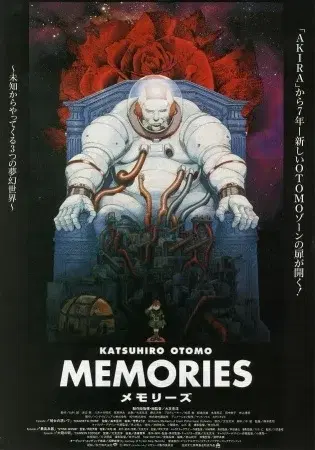
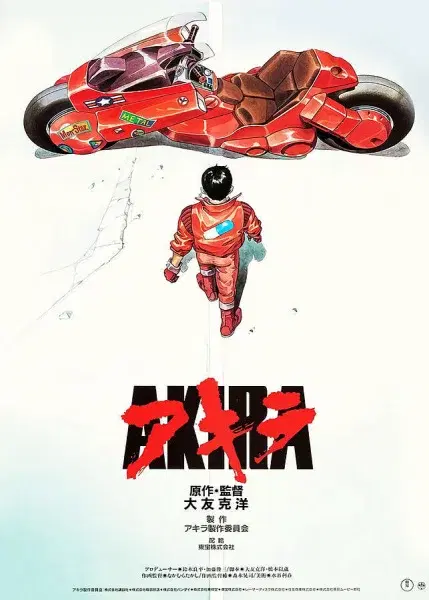
If you want mechanical spectacle without franchise lore, continuity homework, or a single house style, Robot Carnival is a compact tour of late-1980s animator authorship. Its strongest pieces offer sharply different pleasures: Presence supplies melancholy character drama, Nightmare turns the city into a feverish machine ballet, and A Tale of Two Robots combines period design with broad comedy. The dialogue-light passages make draftsmanship, timing, and music featuring Joe Hisaishi do work that modern productions often assign to exposition. It scratches the same tactile, hand-drawn itch as Akira and the later Memories, but changes visual grammar every few minutes rather than sustaining one world. Viewers interested in layouts, effects animation, retro-futurist machinery, or how individual directors interpret one production brief will get more from it than anyone seeking uniform plotting or a conventional mecha campaign.
Key Characters
- AAndroid
The Android embodies the film’s most affecting tension between meticulous human craftsmanship and the unsettling possibility that an artificial being might exceed its maker’s emotional limits.
- CChicken Man
Chicken Man is one of the anthology’s most instantly recognizable grotesques, pushing robot imagery away from heroic mecha and toward surreal urban horror.
- GGirl(VA: Yayoi Maki)
The simply credited Girl, voiced by Yayoi Maki, reflects the anthology’s preference for visually legible archetypes over franchise-style character biographies.
- MMad Scientist
The Mad Scientist turns Franken’s Gears into a physically exaggerated, machine-age riff on the Frankenstein creator archetype.
What Makes It Stand Out
- 1
APPP gives the seven central shorts to seven different directors, including Kouji Morimoto, Yasuomi Umetsu, Hiroyuki Kitakubo, and Takashi Nakamura; the resulting changes in movement, design, and tone are the film’s organizing principle rather than a production inconsistency.
- 2
Katsuhiro Ootomo scripted, storyboarded, and directed both the Opening and Ending, using the same colossal attraction to bookend the more personal experiments between them.
- 3
Presence, directed by Yasuomi Umetsu, is the anthology’s clearest answer to viewers who find the other entries narratively thin: its emotional emphasis has made it the short most often singled out for storytelling rather than spectacle alone.
- 4
A Tale of Two Robots pairs Hiroyuki Kitakubo’s direction with character designs credited to future Evangelion designer Yoshiyuki Sadamoto, giving its historical caricatures a particularly expressive, theatrical look.
- 5
The film is substantially dialogue-light, with AniList assigning its No Dialogue tag a 76 percent prominence; music, pantomime, effects animation, and visual rhythm therefore carry much of the characterization.
Fun Facts & Trivia
- Fun fact 1
- Robot Carnival premiered on July 21, 1987, as a single completed anthology film rather than the opening installment of a continuing mecha property.
- Fun fact 2
- Cloud is attributed to Mao Lamdo in the segment credits, while the staff listing identifies its director as Manabu Oohashi.
- Fun fact 3
- Although there are nine titled segments, Ootomo handles both the first and ninth entries, while seven other directors each control one of the middle chapters.
- Fun fact 4
- The soundtrack includes work associated with Joe Hisaishi, whose music is frequently highlighted by viewers even when they criticize the individual narratives.
- Fun fact 5
- A retrospective warned that the English dub gives Japanese characters exaggerated mock-Asian accents, making the original Japanese presentation the preferable historical viewing option.
Studios
- APPP