Ping Pong the Animation
ピンポン THE ANIMATION
- Award Winning
- Drama
- Sports
- Psychological
- School
- Episodes
- 11
- Duration
- 23 min per ep
- Aired
- Apr 11, 2014 to Jun 20, 2014
- Status
- Finished Airing
Synopsis
Makoto “Smile” Tsukimoto and Yutaka “Peco” Hoshino have been inseparable since childhood, even if their personalities couldn’t be more different. Peco’s loud confidence and dream of becoming the world’s best ping-pong player clash with his habit of skipping practice on Katase High’s team, while the quiet, gifted Smile holds back in matches, unwilling to fully overpower others. Their shared love of the sport has long been the glue that keeps their friendship steady.
That bond is tested when Peco learns a former Chinese national team player is arriving in Japan and insists on visiting Tsujido High to see the competition up close. The trip ends in a brutal wake-up call as Peco is decisively beaten by Kong Wenge, forcing him to confront what ping-pong truly means to him. Back at Katase, the coach turns his attention to Smile’s unrealized potential, pushing him to face his reluctance and play with purpose rather than restraint.
With the inter-high tournament approaching, stronger opponents—each carrying their own struggles—stand in their way. As ambition and uncertainty collide, the pursuit of victory reveals both the exhilaration and the harsher truths that come with chasing greatness.
Otaku Consensus
Ping Pong the Animation earns its reputation by making Masaaki Yuasa’s elastic direction, tight 11-episode pacing, and Taiyou Matsumoto’s jagged humanism feel inseparable rather than merely stylish. Its most-cited barrier is also its signature: the rough, distorted, partly rotoscoped visual language can repel viewers expecting polished sports-anime spectacle, but for receptive fans it turns matches into psychological X-rays.
Why You Should Watch
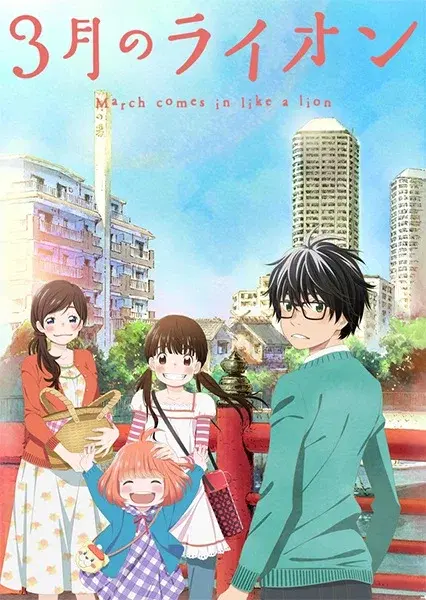
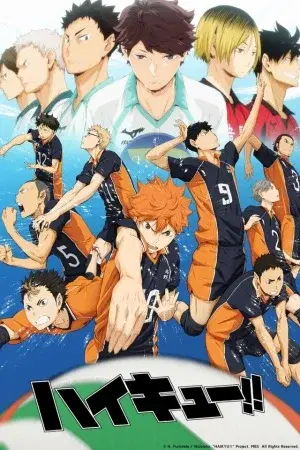
Watch Ping Pong the Animation if you want a sports anime about ambition without the usual escalation treadmill. It scratches the same itch as Haikyuu!!’s match psychology and March Comes in Like a Lion’s interior bruising, but strips the genre down to sharp body language, awkward silences, and people realizing that talent can be a burden. Masaaki Yuasa’s layouts make every serve feel emotionally loaded, while the series’ short run keeps side characters from becoming motivational props. This is for viewers who like competition stories where losing matters, coaches are not just speech machines, and rivals have private philosophies rather than power levels. If you dismissed it because of the art, that is the exact reason to reconsider it.
Key Characters
- MMakoto “Smile” Tsukimoto
Smile is fascinating because his near-mechanical calm turns every rally into a question of empathy, restraint, and whether natural talent creates obligations beyond winning.
- YYutaka “Peco” Hoshino
Peco’s swagger is the show’s emotional weather system, making confidence, avoidance, charisma, and insecurity feel inseparable rather than contradictory.
- KKong Wenge
Kong brings a rare perspective for a school sports anime: an elite displaced athlete whose language barrier and pride make him more than an imported rival.
What Makes It Stand Out
- 1
Masaaki Yuasa is credited as both director and series composer, giving the adaptation an unusually unified sense of visual rhythm and dramatic structure across its compact 11 episodes.
- 2
Tatsunoko Production embraces Nobutake Itou’s deliberately loose character designs rather than smoothing them into standard TV-anime polish; AniList’s high Rotoscoping and CGI tags reflect how visibly mixed and unconventional the motion language is.
- 3
Episode 6 is frequently singled out by viewers as one of the show’s emotional peaks, with web discussion specifically praising an anime-original scene rather than only the adapted material.
- 4
Kong Wenge’s presence gives the series a language-barrier thread, a detail uncommon in school sports anime and one that reframes rivalry through displacement, communication, and national-team pressure.
- 5
The ensemble structure prevents the story from functioning as a simple two-protagonist ladder; rivals, teachers, and club players are treated as competing life philosophies instead of disposable tournament obstacles.
Fun Facts & Trivia
- Fun fact 1
- The production pairs original creator Taiyou Matsumoto with Masaaki Yuasa, a particularly fitting match because both are known for expressive distortion over conventional prettiness.
- Fun fact 2
- Eun-Yeong Choi is credited as assistant director, placing one of Yuasa’s key creative collaborators directly in the show’s core production staff.
- Fun fact 3
- The visual pipeline lists Kevin Aymeric as art director, Kunio Tsujita as color designer, Shunsuke Nakamura as director of photography, and Kashiko Kimura as editor, which helps explain why the show’s rough drawings still feel formally controlled.
- Fun fact 4
- Its reception is unusually strong across databases: MAL lists it at 8.63 from 205,709 votes and rank #97, while AniList records an 86/100 score and 9,969 favourites.
- Fun fact 5
- Despite being labeled Sports, Drama, and Award Winning, its AniList tags put Coming of Age, Philosophy, and Ensemble Cast near the top, which captures why many fans discuss it as a life story first and a competition story second.
Studios
- Tatsunoko Production