Chance Pop Session
チャンス トライアングルセッション (Chance Triangle Session)
- Drama
- Idols (Female)
- Music
- Episodes
- 13
- Duration
- 24 min per ep
- Aired
- May 21, 2001 to Aug 27, 2001
- Status
- Finished Airing
Synopsis
Chance Pop Session follows the intertwining journeys of three young women whose lives are transformed by a chance encounter with their idol, Reika. Akari, a bright and optimistic girl from a devout background, finds her passion for music ignited as she attends Reika's concert. Meanwhile, Yuki, a fiercely independent spirit who has left her home, works behind the scenes at the event, dreaming of a life beyond her current circumstances. Lastly, Nozomi, from a privileged family, enjoys the luxuries of VIP access but yearns for a deeper connection to her aspirations.
Motivated by the electrifying performance, the trio decides to pursue their own dreams of becoming pop idols and enrolls in the Akiba music school. Through their challenges and triumphs, they explore the complexities of friendship, ambition, and self-discovery in the vibrant world of music. As they navigate their paths, the influence of Reika's artistry continues to resonate, guiding them toward their own destinies.
Otaku Consensus
Chance Pop Session is remembered, when it is remembered at all, as a modest 2001 Madhouse idol drama whose character-focused direction, well-matched seiyuu, and stronger-than-expected musical inserts overcome a roadmap viewers can see from the first disc. Fans who rate it in the 7–8 range point to its earnest tone and subplots that make the trio feel relatable; detractors cite a cluttered opening and predictable plotting that never gains the polish of later idol-anime machines. Its 6.44 MAL average and low popularity capture the verdict: a niche comfort pick, not a rediscovered masterpiece.
Why You Should Watch
Watch Chance Pop Session if you want an idol anime from before the Love Live! and The iDOLM@STER template hardened into auditions, unit branding, and franchise spectacle. Its appeal is smaller and more character-drama oriented: a 13-episode Madhouse TV series where the pleasure comes from seiyuu chemistry, insert songs, and personal subplots rather than surprise twists. Viewers who like early-2000s shoujo-adjacent melodrama will get more from it than anyone chasing glossy choreography or hyper-polished production numbers. It scratches the same broad “music as emotional self-definition” itch as older pop-star anime, but without the supernatural hook of Full Moon o Sagashite or the industry sprawl of later idol shows. Go in for sincerity, not reinvention.
Key Characters
- AAkari Mizushima(VA: Mayumi Iizuka)
Akari is the cast’s cleanest expression of earnest idol aspiration, and Mayumi Iizuka’s casting gives her the familiar warmth associated with late-1990s and early-2000s heroine roles.
- YYuki Aoyama(VA: Atsuko Enomoto)
Yuki brings the series its harder-edged independence, making her the entry point for viewers who prefer idol stories grounded in work, friction, and self-reliance rather than pure glamour.
- NNozomi Kaibara(VA: Maria Yamamoto)
Nozomi is interesting because the show frames privilege as emotional distance rather than an easy advantage, giving her scenes a quieter kind of tension.
- KKaito Kosaka(VA: Takehito Koyasu)
Kaito stands out in the cast list because Takehito Koyasu brings a major veteran presence to a small, comparatively obscure idol drama.
What Makes It Stand Out
- 1
Madhouse produced the series as a compact 13-episode TV run airing from May 21 to August 27, 2001, placing it before the modern idol-anime boom and its franchise-driven visual language.
- 2
The show’s structure divides attention across three aspiring-idol viewpoints rather than building everything around a single lead, a choice that positive reviewers credited for making the subplots sharpen the main drama.
- 3
Its musical material drew better notices than the rest of the craft: one web review singled out the insert songs as “somewhat better than expected,” while another review focused enough on the soundtrack to mention uploading it in full.
- 4
The reception pattern is unusually consistent: favorable reviews call it sweet, earnest, addictive, and well-cast, while negative reviews attack the same core weakness, a predictable story with a poor or cluttered start.
- 5
The series occupies a rare middle zone for idol anime: not a campy failure, not a prestige classic, but a low-popularity title whose defenders tend to value sincerity and voice acting over production flash.
Fun Facts & Trivia
- Fun fact 1
- The anime is listed under both Chance Pop Session and Chance Triangle Session, which can make older reviews and database entries look like they are discussing separate shows.
- Fun fact 2
- Despite being a Madhouse production, it remains obscure by database metrics: MAL lists it at 6.44/10 from 2,223 votes, with popularity around #8458.
- Fun fact 3
- Fan reviews reference a later home-video re-release and bargain-bin RightStuf purchases, suggesting that some of its English-language audience discovered it through physical media rather than broadcast-era visibility.
- Fun fact 4
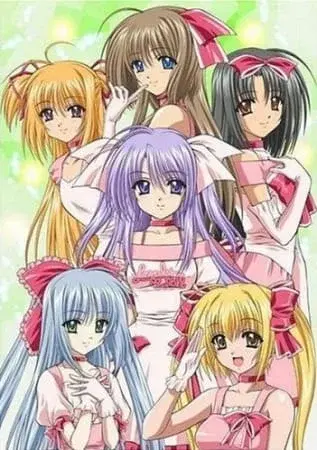
- One viewer noted that the DVD insert art looked far more ecchi than the series itself, a packaging mismatch worth knowing before judging the show by its cover.
- Fun fact 5
- The Japanese cast includes several recognizable names for early-2000s anime fans: Mayumi Iizuka, Atsuko Enomoto, Maria Yamamoto, Yuu Daiki, and Takehito Koyasu.
Studios
- Madhouse