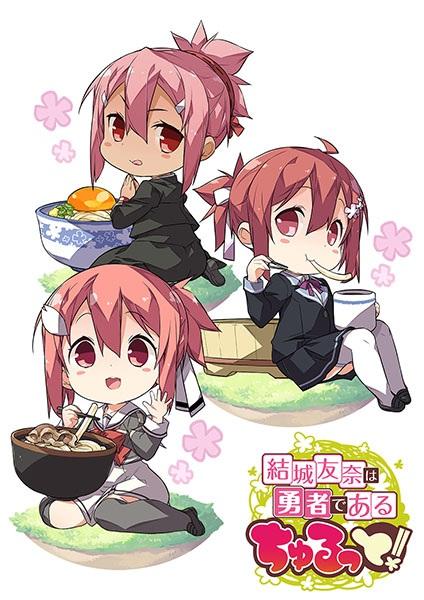
Yuki Yuna is a Hero
結城友奈は勇者である (Yuuki Yuuna wa Yuusha de Aru)
- Drama
- Mahou Shoujo
- Episodes
- 12
- Duration
- 24 min per ep
- Aired
- Oct 17, 2014 to Dec 26, 2014
- Status
- Finished Airing
Synopsis
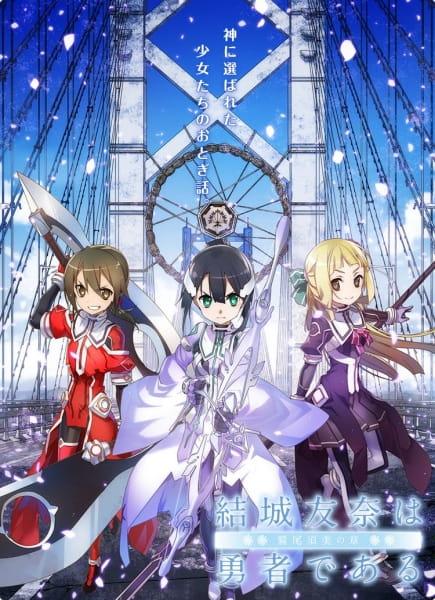
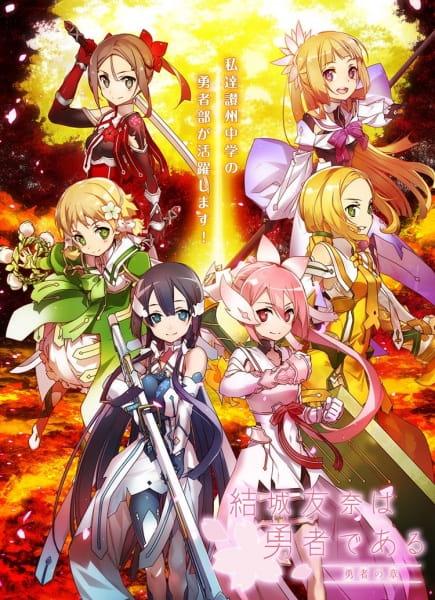
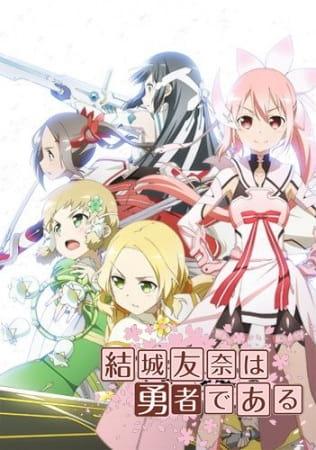
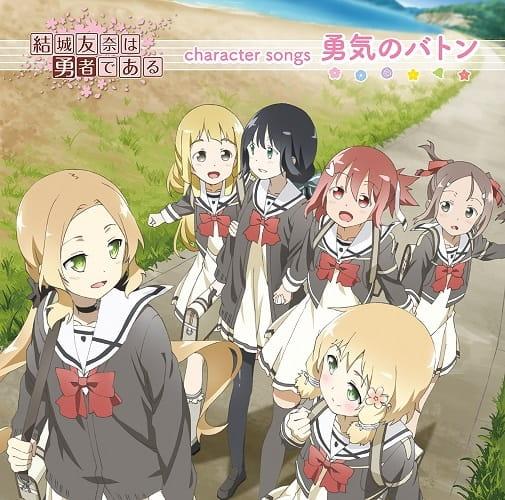
Yuuna Yuuki already considers herself a hero in the small ways that matter—she’s an energetic member of her middle school’s Hero Club, devoted to helping others and brightening the day of anyone around her. Alongside her closest friend, Mimori Tougou, the club’s activities are usually simple, sincere, and rooted in everyday kindness.
That ordinary routine shifts when ominous beings known as Vertexes begin endangering the world she cherishes. Summoned by a mysterious phone app, Yuuna and the other Hero Club members—Fuu and Itsuki Inubouzaki included—are tasked with transforming into magical girls to confront the threat. Between school life and club events, their battles force them to grapple with the hidden costs of their powers and what it truly means to be a hero.
Otaku Consensus
Seiji Kishi’s controlled direction and Makoto Uezu’s tightly staged late-series escalation turn a deceptively modest club drama into a consequence-driven examination of heroism, with Studio Gokumi preserving warmth even as the characters’ circumstances darken. Its multimedia origins never prevent the 12-episode anime from functioning as a complete entry, though detractors find Yuuna’s idealism underdeveloped and object to a resolution that appears too willing to validate it. The polarized response is reflected in solid rather than overwhelming aggregate scores: 7.38 on MyAnimeList and 72 on AniList.
Why You Should Watch
Watch Yuki Yuna is a Hero if you want the moral pressure and physical consequences of Puella Magi Madoka Magica without sacrificing the affectionate club-room chemistry of a school ensemble. Its strongest material examines service as an institution: who defines heroism, what young volunteers are allowed to know, and whether sacrifice remains noble when consent is compromised. The compact 12-episode structure rewards patience, using early comedy and routine as emotional infrastructure rather than disposable camouflage. Studio Gokumi’s inviting character work also makes the harsher turns land through contrast instead of relentless gloom. This is especially suited to viewers who prefer magical-girl drama built around friendship, disability, duty, and faith rather than puzzle-box lore, and its visual and thematic foreshadowing gives a second viewing unusual value.
Key Characters
- YYuuna Yuuki(VA: Haruka Terui)
Yuuna’s uncomplicated belief in helping others becomes the series’ central ideological test, inspiring viewers who read her sincerity as strength while frustrating those who want that optimism interrogated more aggressively.
- MMimori Tougou(VA: Suzuko Mimori)
Tougou pairs tactical composure and intense loyalty with the ensemble’s most philosophically charged perspective on duty, vulnerability, and the systems surrounding the Hero Club.
- FFuu Inubouzaki(VA: Yumi Uchiyama)
Fuu’s boisterous leadership is compelling because the responsibilities of being club president repeatedly collide with her protective instincts toward the younger members.
- IItsuki Inubouzaki(VA: Tomoyo Kurosawa)
Itsuki gives the ensemble its quietest coming-of-age thread, with Tomoyo Kurosawa emphasizing the uncertainty beneath her gentle manner and admiration for her sister.
What Makes It Stand Out
- 1
Director Seiji Kishi and series composer Makoto Uezu organize the season around a deliberate tonal progression: ordinary club activities establish relationships and routines before the cost-of-power material changes how those earlier scenes are understood.
- 2
Studio Gokumi animates the everyday and supernatural material with contrasting visual priorities, preserving BUNBUN’s rounded, approachable original designs through Takahiro Sakai’s animation-ready character work while giving transformations and battles greater scale.
- 3
Disability is embedded in the series’ treatment of power, dependence, and autonomy rather than used only as tragic decoration; physical consequence continues to shape school and club life after combat ends.
- 4
The anime repeatedly links heroism to institutions, gods, and incomplete information, giving its magical-girl mechanics a philosophical dimension centered on consent and obligation.
- 5
Reviewers frequently single out its rewatchability: visual details and seemingly routine early interactions gain additional meaning once the viewer understands the season’s larger structure.
Fun Facts & Trivia
- Fun fact 1
- The anime belongs to a wider multimedia project spanning light novels, visual novels, games, manga, and animation, but Takahiro is credited with the original plan and the television season was designed to stand on its own.
- Fun fact 2
- Washio Sumi wa Yuusha de Aru chronologically provides earlier context for this story, yet fan viewing guides commonly recommend approaching it after the 2014 anime because even its synopsis can disclose information intended to be learned here.
- Fun fact 3
- The principal creative pairing brought recognizable tonal pedigrees: Seiji Kishi directed Angel Beats!, while Makoto Uezu handled series composition for Akame ga Kill!, a combination that helped fuel both anticipation and skepticism about the show’s dramatic turns.
- Fun fact 4
- BUNBUN created the original character concepts, with Takahiro Sakai adapting them for animation; Mitsuaki Takabe and Hiroshi Tanabe were credited as main animators.
- Fun fact 5
- The production divided its environment work across art directors Ayumi Miyakoshi and Kazuto Shitayama, while JWWorks supplied concept art for the series’ urban, coastal, and supernatural spaces.
Studios
- Studio Gokumi