Day Break Illusion
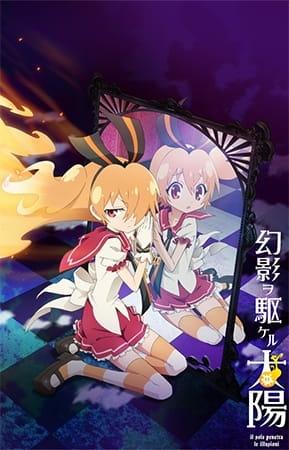
幻影ヲ駆ケル太陽 (Genei wo Kakeru Taiyou)
- Action
- Drama
- Mahou Shoujo
- Psychological
- Episodes
- 13
- Duration
- 24 min per ep
- Aired
- Jul 6, 2013 to Sep 28, 2013
- Status
- Finished Airing
Synopsis
Akari Taiyou, a fortune-teller-in-training, lives with her aunt and uncle and their daughter, Fuyuna. Orphaned young, Akari’s strongest link to her mother is a cherished tarot deck—and the hope of one day walking the same path. After a vivid nightmare of a plant-like monster and a more powerful Akari striking it down, she wakes to a terrifying reality: the “monster” was Fuyuna. Stranger still, Akari and her family soon lose all memory that Fuyuna ever existed.
When another Daemonia appears, Akari is saved by three magical girls—Ginka Shirokane, Seira Hoshikawa, and Luna Tsukuyomi—members of Sefiro Fiore, an organization that battles these threats using Elemental Tarot. Akari learns she has inherited her mother’s power as well, tied to The Sun card, and is drawn into a fight where the enemy may be an ordinary person overtaken from within. Forced to choose between mercy and eradication, Akari’s resolve—and the unity of her new allies—begins to crack under dangers that come not only from outside, but from within their own ranks.
Otaku Consensus
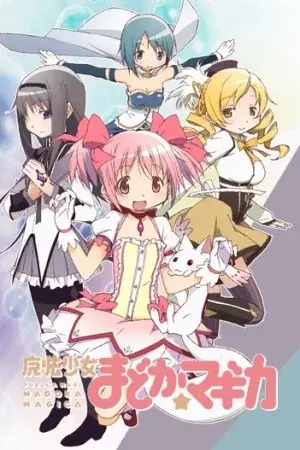
Keizou Kusakawa’s forceful direction, AIC’s ornate character work, and the unsettling opening family-horror turn give Day Break Illusion an identity stronger than its reputation as a post-Madoka imitator. Its compact, anime-original structure delivers immediate intensity but compresses later psychological developments, while busy action staging, conspicuous shock tactics, and familiar Madoka-era imagery remain the most persistent criticisms.
Why You Should Watch
Watch Day Break Illusion if you want the moral pressure and visual menace of Puella Magi Madoka Magica in a leaner, more openly melodramatic one-cour package. AIC builds its fights around distinct silhouettes and weapon styles—archery, spearplay, swordplay, shapeshifting, and animal-eared transformations—rather than treating every confrontation as interchangeable spellfire. The strongest material comes from the friction between Akari’s empathy and teammates who regard hesitation as dangerous, giving the female ensemble more to negotiate than simple friendship speeches. Tatsuya Katou’s score and the clash between bright tarot motifs and grotesque creature design reinforce its horror-fantasy mood. It best suits viewers who appreciate emotionally severe magical-girl stories, urban fantasy, and found-family tension, and who can tolerate compressed character turns, overt tragedy, and action scenes crowded with symbolic imagery.
Key Characters
- AAkari Taiyou(VA: Mai Kadowaki)
Mai Kadowaki gives Akari a gentle but increasingly burdened resolve, making her the story’s moral pressure point rather than a conventional magical power fantasy.
- SSeira Hoshikawa(VA: Eri Kitamura)
Eri Kitamura’s clipped intensity suits Seira’s role as the ensemble’s hard-line counterweight, turning ideological disagreement into some of the series’ sharpest interpersonal tension.
- GGinka Shirokane(VA: Yuiko Tatsumi)
Yuiko Tatsumi lends Ginka an outgoing warmth that keeps the show’s found-family chemistry visible even when its atmosphere becomes relentlessly severe.
- LLuna Tsukuyomi(VA: Sora Tokui)
Sora Tokui plays Luna with brittle sweetness, making her emotional volatility one of the group’s most unsettling fault lines.
What Makes It Stand Out
- 1
AIC assigns the human cast and monsters to separate specialists—character designer Shinpei Tomooka and creature designer Hiroyasu Oda—strengthening the deliberate clash between decorative magical-girl imagery and grotesque horror forms.
- 2
Director Keizou Kusakawa and assistant director Harume Kosaka shape the series as a tightly compressed 13-episode escalation; the pace produces a striking opening but leaves less room for later emotional transitions to breathe.
- 3
Its action vocabulary is unusually broad for a single cour, with archery, spearplay, swordplay, henshin sequences, and shapeshifting all identified as recurring elements rather than isolated flourishes.
- 4
Art directors Toshihiro Kohama and Ryouka Kinoshita pair urban-fantasy spaces with Aiko Matsuyama’s color design, creating the bright-versus-macabre visual contrast repeatedly praised even by mixed reviews.
- 5
Tatsuya Katou composed the music, while Natsumi Okamoto performed theme material, giving the production a distinct musical team rather than relying solely on its tarot iconography for atmosphere.
Fun Facts & Trivia
- Fun fact 1
- Day Break Illusion was created as an anime-original television project rather than beginning as an adaptation, so its entire dramatic structure was designed around the 13-episode broadcast format.
- Fun fact 2
- The series aired from July 6 to September 28, 2013, placing it directly in the wave of darker magical-girl productions that critics and viewers interpreted through the enormous influence of Puella Magi Madoka Magica.
- Fun fact 3
- Its reception is notably polarized: the supplied user reviews range from 4/10 condemnations to 9/10 recommendations, and both camps repeatedly use the Madoka comparison as their central point of argument.
- Fun fact 4
- Aggregate reception reflects that divide more quietly: MyAnimeList records a 6.43 score from 21,352 votes, while AniList lists 60/100 and only 65 favorites.
- Fun fact 5
- The production credits two art directors, Toshihiro Kohama and Ryouka Kinoshita, alongside dedicated color designer Aiko Matsuyama—an unusually visible division of responsibility behind its dense visual presentation.
Studios
- AIC