Hero Tales
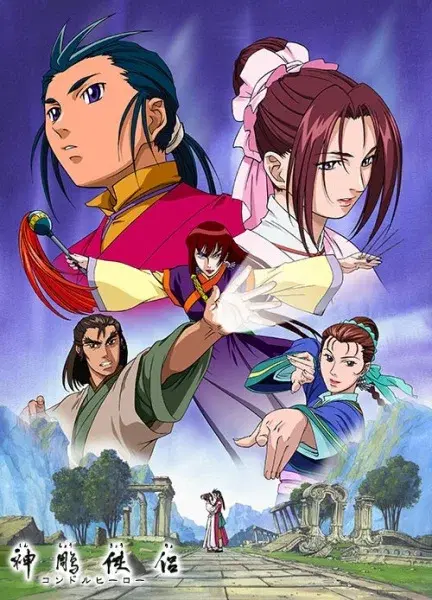
獣神演武 - HERO TALES - (Juushin Enbu: Hero Tales)
- Action
- Adventure
- Fantasy
- Martial Arts
- Episodes
- 26
- Duration
- 24 min per ep
- Aired
- Oct 8, 2007 to Mar 31, 2008
- Status
- Finished Airing
Synopsis
In the Ken Empire, justice has all but vanished. Lord Keiro, the unhinged shogun commanding the Imperial Army, spreads fear across the land while hunting a sacred sword said to grant godlike power. Opposing him is Taito—an all-powerful star reborn as a human—who swears to wield his celestial strength to avenge those Keiro has massacred.
Drawn inevitably toward a brutal confrontation, Taito discovers that his abilities come with a dangerous cost: if he loses control, they could tear him apart from within. To survive and fight with purpose, he must learn discipline and seek out others who share his origin—the seven star-born warriors capable of challenging a corrupted empire.
Otaku Consensus
Hero Tales earns its modest cult defense as a straight-ahead martial-arts shounen whose best asset is Osamu Sekita’s clean action direction: reviewers repeatedly single out the fight animation as fluid, readable, and paced well enough to keep the comedy from clogging the adventure. Its Hiromu Arakawa pedigree and 26-episode classical structure give it an accessible hook, but the dominant criticism is consistent: the characterization is too shallow and male-centered to make the imperial-scale conflict feel emotionally weighty.
Why You Should Watch
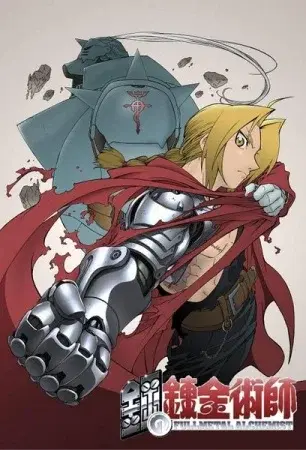
Watch Hero Tales if you want a compact, old-school martial-arts adventure that values training, sword clashes, brotherhood energy, and clean momentum over labyrinthine politics or genre deconstruction. It scratches a simpler shounen itch than Fullmetal Alchemist: the Arakawa connection is there, but the pleasure is closer to a traditional quest serial where every episode pushes toward another confrontation or lesson in control. Viewers who like action scenes that are easy to read, not buried under effects, will get the most from it. The 26-episode length also helps: it has enough room for an ensemble without asking for a long-running commitment, and the BEAT CRUSADERS and High and Mighty Color theme songs give it a distinctly late-2000s TV-anime flavor.
Key Characters
- TTaito
Taito is built as a blunt shounen engine rather than a cerebral hero, with much of his appeal coming from watching overwhelming power be forced into martial discipline.
- LLord Keiro
Lord Keiro gives the series its operatic villainy, functioning less as a subtle political antagonist than as the kind of tyrant who makes every fight feel like a moral challenge.
What Makes It Stand Out
- 1
Studio Flag produced a full 26-episode TV run that aired from October 2007 to March 2008, giving the series the shape of a complete two-cour shounen rather than a short promotional adaptation.
- 2
The action direction is the show’s most consistently praised craft element, with external reviews noting that its martial-arts sequences are fluid, readable, and paced without dead air.
- 3
The production carries unusual creator interest because Hiromu Arakawa is credited as original creator, linking Hero Tales to the authorial reputation behind Fullmetal Alchemist and Silver Spoon while operating in a more traditional fantasy-adventure mode.
- 4
Its music identity is very specific to the period: BEAT CRUSADERS performed the first opening, Mai Hoshimura performed the first ending, and High and Mighty Color handled both the second opening and second ending.
- 5
Its reception profile is notably middle-tier rather than infamous: MAL lists it at 6.81 from 10,530 votes, while AniList sits at 62/100 with only 27 favourites, suggesting a series remembered more by niche shounen loyalists than by broad fandom consensus.
Fun Facts & Trivia
- Fun fact 1
- Hiromu Arakawa’s involvement is the reason the title still gets curiosity clicks from fans of Fullmetal Alchemist and Silver Spoon, even though Hero Tales is judged by most viewers as a much more conventional shounen work.
- Fun fact 2
- Mayori Sekijima handled series composition, while Osamu Sekita directed; that pairing helps explain why reviews often describe the show as easy to follow and structurally straightforward.
- Fun fact 3
- Youji Shimizu served as sound director, and the theme-song lineup leans heavily into recognizable 2000s anime rock through BEAT CRUSADERS and High and Mighty Color.
- Fun fact 4
- The English-language production credits include Gen Fukunaga as executive producer and Tyler Walker as ADR director, tying the localized version to major Funimation-era dub infrastructure.
- Fun fact 5
- Tomoko Fukunaga is specifically credited for key animation on episode 3, a useful production detail for viewers who track individual animator contributions rather than only studio branding.
Studios
- Studio Flag