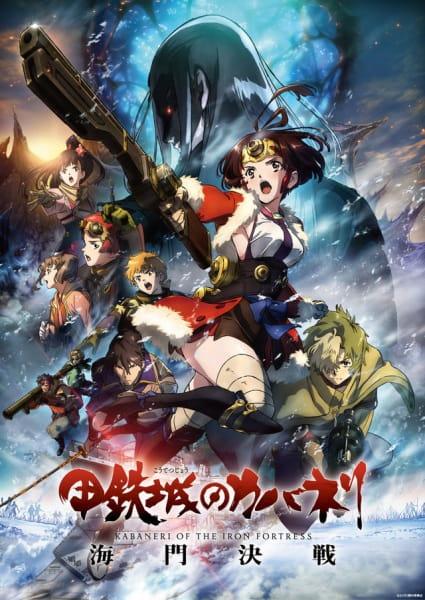
Kabaneri of the Iron Fortress
甲鉄城のカバネリ (Koutetsujou no Kabaneri)
- Action
- Fantasy
- Horror
- Suspense
- Gore
- Historical
- Survival
- Episodes
- 12
- Duration
- 22 min per ep
- Aired
- Apr 8, 2016 to Jul 1, 2016
- Status
- Finished Airing
Synopsis
Amid an industrial revolution, a mysterious virus gives rise to Kabane—ravenous undead that tear through human flesh and can only be put down by destroying their iron-plated hearts. A single bite is a grim sentence: the victim is lost, only to return as another Kabane.
Humanity clings to survival inside heavily fortified settlements, including the island nation of Hinomoto, protected by an immense wall and connected by heavily armored trains. Ikoma, a young engineer who helps build and maintain these lifelines, has developed a weapon he believes can pierce a Kabane’s hardened core—and he’s been waiting for the chance to prove it. That opportunity arrives far sooner than he ever expected.
Otaku Consensus
Kabaneri of the Iron Fortress lands as a high-impact original from Wit Studio: Tetsurou Araki’s direction, the front-loaded pacing, and the rail-bound action staging give its 12 episodes the charge of a premium blockbuster. Its reputation is also sharply qualified; the same viewers who praise its animation, fights, and music often point to plot inconsistencies and late-series logic gaps as the price of its rule-of-cool storytelling.
Why You Should Watch
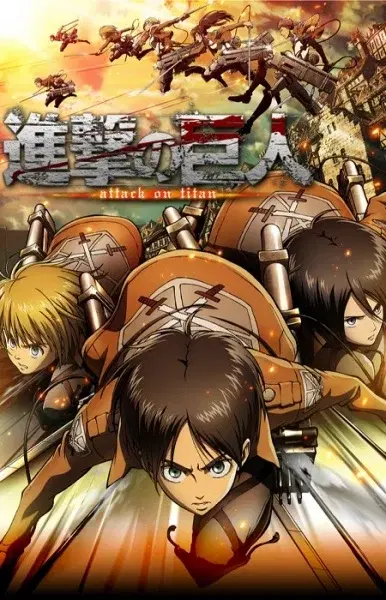
Watch Kabaneri if you want the siege panic of Attack on Titan filtered through steampunk rail warfare, but in a compact, finished 12-episode package instead of a sprawling mythology. It is built for viewers who value kinetic direction, brutal survival tension, guns-and-gore spectacle, and mechanical design as much as character drama. Wit Studio gives the show a dense industrial texture: armored trains, pressure-chamber interiors, hand-built weapons, and combat scenes that feel engineered rather than merely choreographed. If you want historical-flavored horror without slow-burn restraint, or a zombie anime that swaps mall barricades for moving fortresses and iron machinery, this scratches a very specific itch.
Key Characters
- IIkoma(VA: Tasuku Hatanaka)
Ikoma stands out as a technician-hero whose appeal comes from obsession, nerve, and problem-solving under pressure rather than chosen-one mystique.
- MMumei(VA: Sayaka Senbongi)
Mumei became the show’s breakout presence for the way her compact design and acrobatic fighting style turn every action beat into character expression.
What Makes It Stand Out
- 1
Wit Studio produced the series during the studio’s early prestige era, and the show is frequently discussed alongside Attack on Titan because of its shared appetite for panic, vertical momentum, and large-scale survival action.
- 2
Director Tetsurou Araki gives the action a distinctly mechanical rhythm: fights are staged around confined train spaces, sudden breaches, firearms, and impact-heavy close quarters instead of open battlefield choreography.
- 3
The character look is unusually pedigree-rich for a 2010s TV action anime: Haruhiko Mikimoto handled the original character designs, while Yasuyuki Ebara translated them into the final animation-ready designs.
- 4
Ichirou Ookouchi handled series composition, which helps explain the show’s compressed, event-driven structure; it moves with urgency, even when that speed contributes to the plot criticisms around consistency.
- 5
The database tag profile is unusually specific: Zombie at 97%, Steampunk at 96%, Post-Apocalyptic at 92%, Trains at 88%, and Pandemic at 80%, making it one of the rare TV anime where the transport system is not backdrop but genre identity.
Fun Facts & Trivia
- Fun fact 1
- Kabaneri aired from April 8 to July 1, 2016, right in the period when many fans were waiting for more Attack on Titan, which intensified comparisons between the two Wit Studio productions.
- Fun fact 2
- Its popularity far outpaces its ranking on MyAnimeList: a 7.28 score from 462,737 votes places it at rank #3240, but its popularity rank of #241 shows how widely sampled and debated it became.
- Fun fact 3
- The production credits separate original character design and animation character design, with Haruhiko Mikimoto originating the look and Yasuyuki Ebara adapting it for the series.
- Fun fact 4
- You Moriyama is credited for both title logo design and design work, a small but telling sign of how much the series leans on unified industrial branding and visual identity.
- Fun fact 5
- AniList’s audience data gives it a 70/100 score and 3,130 favourites, matching its broader reputation: admired for sensory impact, less universally embraced for writing precision.
Studios
- Wit Studio