Time of Eve
イヴの時間 (Eve no Jikan)
- Sci-Fi
- Slice of Life
- Mecha
- Episodes
- 6
- Duration
- 18 min per ep
- Aired
- Aug 1, 2008 to Sep 18, 2009
- Status
- Finished Airing
Synopsis
In a near-future Japan where android housekeepers are an everyday sight, the Three Laws of Robotics shape both technology and social attitudes. Backed by the Robot Ethics Committee, most people treat androids as nothing more than advanced appliances, while those who openly admire them—dismissed as “android-holics”—are pushed to the fringes.
Rikuo Sakisaka has grown up accepting that androids aren’t human, until he finds an unusual message hidden in the activity logs of his household unit, Sammy. The discovery draws him to a quiet café called Eve no Jikan, a place with a single rule: inside, humans and androids must be regarded as equals. As Rikuo returns in search of answers, he begins to question what lies behind Sammy’s strange behavior—and what that rule truly means.
Otaku Consensus
Time of Eve remains a compact benchmark for intimate robot fiction: Yasuhiro Yoshiura’s unusually centralized control over creation, script, direction, editing, and sound gives its six episodes a clean philosophical focus that larger sci-fi series often dilute. Its chamber-piece pacing, café/bar structure, and restrained use of CG make the AI debate feel social rather than technical, while the most common limitation is scale: the wider Robot Ethics Committee world is compelling but only lightly explored.
Why You Should Watch
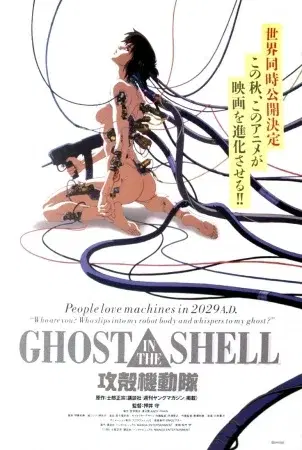
Watch Time of Eve if you want artificial-intelligence philosophy without cyberpunk gunfire, courtroom exposition, or a 50-episode commitment. It scratches a related itch to Ghost in the Shell or Pluto, but trades crime, war, and conspiracy for loaded silences, etiquette, and small behavioral contradictions. Studio Rikka and Yasuhiro Yoshiura turn a café/bar setting into a pressure chamber for questions about personhood, habit, and prejudice, with each short episode built around a social situation rather than a lore dump. The result is ideal for viewers who like sci-fi that trusts them to read body language, audio cues, and rules of space. Despite its mecha-adjacent database labeling, its real machinery is domestic, psychological, and ethical.
Key Characters
- RRikuo Sakisaka
Rikuo is compelling because he is not a rebel at first; he begins as someone shaped by ordinary anti-android etiquette, making his gradual discomfort with that etiquette the series’ emotional engine.
- SSammy
Sammy draws attention through the gap between household-machine formality and the possibility of private interiority, a tension the series handles through restraint rather than melodrama.
What Makes It Stand Out
- 1
Studio Rikka’s production is built around a small, tightly controlled authorial model, with Yasuhiro Yoshiura credited as original creator, director, scriptwriter, editor, sound director, and episode director.
- 2
The six-episode structure is unusually compact for a philosophical sci-fi anime, and its original airing stretched from August 1, 2008 to September 18, 2009, giving the project a serialized, slow-release identity rather than a standard TV-cour rhythm.
- 3
The café/bar space is not just decoration: AniList’s high Bar, Philosophy, Artificial Intelligence, and Robots tags reflect how the series converts speculative ethics into conversational staging and social observation.
- 4
Tooru Okada’s combined roles as assistant director, CG director, and music composer make the digital texture and audio atmosphere feel unusually coordinated for a short-form production.
- 5
The series’ sci-fi identity is closer to domestic robotics and Asimov-style social rules than to combat hardware, which makes its MAL-listed Mecha theme feel more about human-machine culture than traditional piloted-machine spectacle.
Fun Facts & Trivia
- Fun fact 1
- Time of Eve is an original anime project rather than a manga or light-novel adaptation, with Yasuhiro Yoshiura credited as both original creator and scriptwriter.
- Fun fact 2
- Yoshiura’s staff footprint is unusually broad: beyond directing, he also handled editing and sound direction, giving the series a unified rhythm across image, pacing, and audio design.
- Fun fact 3
- Tooru Okada held three major creative posts on the production: assistant director, CG director, and music composer.
- Fun fact 4
- The anime finished as only six episodes, yet its release window covered more than a year, from August 2008 to September 2009.
- Fun fact 5
- Its reception is notably durable for a short Studio Rikka sci-fi work: MAL lists it at 7.98 from 82,182 votes, while AniList records a 77/100 score and 467 favourites.
Studios
- Studio Rikka