Kiznaiver
キズナイーバー
- Drama
- Romance
- Sci-Fi
- Love Polygon
- Episodes
- 12
- Duration
- 24 min per ep
- Aired
- Apr 9, 2016 to Jun 25, 2016
- Status
- Finished Airing
Synopsis
Katsuhira Agata is a withdrawn high school boy who can barely feel pain, leaving him detached not only from injury but from emotion itself. His longtime friend Chidori Takashiro remembers him from before that change, yet can do little as his numb passivity turns him into an easy mark for bullies who extort him without fear of consequences.
Everything shifts when Katsuhira, Chidori, and four other teenagers are abducted and enlisted in the Kizuna System as “Kiznaivers.” Bound by a strange link, they share pain—when one is hurt, the others experience the same agony. Used as test subjects for an unfinished experiment created in the name of world peace, the group must confront one another’s hidden selves, knowing that failure could cost far more than the project.
Otaku Consensus
Kiznaiver lands as one of Trigger’s most emotionally exposed original projects: Hiroshi Kobayashi’s direction, Shirow Miwa-to-Mai Yoneyama character pipeline, and Mari Okada’s taste for messy adolescent confession give the series a sharper identity than its MAL score of 7.36 suggests. Its strongest material is the middle stretch, where the ensemble format turns romance, shame, and social performance into the real experiment; the recurring criticism is that 12 episodes compress too many emotional reversals, making the final act feel more hurried than earned.
Why You Should Watch
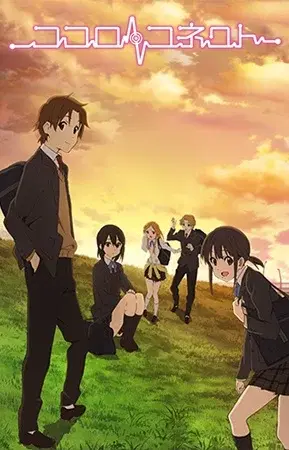
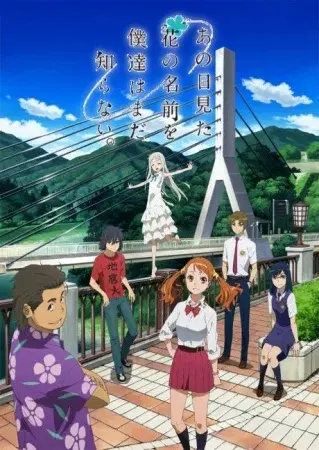
Watch Kiznaiver if you want the emotional pressure-cooker of Kokoro Connect or Anohana filtered through Trigger’s graphic color sense rather than a conventional school-drama presentation. It is for viewers who like romance as an unstable system: unrequited feelings, triangulated loyalties, and blunt confrontations matter more here than lore explanations or action escalation. Mari Okada’s series composition pushes the cast toward uncomfortable honesty, while Yuuki Hayashi’s music and the Boom Boom Satellites opening give the show a polished, melancholy pulse. If you want sci-fi that functions as a psychological device, not a hard-science puzzle, Kiznaiver offers a compact 12-episode study of teenage alienation, empathy, and the cost of being forced to understand other people too quickly.
Key Characters
- KKatsuhira Agata
Katsuhira is compelling because his passivity is treated less as a personality quirk than as an emotional absence the series keeps testing from different social angles.
- CChidori Takashiro
Chidori gives the show its most grounded emotional perspective, carrying the frustration of someone who remembers a warmer version of Katsuhira and cannot simply let that memory go.
What Makes It Stand Out
- 1
Kiznaiver is a Trigger production that largely trades the studio’s usual kinetic action-comedy image for urban sci-fi melodrama, making its visual identity depend on color blocking, clean silhouettes, and emotional staging rather than spectacle alone.
- 2
Mari Okada’s series composition emphasizes love polygons and unrequited attachment as structural forces, aligning with the show’s strongest AniList tags: Love Triangle at 80%, Unrequited Love at 79%, and Coming of Age at 78%.
- 3
The design chain is unusually notable: Shirow Miwa provided the original character designs, while Mai Yoneyama handled the anime character designs, giving the cast a fashion-forward sharpness that helps distinguish the ensemble on sight.
- 4
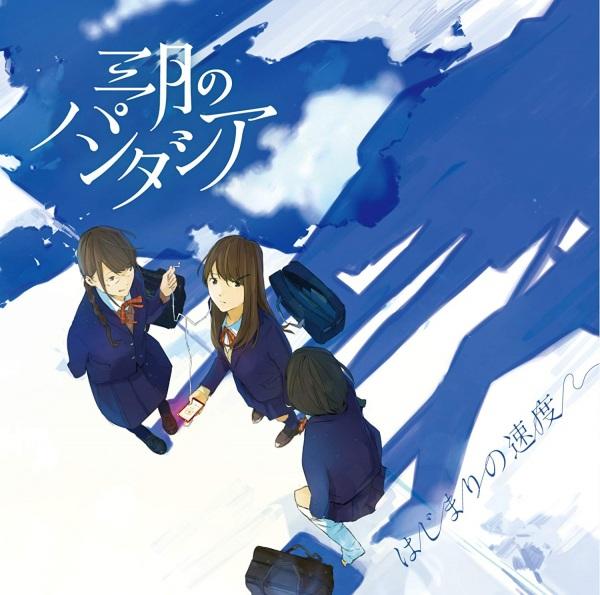
Yuuki Hayashi’s score supports the drama with a more polished emotional register than Trigger’s louder action titles, while Boom Boom Satellites’ opening and Sangatsu no Phantasia’s ending frame the series with two very different kinds of melancholy pop energy.
- 5
The 12-episode structure makes the series unusually concentrated for an ensemble drama; its reputation is tied as much to that compression as to its concept, with fans often praising the charged middle episodes while criticizing the speed of the closing stretch.
Fun Facts & Trivia
- Fun fact 1
- Kiznaiver aired as a finished 12-episode TV anime from April 9 to June 25, 2016, placing it in the same year Trigger was expanding its profile beyond the long shadow of Kill la Kill.
- Fun fact 2
- The opening theme was performed by Boom Boom Satellites, while the ending theme was performed by Sangatsu no Phantasia, giving the series a music identity split between electronic-rock intensity and softer youth-drama reflection.
- Fun fact 3
- Its staff lineup connects several distinct creative signatures: Hiroshi Kobayashi directed, Mari Okada handled series composition, Masanobu Nomura served as art director, and Toshiki Amata handled art design.
- Fun fact 4
- The show remains highly visible despite a moderate aggregate rating: on MyAnimeList it holds a 7.36 score from 383,276 votes and a popularity rank of #288, while AniList lists it at 72/100 with 4,128 favourites.
- Fun fact 5
- AniList’s highest tag for the series is Ensemble Cast at 89%, which is more revealing than its genre labels; the anime’s identity depends on distributing emotional pressure across a group rather than treating its sci-fi device as a solo protagonist gimmick.
Studios
- Trigger