Midori Days
美鳥の日々 (Midori no Hibi)
- Comedy
- Ecchi
- Romance
- Supernatural
- Delinquents
- School
- Episodes
- 13
- Duration
- 24 min per ep
- Aired
- Apr 4, 2004 to Jun 27, 2004
- Status
- Finished Airing
Synopsis
At Sakuradamon High, Seiji Sawamura is infamous as “The Mad Dog,” a delinquent whose terrifyingly strong right hand has become the stuff of school legend. That reputation keeps girls at a distance, and after being turned down twenty times in a row, Seiji bitterly jokes that he’ll just make it through high school with his right hand as his girlfriend.
The next morning, that joke takes a surreal turn when his right hand becomes a tiny girl named Midori Kasugano. Midori admits she’s been in love with Seiji for the past three years, leaving both of them scrambling to understand what happened and how to undo it. After a misunderstanding at the Kasugano home, they agree to hide their secret while searching for a way to set things right—an awkward arrangement that also gives Midori the closeness she’s long wanted.
Otaku Consensus
Midori Days’ best case is its compactness: Tsuneo Kobayashi’s 13-episode adaptation turns Kazurou Inoue’s outrageous shounen-romcom hook into brisk sketch comedy, with Mai Nakahara’s sweetness and Kishou Taniyama’s combustible delivery giving the romance more sincerity than the gag promises. Its reputation remains warmly split rather than classic-status: a 7.21 MAL score and 69/100 AniList score match the reviews, where viewers praise the cute energy, tight cast, and light finish, while detractors consistently point to forced drama and visibly cheap mid-series animation.
Why You Should Watch
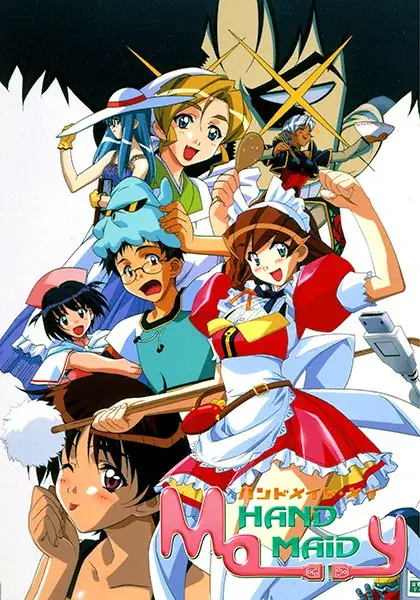
Watch Midori Days if you want early-2000s shounen romantic comedy at its strangest without the 26-episode sprawl, endless harem padding, or a dozen side couples fighting for oxygen. It scratches a neighboring itch to Please Teacher and Hand Maid May: a bizarre domestic setup, school comedy pressure, and ecchi awkwardness treated as a vehicle for affection rather than just escalation. The appeal is not polish; it is the speed and confidence of a 13-episode oddity that knows exactly how much cast it needs. Viewers who like Toradora-style hot-headed romantic friction may enjoy Seiji’s delinquent energy, but this is sillier, shorter, and more surreal. Go in for a fever-dream romcom with a surprisingly earnest center, not for sakuga consistency or subtle melodrama.
Key Characters
- MMidori Kasugano(VA: Mai Nakahara)
Midori is remembered by fans as the emotional counterweight to the show’s lewdest jokes, with Mai Nakahara playing her as openly affectionate rather than merely cutesy.
- SSeiji Sawamura(VA: Kishou Taniyama)
Seiji turns the delinquent-romcom archetype into a loud, embarrassed comic engine, and Kishou Taniyama’s hot-blooded delivery is a major reason the absurd setup keeps moving.
What Makes It Stand Out
- 1
The series is a complete 13-episode Studio Pierrot TV adaptation that aired from April 4 to June 27, 2004, giving it the compact rhythm of a single-cour early-2000s romantic comedy rather than a long-running school series.
- 2
Director Tsuneo Kobayashi and literary arts credit Shinya Kawabata keep the show structured around short bursts of surreal comedy and romantic tension, a format that reviewers often find fun even when they criticize the drama.
- 3
Its reception profile is unusually precise for a cult romcom: MAL lists it at 7.21 from 95,286 votes with popularity rank #1515, while AniList gives it 69/100 and 430 favourites, placing it firmly in the “memorable oddity” zone rather than consensus classic territory.
- 4
The AniList tag spread captures its tonal balancing act: Surreal Comedy at 82%, Shounen and School at 80%, Delinquents at 65%, and Nudity at 55%, meaning the show’s identity is not just romance but specifically a school delinquent comedy with TV-ecchi edges.
- 5
Critical complaints tend to cluster around production limits rather than the core idea: user reviews call out weak or inconsistent animation in the middle episodes, while DVD-era coverage noted that the home-video presentation itself was clean, sharp, and free of compression artifacts.
Fun Facts & Trivia
- Fun fact 1
- Midori Days is based on original creator Kazurou Inoue’s work and is also known by its Japanese title, Midori no Hibi.
- Fun fact 2
- The production’s visual pipeline included Yuuko Kusumoto on character design, Yasutada Katou as art director, Tokumitsu Kobayashi and Haruo Miyagawa on art design, and Yuuko Satou on color design.
- Fun fact 3
- Atsuho Matsumoto handled photography and Seiji Morita handled editing, two roles especially relevant to how a low-episode TV comedy controls timing, reaction shots, and visual clarity.
- Fun fact 4
- Nefarious Reviews watched both the Japanese and English versions and specifically praised both voice tracks for bringing “cute energy” and hot-headedness to the material.
- Fun fact 5
- The show’s fan discourse remains polarized in a distinctive way: some reviews frame it as a bizarrely sincere romance, while harsher viewers reduce it to its masturbation-joke reputation and criticize the art as cheap.
Studios
- Studio Pierrot