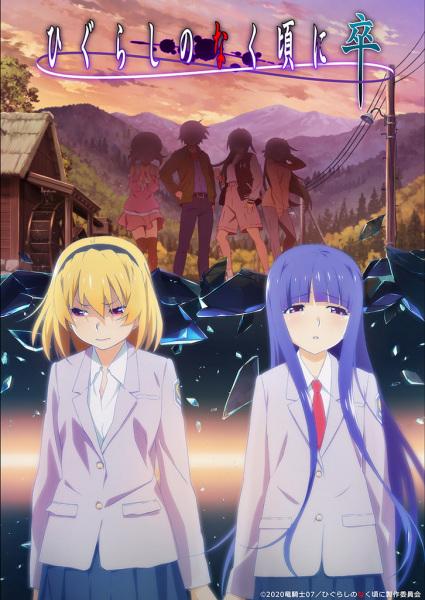
Higurashi: When They Cry – Gou
ひぐらしのなく頃に業 (Higurashi no Naku Koro ni Gou)
- Horror
- Mystery
- Suspense
- Gore
- Psychological
- Episodes
- 24
- Duration
- 23 min per ep
- Aired
- Oct 1, 2020 to Mar 19, 2021
- Status
- Finished Airing
Synopsis
In June 1983, Rika Furude and her close-knit circle in the secluded mountain village of Hinamizawa welcome a new classmate, Keiichi Maebara—the only boy among them. Day-to-day life seems easygoing as they spend their afternoons playing games and enjoying their time together, but Keiichi can’t shake the feeling that something is off. Subtle shifts in his friends’ behavior hint at secrets they refuse to share, and the town’s pleasant surface begins to fracture.
From afar, someone observes the mounting unease with the memory of similar tales repeating again and again. Determined to set things right, they try to mend these fractured outcomes—only to find that changing circumstances bring a chilling uncertainty. With key details no longer following a familiar pattern, even foreknowledge can’t guarantee a way to avert the tragedy closing in.
Otaku Consensus
Higurashi: When They Cry – Gou is best received when treated as a risky sequel to the 2006/Kai continuity rather than a clean remake: Passione’s polished horror staging, Keiichirou Kawaguchi’s controlled escalation, and the achronological mystery structure give longtime fans plenty to dissect. The divided reception comes from the same choice; viewers who wanted a definitive reset often found Gou caught between revisiting familiar material and expanding the lore, with some criticism aimed at its cleaner visual style losing the warped ugliness that made Studio Deen’s version feel so diseased.
Why You Should Watch
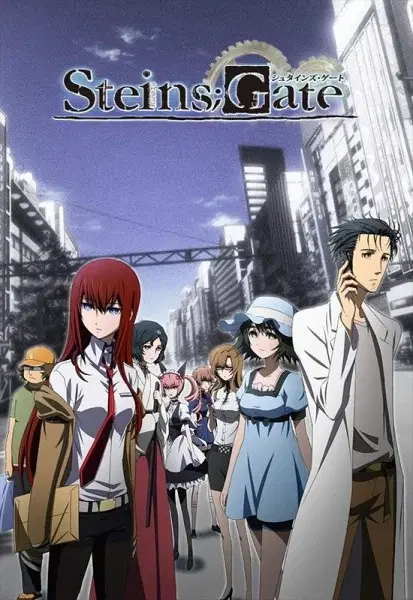
Watch Gou if you want psychological horror that weaponizes familiarity: the series is built for viewers who know Higurashi’s old rhythms and enjoy noticing when a scene is one degree wrong. It scratches the same itch as Steins;Gate’s loop anxiety and Madoka Magica’s cute-surface cruelty, but with more rural paranoia, splatter, and character-based dread. Passione’s glossy designs make the violence feel less grimy than the 2006 anime, yet that smoothness creates its own unease when club comedy snaps into denpa panic. This is not the best entry point for newcomers; it is for fans who want a contentious, lore-conscious sequel that turns franchise memory into part of the horror.
Key Characters
- RRika Furude(VA: Yukari Tamura)
Rika remains the franchise’s most unnerving contrast: a shrine maiden with a childlike public face and the weary gravity that makes every altered detail feel dangerous.
- SSatoko Houjou(VA: Mika Kanai)
Satoko’s prankster energy gives Gou some of its sharpest tonal whiplash, because her childish bravado sits close to the series’ most painful emotional pressure points.
- KKeiichi Maebara(VA: Souichirou Hoshi)
Keiichi works as the audience’s social barometer, turning ordinary club banter into a test of whether Hinamizawa is welcoming him or quietly closing around him.
- RRena Ryuuguu(VA: Mai Nakahara)
Rena is the character fans watch for micro-shifts, since her adorable enthusiasm and sudden intensity can make a harmless line feel like a threat.
What Makes It Stand Out
- 1
Studio Passione replaces Studio Deen for this 2020 entry, giving Gou cleaner, shinier character art and smoother gore staging than the rougher 2006 television production. That upgrade is also one of the show’s major fault lines, since several critics felt the old model inconsistency contributed to Higurashi’s distorted horror texture.
- 2
Gou uses an achronological, repetition-based structure rather than a conventional mystery timeline, a choice reflected in its high AniList tags for Achronological Order, Tragedy, Denpa, and Gore. The appeal is not just learning what happened, but tracking how familiar setups mutate.
- 3
The production positions itself as a continuation for existing fans, not a simple remake, which became one of the loudest fan warnings around the series. That framing changes the viewing contract: prior knowledge is not optional context, it is part of how Gou creates suspense.
- 4
The horror leans heavily into psychological destabilization before erupting into over-the-top deaths, a combination noted by both positive and negative reviewers. Gou’s best scenes often depend on the delay between a normal club interaction and the moment the viewer realizes the emotional temperature has shifted.
- 5
Rika and Satoko function as the central emotional axis of the season, giving the sequel a more specific character focus than a pure anthology of village tragedies. That emphasis is a major reason Gou/Sotsu became so polarizing among viewers invested in Higurashi Kai as a completed ending.
Fun Facts & Trivia
- Fun fact 1
- Ryukishi07, the original creator of Higurashi, is credited on Gou, while the TV production is handled by Passione with Keiichirou Kawaguchi directing and Naoki Hayashi on series composition.
- Fun fact 2
- Akio Watanabe served as character designer for Gou, a notable visual shift for viewers familiar with the older Studio Deen adaptation’s rougher, more irregular faces.
- Fun fact 3
- The show aired for 24 episodes from October 1, 2020 to March 19, 2021, making it a full two-cour return rather than a short anniversary project.
- Fun fact 4
- Gou’s reception numbers reflect its divisive status: it holds a 7.21 MAL score from 103,692 votes, while AniList lists it at 69/100 with 1,330 favourites.
- Fun fact 5
- The production credits list five prop designers: Kenta Kyousu, Hiroyuki Mano, Guy Nakahira, Tatsuya Fukushima, and Kakeru Hirasawa, a detail that fits a series where everyday objects often become part of the tension.
Studios
- Passione