To Your Eternity
不滅のあなたへ (Fumetsu no Anata e)
- Adventure
- Drama
- Supernatural
- Psychological
- Episodes
- 20
- Duration
- 25 min per ep
- Aired
- Apr 12, 2021 to Aug 30, 2021
- Status
- Finished Airing
Synopsis
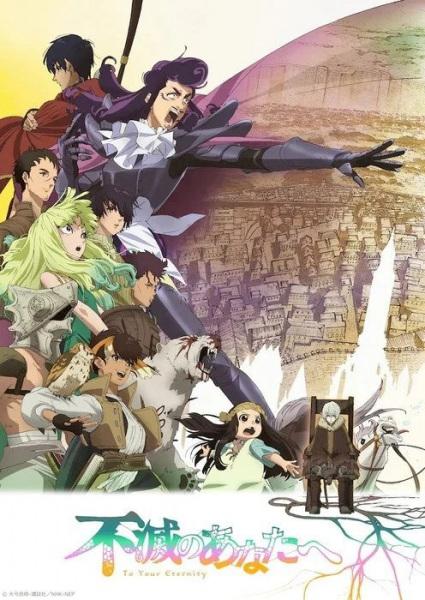
An enigmatic orb known only as “It” is sent to Earth to be observed from afar. Able to assume the forms of things it encounters, it begins as an unfeeling rock, then becomes moss as the world around it changes. Its stillness ends on a snowy day when a dying wolf passes by—after taking the animal’s shape, It awakens to consciousness and starts moving forward without knowing where it’s meant to go.
In the wilderness, It meets the wolf’s master: a solitary boy who has been left behind, waiting for his tribe to return from a lush southern paradise said to be rich with fish and fruit. Clinging to the hope of reunion, the boy chooses to leave his home and follow the trail his people once took, bringing It along as his only companion. But with his body already badly wounded and no sign of those he’s searching for, the journey quickly turns uncertain.
To Your Eternity follows an immortal being as it learns what it means to live by crossing paths with many people, in many places, over the passage of time.
Otaku Consensus
Critics and viewers largely agree that Brain's Base turned Yoshitoki Ooima's manga into a bruising prestige shounen: Masahiko Murata's restrained direction and Shinzou Fujita's arc-by-arc composition make the early wilderness material and later ensemble chapters land as moral tests rather than standard adventure beats. Ryou Kawasaki's score and Hikaru Utada's opening strengthen its melancholy study of identity, while the most persistent criticism is that the series can feel unevenly paced and overly invested in temporary side characters at the expense of forward momentum.
Why You Should Watch
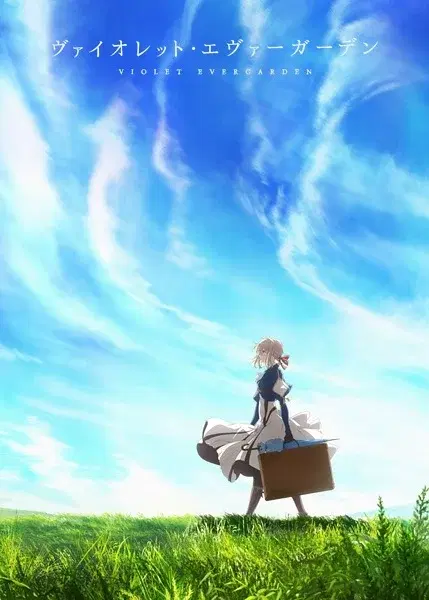
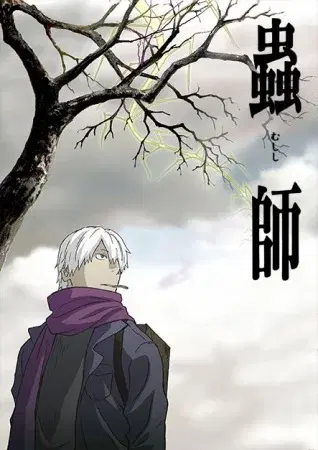
Watch To Your Eternity if you want philosophical fantasy without tournament logic, power scaling, or easy emotional catharsis. It scratches the same itch as Mushishi in its patient travel structure and Violet Evergarden in its fascination with learning emotion through encounters, but it is harsher: attachment is treated as education, not comfort. The appeal is not mystery-box lore; it is watching a nonhuman lead absorb language, grief, morality, and bodily experience through an ensemble that keeps changing around him. Viewers who like shounen frameworks but want tragedy, rural settings, body horror, and moral coming-of-age material will find it unusually dense for a 20-episode TV season.
Key Characters
- FFushi
Fushi is compelling because his character development is literalized as accumulation: identity, memory, pain, and affection all become things he has to learn rather than traits he already owns.
- TThe Beholder
The Beholder gives the series its cold philosophical edge, functioning less like a mentor than a distant observer whose presence keeps the story asking whether growth can be measured without compassion.
What Makes It Stand Out
- 1
Brain's Base produced the 20-episode first season, giving the adaptation enough room for a travel-and-time-skip structure rather than compressing it into a single destination-driven quest.
- 2
The series' tag profile is unusually severe for a shounen-labeled work: AniList rates Tragedy at 92%, Philosophy at 78%, Body Horror at 68%, and Gore at 58%, which accurately signals its emotional and physical harshness.
- 3
Masahiko Murata directs from scripts organized by Shinzou Fujita, and the result is an arc-based rhythm where each location functions like a self-contained ethical experiment instead of a simple stop on a map.
- 4
The music package is unusually high-profile: Ryou Kawasaki scores the series, Hikaru Utada performs the opening theme, and Masashi Hamauzu handles composition and arrangement for the ending theme.
- 5
Key animator Takahiro Chiba is credited on episodes 5, 12, 16, and 20, placing notable animation work at multiple structural turning points across the season rather than only at the premiere or finale.
Fun Facts & Trivia
- Fun fact 1
- The original creator is Yoshitoki Ooima, and this anime adapts a work that sits far from a conventional battle-shounen identity despite AniList also tagging it as Shounen at 63%.
- Fun fact 2
- Season 1 aired from April 12 to August 30, 2021, finishing as a 20-episode run rather than the more common 12- or 13-episode seasonal format.
- Fun fact 3
- Its reception is strong across major anime databases: the provided data lists a MyAnimeList score of 8.35 from 429,720 votes, a MAL popularity rank of #192, and 10,466 AniList favourites.
- Fun fact 4
- Web reviews repeatedly single out the story and character development as the main draw, while one common dissenting view is that the concept is stronger than the delivery because of the show's heavy focus on side characters.
- Fun fact 5
- The opening theme performance by Hikaru Utada is a major production flex for a TV anime, while the ending's Masashi Hamauzu credit connects the series to a composer known for emotionally textured, orchestral game and anime music work.
Studios
- Brain's Base