My Neighbors the Yamadas
ホーホケキョ となりの山田くん (Tonari no Yamada-kun)
- Award Winning
- Comedy
- Adult Cast
- Childcare
- Gag Humor
- Iyashikei
- Episodes
- 1
- Duration
- 1 hr 43 min
- Aired
- Jul 17, 1999
- Status
- Finished Airing
Synopsis
*My Neighbors the Yamadas* follows the everyday ups and downs of the Yamada household, where small arguments over errands play out under the constant hum of the television and daily life rarely goes exactly as planned. Their routines and misadventures might draw a few curious looks, but they’re the kind of moments any family could recognize.
Beneath the bickering and blunt personalities is a steady affection that keeps them together, finding reasons to laugh and carry on through life’s ordinary stretches. The result is a close, comedic snapshot of a typical Japanese family and the quiet warmth in their day-to-day chaos.
Otaku Consensus
My Neighbors the Yamadas is a deliberately minor-key Studio Ghibli outlier, and its best qualities come from Isao Takahata treating Hisaichi Ishii’s comic sensibility as a succession of sharp domestic sketches rather than forcing it into a conventional movie shape. Critics and fans most often praise the watercolor-like visual approach, ensemble timing, and bite-size comedy, while the consistent complaint is that the title-card skit structure can feel thin or underpowered at feature length.
Why You Should Watch
Watch this if you want Ghibli’s humanism without fantasy quests, villains, or tear-jerking escalation. It scratches the observational itch of Sazae-san and the gentler side of slice-of-life comedy, but filtered through Isao Takahata’s experimental eye: chibi figures, blank space, comic-strip pauses, and abrupt tonal detours that make ordinary behavior feel theatrical. Viewers who like anime as a rhythm piece, where timing and expression matter more than narrative momentum, will get the most from it. It is also a strong pick for anyone curious about Ghibli’s least house-style-looking theatrical work: more sketchbook than storybook, more family gag page than prestige drama. If your favorite anime comfort food is small, specific, and unforced, this is the Ghibli entry that refuses to perform grandeur.
Key Characters
- MMatsuko Yamada(VA: Yukiji Asaoka)
Matsuko’s blunt, easily flustered presence gives the film much of its domestic comic friction, with Yukiji Asaoka leaning into a performance that feels more lived-in than polished.
- TTakashi Yamada(VA: Tooru Masuoka)
Takashi is funny because his small patriarchal certainties keep being punctured by the film’s deadpan timing and refusal to treat him as a sitcom hero.
- NNonoko Yamada(VA: Naomi Uno)
Nonoko gives the ensemble a child’s-eye counterweight, often making adult behavior look stranger simply by existing beside it.
- SShige Yamano(VA: Masako Araki)
Shige stands out as the elderly wildcard of the household, adding a sharper generational edge to comedy that could otherwise feel too soft.
What Makes It Stand Out
- 1
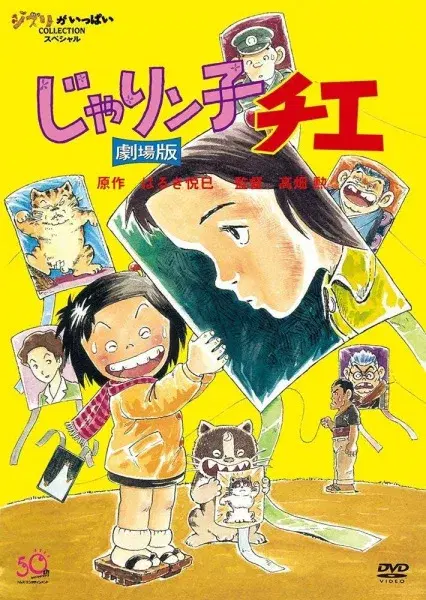
Studio Ghibli and Isao Takahata reject the studio’s familiar lush fantasy look in favor of a sparse watercolor-and-ink style built around chibi designs, open white space, and comic-strip readability.
- 2
The film is structured as an achronological chain of short segments, with title-card breaks that make it feel closer to an animated collection of gags than a traditional theatrical narrative.
- 3
AniList’s high tags for Episodic, Ensemble Cast, Family Life, Chibi, Achronological Order, Surreal Comedy, and Rotoscoping accurately capture how unusual its form is inside the Ghibli catalog.
- 4
The comedy relies on adult-cast domestic timing as much as children’s perspective, which separates it from the adolescent adventure and coming-of-age modes many international viewers associate with Ghibli.
- 5
Its reception is unusually split for a Ghibli film: viewers who watch it in bite-size portions often praise its warmth, while detractors frequently cite the same structure as a reason it feels inert as a long movie.
Fun Facts & Trivia
- Fun fact 1
- My Neighbors the Yamadas opened in Japan on July 17, 1999 and is cataloged as a single finished film, even though its internal design behaves like a run of compact episodes.
- Fun fact 2
- Hisaichi Ishii is credited as the original creator, and the adaptation preserves a gag-strip sensibility instead of reshaping the material into a conventional three-act Ghibli journey.
- Fun fact 3
- The production credits list three assistant directors: Kenji Imura, Kazuyoshi Tanaka, and Tamaki Kojou, pointing to a sizable coordination effort behind a film that intentionally looks loose and hand-drawn.
- Fun fact 4
- Its visual identity was handled by multiple specialized credits, including art directors Naoya Tanaka and Youji Takeshige, assistant art director Noboru Yoshida, photography director Atsushi Okui, and title logo designer Kaoru Mano.
- Fun fact 5
- Database reception reflects its cult-but-divisive position: it holds a 7.09 MAL score from 29,761 votes, an AniList score of 69/100, and 217 AniList favourites, placing it well below Ghibli’s most broadly celebrated titles in popularity.
Studios
- Studio Ghibli