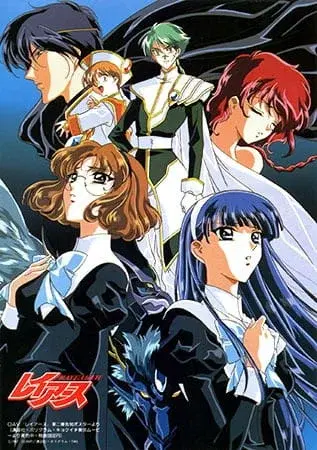
Revolutionary Girl Utena: The Adolescence of Utena
少女革命ウテナ アドゥレセンス黙示録 (Shoujo Kakumei Utena: Adolescence Mokushiroku)
- Avant Garde
- Drama
- Girls Love
- Mahou Shoujo
- School
- Episodes
- 1
- Duration
- 1 hr 25 min
- Aired
- Aug 14, 1999
- Status
- Finished Airing
Synopsis
At Ohtori Academy, the arrival of transfer student Utena Tenjou immediately draws attention. Yet Utena’s focus is on Touga Kiryuu, a familiar face from her childhood. Touga carries unsettling knowledge about the Mark of the Rose—distinctive rings worn by those drawn into a secretive tradition of duels.
These contests revolve around Himemiya Anthy, the Rose Bride, who is claimed by the victor. Rumor holds that anyone who triumphs in every duel will be granted the power to revolutionize the world. Pulled into this ritual, Utena finds that her tangled past with Touga threatens to upend what she believes she understands, as appearances at Ohtori prove increasingly deceptive in this reimagining of the original story.
Otaku Consensus
Adolescence of Utena is strongest when treated as Kunihiko Ikuhara’s feature-film remix of Revolutionary Girl Utena, not as a conventional sequel: its J.C.Staff animation, Shinya Hasegawa redesigns, Shichirou Kobayashi art direction, and accelerated editing turn the material into a lush, confrontational art object. Fans and critics repeatedly praise its rewatch value, queer emotional charge, and dreamlike momentum, while the main complaint is genuine: its symbolism-first storytelling can feel bewildering, abrupt, or less emotionally patient than the TV series.
Why You Should Watch
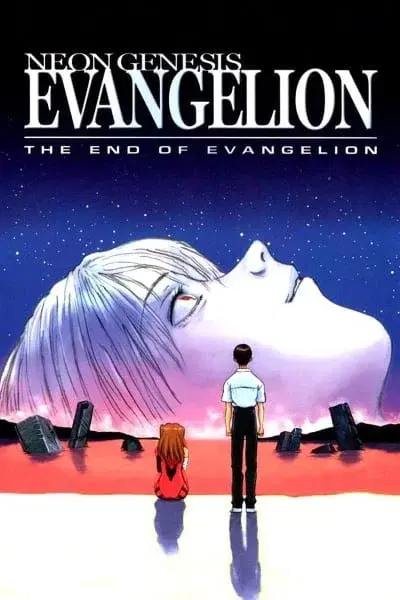
Watch this if you want an anime film that behaves like a thesis, a music video, and a queer coming-of-age fever dream at once, without pausing to explain itself. It scratches a similar itch to End of Evangelion’s feature-length self-reinvention: familiar material is not “adapted” so much as detonated, compressed, and rebuilt around emotional logic. Viewers drawn to avant-garde school settings, yuri themes, sword imagery, and visual metaphor will find far more to parse than in a standard recap movie. It is especially rewarding for fans who enjoy rewatches, frame-level interpretation, and anime that lets production design carry meaning. If you need linear answers, it will frustrate you; if you want cinema that feels like escaping a locked mythology, it lands hard.
Key Characters
- AAnthy Himemiya(VA: Yuriko Fuchizaki)
Anthy is the film’s most enigmatic presence, with fans often reading her silence, composure, and shifting intimacy as the emotional key to its queer liberation imagery.
- UUtena Tenjou(VA: Tomoko Kawakami)
Utena’s appeal here comes from how the movie sharpens her tomboy prince persona into a more volatile image of adolescence, desire, and self-invention.
What Makes It Stand Out
- 1
The film is a single 1999 J.C.Staff feature rather than a TV continuation, and its reputation rests on how aggressively it compresses and reconfigures Revolutionary Girl Utena into a standalone cinematic statement.
- 2
Kunihiko Ikuhara directs from an original plan credited to both Ikuhara and Chiho Saitou, giving the movie the feel of an official alternate interpretation rather than a side story or disposable franchise add-on.
- 3
Shinya Hasegawa’s character designs and Shichirou Kobayashi’s art direction are central to the film’s appeal; user reviews specifically single out the redesigned cast, the academy’s look, and the unusually fluid visual presentation.
- 4
Hiroshi Nagahama is credited with mechanical design, a production detail that matters because the film’s surreal mechanical and car imagery is prominent enough for AniList to tag Cars at 74%.
- 5
Its audience profile is unusually specific: AniList tags Coming of Age at 95%, Yuri at 93%, LGBTQ+ Themes at 92%, and Philosophy at 85%, placing identity, interpretation, and transformation ahead of ordinary school-fantasy pleasures.
Fun Facts & Trivia
- Fun fact 1
- It aired in Japan on August 14, 1999 as a one-episode finished film, and its database footprint reflects cult status more than mainstream reach: MAL lists it at 7.71 from 30,990 votes, with popularity at #3233.
- Fun fact 2
- The original creator credit goes to Be-Papas, while the original plan is credited to both Chiho Saitou and Kunihiko Ikuhara, preserving the collaborative identity behind the Utena project.
- Fun fact 3
- The production credits include Mayumi Tanahashi for color design, Toyomitsu Nakajou for photography, and Shigeru Nishiyama for editing, three roles that are especially visible in a film praised for its pace, color, and dreamlike flow.
- Fun fact 4
- Anime-Planet and IMDb user commentary both emphasize that the movie gains value through repeat viewings, a reception pattern that matches its dense symbolism and non-literal structure.
- Fun fact 5
- AniList records 1,240 favourites and a 79/100 score, slightly above its MAL average, suggesting a smaller but highly invested audience that responds strongly to its avant-garde and LGBTQ+ elements.
Studios
- J.C.Staff