Neon Genesis Evangelion: The End of Evangelion
新世紀エヴァンゲリオン劇場版 Air / まごころを, 君に (Shinseiki Evangelion Movie: Air/Magokoro wo, Kimi ni)
- Avant Garde
- Drama
- Sci-Fi
- Suspense
- Mecha
- Psychological
- Episodes
- 1
- Duration
- 1 hr 26 min
- Aired
- Jul 19, 1997
- Status
- Finished Airing
Synopsis
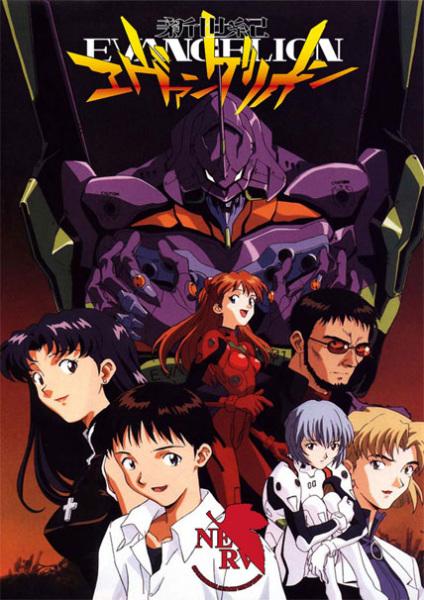
Shinji Ikari collapses into a near-catatonic state after the loss of someone close to him, leaving him unable to pilot Evangelion Unit-01. With Shinji out of commission, NERV commander Gendou Ikari moves to set his own endgame in motion—only to find himself in a race against the secretive SEELE, each pushing a different vision of humanity’s final transformation. SEELE seeks to forge a godlike entity by merging their souls with an Evangelion, while Gendou aims to return all people to a single primordial existence in hopes of reuniting with his late wife, Yui.
SEELE escalates the conflict into open war, launching a brutal assault on NERV headquarters that turns the facility into a battlefield. As personnel are slaughtered and defenses collapse, Asuka Langley Souryuu takes Evangelion Unit-02 into a desperate last stand against overwhelming firepower. Deep inside the ruins, Shinji retreats into hiding as the world outside unravels—until Misato Katsuragi fights to reach him, knowing the fate of everything may still hinge on one broken boy.
Otaku Consensus
The End of Evangelion stands as the franchise’s most forceful finale because Hideaki Anno and Kazuya Tsurumaki convert unresolved television-era abstraction into a theatrical work of violent pacing, extreme psychological intimacy, and operatic visual design. Critics and fans consistently single out the Gainax/Production I.G animation, Bach-inflected music, and dense Judeo-Christian apocalyptic symbolism as essential to its impact; the lasting complaint is that its symbolism, psychosexual imagery, and narrative opacity can feel punishing rather than clarifying.
Why You Should Watch
Watch The End of Evangelion if you want mecha anime that treats the giant robot not as power fantasy, but as a pressure chamber for shame, desire, faith, and self-annihilation. It scratches the same itch as Serial Experiments Lain’s identity dread and Akira’s body-horror catastrophe, but with the formal aggression of a super-robot apocalypse staged by Gainax and Production I.G. This is the version of Evangelion for viewers who want the TV ending’s interior breakdown translated into cinema: orchestral terror, abrupt tonal ruptures, religious iconography used as emotional architecture, and animation that makes combat feel less like spectacle than psychic collapse. If you want clean exposition or heroic release, look elsewhere; if you want a landmark that makes discomfort part of the text, this is the franchise’s black box.
Key Characters
- SShinji Ikari(VA: Megumi Ogata)
Shinji remains one of anime’s defining anti-power-fantasy protagonists, discussed by fans as a raw study of shame, dependency, and emotional paralysis rather than wish-fulfillment heroism.
- AAsuka Langley Souryuu(VA: Yuko Miyamura)
Asuka’s performance-driven confidence gives the film one of its most volatile emotional centers, making her both a fan-favorite pilot and a brutal portrait of validation hunger.
- MMisato Katsuragi(VA: Kotono Mitsuishi)
Misato is compelling because her tactical competence and private damage coexist, turning the mentor role into something messier, older, and more wounded.
- GGendou Ikari(VA: Fumihiko Tachiki)
Gendou’s cold authority is memorable because it reads simultaneously as institutional control, emotional cowardice, and grief calcified into ideology.
What Makes It Stand Out
- 1
The film is built as two theatrical “episodes,” “Air” and “Magokoro wo, Kimi ni,” positioning it as a cinematic counterpart to the television series’ final two episodes rather than a simple recap or side story.
- 2
Gainax and Production I.G are both credited as studios, and the result has a sharper theatrical density than the TV production, with large-scale mechanical animation, body-horror imagery, and abrupt experimental inserts sharing the same visual language.
- 3
Hideaki Anno serves as original creator, chief director, director, and mechanical designer, giving the film an unusually concentrated authorial fingerprint across story conception, staging, and the iconography of the Evangelions themselves.
- 4
The soundtrack is frequently singled out in reviews for its use of classical music, including Bach, which gives the apocalypse material a liturgical quality rather than a conventional action-film rhythm.
- 5
Its genre tags point to why the film still feels difficult to categorize: it is simultaneously mecha, psychological drama, avant-garde cinema, conspiracy thriller, cosmic horror, and psychosexual coming-of-age text.
Fun Facts & Trivia
- Fun fact 1
- The film premiered in Japan on July 19, 1997, after the original TV ending had already become one of anime’s most debated finales.
- Fun fact 2
- Kazuya Tsurumaki is credited as director alongside Hideaki Anno, while Anno is also listed as chief director, reflecting the film’s combination of collaborative production and unusually strong creator control.
- Fun fact 3
- Shinji Higuchi, credited here as assistant director, is a key figure associated with tokusatsu and large-scale effects sensibilities, which fits the film’s emphasis on catastrophic scale and staged destruction.
- Fun fact 4
- Character design is credited to both Yoshiyuki Sadamoto and Takeshi Honda, while mechanical design is credited to Ikuto Yamashita and Hideaki Anno, separating the film’s human expressiveness from its distinctive biomechanical machinery.
- Fun fact 5
- Its database footprint remains unusually strong for a 1997 theatrical anime: the research data lists an 8.57 MAL score from over 700,000 votes, MAL rank #126, and more than 19,000 AniList favourites.
Studios
- Gainax
- Production I.G