Beyblade: Metal Fusion
メタルファイト ベイブレード (Metal Fight Beyblade)
- Adventure
- Comedy
- Sports
- Combat Sports
- High Stakes Game
- Organized Crime
- Team Sports
- Episodes
- 51
- Duration
- 25 min per ep
- Aired
- Apr 5, 2009 to Mar 28, 2010
- Status
- Finished Airing
Synopsis
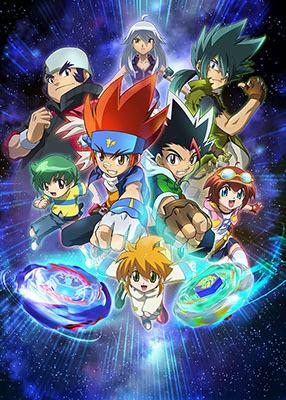
Beyblade: Metal Fusion introduces a fresh lineup of bladers as the struggle between good and evil continues. At the center is Ginga, whose passion for Beyblade draws him into a high-stakes conflict alongside a close-knit group of friends.
Their greatest threat is the Dark Nebula, a dangerous organization determined to seize control and spread its influence. To achieve that goal, they set their sights on taking down Ginga—the one blader strong enough to stand in their way—setting off a rivalry where loyalties shift and former opponents may become unlikely allies as Ginga fights to protect his world and the honor of Beyblade.
Otaku Consensus
Metal Fusion is strongest as a tightly paced, kid-targeted proxy-battle series: Kunihisa Sugishima’s direction and Tatsunoko Production’s hybrid TV approach keep the spinning-top matches legible, toy-forward, and easy to consume in short bursts. Its reception reflects that ceiling, with a 6.96 MAL score and 68/100 on AniList, because the same efficient formula becomes the chief complaint: reviewers repeatedly call the story thin and the battles monotonous once the simple good-versus-evil machinery settles in.
Why You Should Watch
Watch Beyblade: Metal Fusion if you want the frictionless pleasure of a collectible-game anime without deck rules, lore homework, or tournament spreadsheets. It scratches the same itch as Yu-Gi-Oh! Duel Monsters and early Pokémon: compact rival encounters, loud signature identities, and a rules-light power fantasy where the equipment is as marketable as the cast. The appeal is not narrative sophistication; it is the 51-episode rhythm of challenge, counter-style, and exaggerated impact, with CGI-assisted tops giving the battles a different texture from hand-drawn fistfights. Viewers who enjoy kids-anime sincerity, male-protagonist rivalry energy, and fantasy-leaning sports escalation will find an easy weekend binge here. Viewers allergic to toyetic storytelling should skip it, because the series never hides that its battles are the product.
Key Characters
- GGinga Hagane(VA: Aki Kanada)
Ginga is built as the pure shounen sports lead, and Aki Kanada’s energetic performance sells him less as a tactician than as the emotional engine of the series’ battle rhythm.
- RRyuuga(VA: Kenjirou Tsuda)
Ryuuga stands out because Kenjirou Tsuda’s deeper vocal register gives the toy-battle format a sharper, more intimidating edge than the show’s kid-friendly surface suggests.
- KKyouya Tategami(VA: Satoshi Hino)
Kyouya brings the rivalry appeal, defined by a harsher competitive presence that contrasts cleanly with Ginga’s more openhearted style.
- MMadoka Amano(VA: Kei Shindou)
Madoka functions as the technical brain of the main cast, giving the series a practical repair-and-analysis angle that keeps the battles from being only shouting and impact effects.
What Makes It Stand Out
- 1
Tatsunoko Production handled the full 51-episode run from April 5, 2009 to March 28, 2010, giving Metal Fusion the shape of a long-form weekly kids series rather than a compressed seasonal anime.
- 2
The AniList tag profile captures its specific flavor: Male Protagonist at 80%, Kids at 79%, Proxy Battle at 79%, Battle Royale at 60%, and CGI at 50%, which is a precise snapshot of how the show is experienced rather than just how it is advertised.
- 3
The core production lineup is unusually aligned with toy-battle clarity: Kunihisa Sugishima directed, Katsumi Hasegawa handled series composition, Yoshihiro Nagamori designed the characters, and Hideki Itou supplied the mechanical designs.
- 4
Its battles use CGI as part of the visual identity, not as an occasional novelty, which separates the spinning-top clashes from the hand-drawn combat language of most 2000s shounen action shows.
- 5
The series’ critical reputation is defined by its commercial honesty: reviewers who accept toy-centric kids anime often find it serviceable, while reviewers looking for narrative depth consistently point to repetitive matches and an uninspired storyline.
Fun Facts & Trivia
- Fun fact 1
- Efrat Ben Israel is credited for a Hebrew opening theme song performance, a notable localization-related credit in the staff data for a Japanese TV anime page.
- Fun fact 2
- Hideki Itou has two different production credits on the series: mechanical design and key animation for episode 45.
- Fun fact 3
- Junichi Kitamura is credited with key animation on episodes 4 and 42, giving the show identifiable animator credits at both an early and late point in its run.
- Fun fact 4
- The staff list includes Toshihito Naka as an episode director and Keiichirou Kawaguchi on storyboard duties, reflecting the rotating TV-anime production structure behind the weekly format.
- Fun fact 5
- Despite a mixed critical reputation, Metal Fusion has substantial database footprint: 68,356 MAL votes, MAL popularity rank #2327, and 527 AniList favourites.
Studios
- Tatsunoko Production