Saint Seiya: Knights of the Zodiac
聖闘士星矢(セイントセイヤ) (Saint Seiya)
- Action
- Adventure
- Fantasy
- Sci-Fi
- Mythology
- Episodes
- 114
- Duration
- 24 min per ep
- Aired
- Oct 11, 1986 to Apr 1, 1989
- Status
- Finished Airing
Synopsis
Since mythic times, warriors known as Saints have pledged themselves to Athena, goddess of wisdom and war. Drawing on the inner force called the Cosmos, they can battle without weapons, unleashing blows said to rend the sky and split the earth.
In the present day, a new generation rises. The hot-blooded Seiya fights through grueling trials to claim the Pegasus Sacred Armor, and after six years of relentless training, he earns victory—and the mantle of one of Athena’s Saints. With his place secured, Seiya and his fellow Saints are soon tested by looming dangers and formidable enemies, as their journey expands into ever-greater quests.
Otaku Consensus
Toei Animation’s 1986 Saint Seiya is the rare shounen whose excess is the point: the Morishita-era buildup and the Sanctuary stretch turn Masami Kurumada’s astronomy-and-Greek-myth toolkit into ritualized, image-driven battle opera, sharpened by Shingo Araki and Michi Himeno’s character designs. Its recurring weaknesses are real—long weekly-battle pacing, blunt scripting, and plot shortcuts are the complaints that follow the franchise into later Knights of the Zodiac adaptations—but the original remains beloved because its armor iconography, archetypal heroes, and mythic sincerity still feel larger than the screen.
Why You Should Watch
Watch Saint Seiya if you want battle shounen that plays like sacred pageantry rather than comedy-adventure: named attacks, constellation symbolism, armor transformations, brotherhood-through-pain, and fights staged as tests of will more than tactics. It scratches the same itch as Dragon Ball Z’s escalating duels and Sailor Moon’s transformation spectacle, but filters both through Greek divinity, astronomy, and 1980s Toei melodrama. The ideal viewer is someone who can accept older TV pacing in exchange for maximalist emotional payoff: characters shout their convictions, sacrifice is treated as a visual language, and every clash is framed like a myth being carved in real time. If modern remakes feel too streamlined or self-aware, the 1986 version preserves the franchise’s strange, earnest grandeur.
Key Characters
- SSeiya Pegasus(VA: Toru Furuya)
Seiya is remembered as a pure 1980s shounen engine: loud, stubborn, physically reckless, and built around the catharsis of standing back up when the fight should already be over.
- SShun Andromeda(VA: Yumi Touma)
Shun stands out because his gentle temperament complicates the series’ macho battle grammar, giving the ensemble a hero whose power does not erase his reluctance to hurt others.
- SShiryu Dragon(VA: Hirotaka Suzuoki)
Shiryu is the stoic martial-arts pillar of the group, the character fans associate with discipline, self-denial, and some of the franchise’s most severe tests of endurance.
- SSaori Kido(VA: Keiko Han)
Saori gives the series its divine and political gravity, shifting the cast’s battles from personal rivalry into loyalty, faith, and the burden of mythic authority.
What Makes It Stand Out
- 1
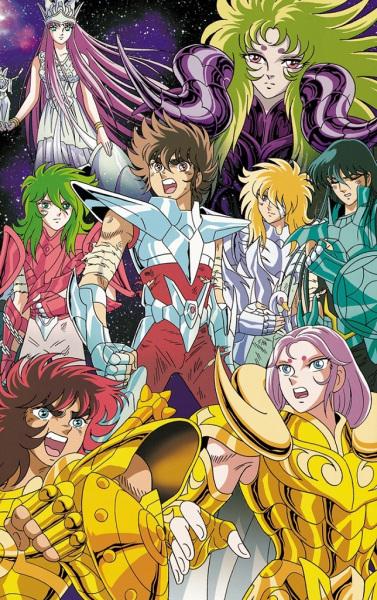
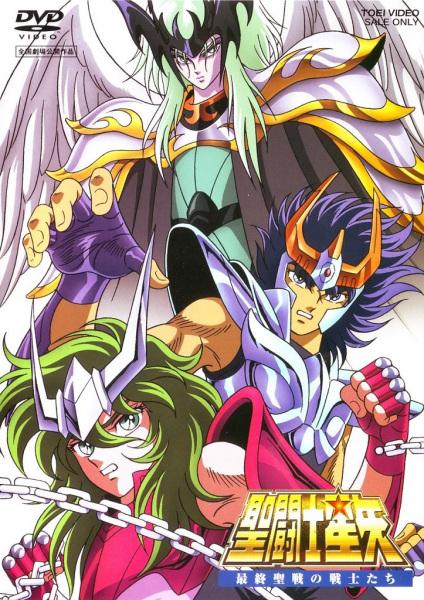
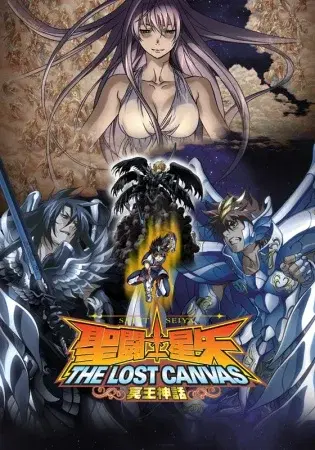
Shingo Araki and Michi Himeno’s character designs are central to the anime’s identity: sharp silhouettes, flowing hair, and ornate armor make the Saints instantly readable even before a fight begins.
- 2
The series uses astronomy as more than decoration; constellations organize identities, attack motifs, and the visual logic of its armor-based transformations, which is why AniList tags it strongly for Mythology, Gods, Astronomy, Super Power, and Henshin.
- 3
Its 114-episode run gives it a distinctly late-1980s weekly rhythm, with combat often structured around repeated escalation, emotional vows, and dramatic reversals rather than fast tactical resolution.
- 4
The anime’s production passed through multiple major creative hands: Kouzou Morishita directed episodes 1-47, Kazuhito Kikuchi is credited for episodes 74-114, and series composition is credited to both Takao Koyama and Yoshiyuki Suga.
- 5
The Asgard material is one of the TV anime’s notable franchise signatures because it was created for the anime rather than simply mirroring the manga’s forward motion, expanding the show’s mythological palette beyond its Greek foundation.
Fun Facts & Trivia
- Fun fact 1
- Saint Seiya aired on Japanese television from October 11, 1986 to April 1, 1989, finishing at 114 episodes under Toei Animation.
- Fun fact 2
- Masami Kurumada is credited as the original creator, while the anime’s polished visual reputation is closely tied to the Araki-Himeno design team rather than to the manga art alone.
- Fun fact 3
- The show’s database footprint reflects a durable cult classic rather than a niche curiosity: it holds a 7.77 MAL score from 109,368 votes, with AniList listing a 73/100 score and 1,488 favourites.
- Fun fact 4
- Fan reviews in the supplied data frame the series in unusually intense terms, calling it a childhood cornerstone and even “the apotheosis of anime Mythos,” which matches its reputation as a formative emotional anime for many international viewers.
- Fun fact 5
- Later English-branded Knights of the Zodiac projects drew criticism for weak scripts and adaptation choices, a contrast that has strengthened the 1986 anime’s status as the version fans most often defend.
Studios
- Toei Animation