Beyblade
爆転シュート ベイブレード (Bakuten Shoot Beyblade)
- Adventure
- Comedy
- Sports
- Super Power
- Episodes
- 51
- Duration
- 23 min per ep
- Aired
- Jan 8, 2001 to Dec 24, 2001
- Status
- Finished Airing
Synopsis
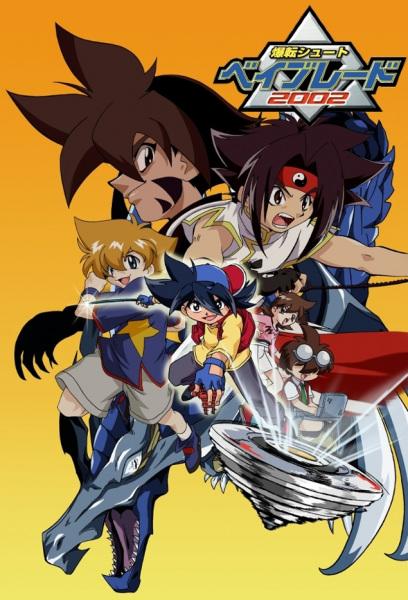
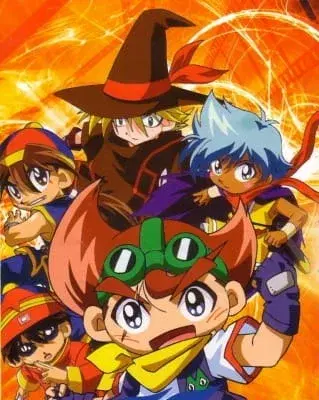
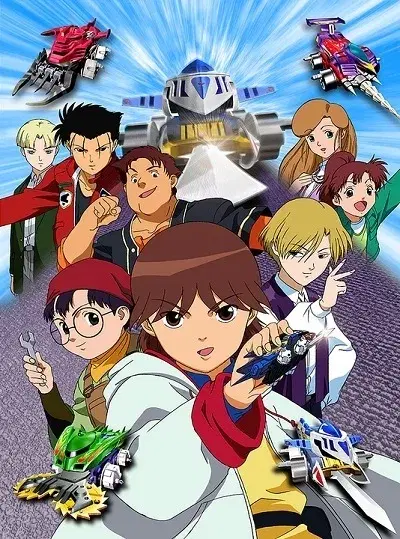
Thirteen-year-old Tyson Granger (Takao Kinomiya) teams up with Kai Hiwatari, Max Tate (Max Mizuhura), and Ray Kon (Rei Kon) as the Bladebreakers set their sights on becoming the world’s top Beybladers. Fueled by rivalry, friendship, and a love of the sport, the group throws themselves into battles that test both skill and resolve.
With guidance from their resident tech whiz Kenny (Kyouju) and the immense power of their BitBeasts, the team relies on their customized spinning tops—known as Blades—to push forward toward their shared ambition.
Otaku Consensus
The 2001 Bakuten Shoot Beyblade remains the franchise’s most warmly regarded TV season because Toshifumi Kawase’s direction gives a 51-episode toy-sports format brisk tournament pacing, clear rivalries, and a travel structure that keeps the arena battles from feeling boxed in. Its adaptation strength is making customized tops, BitBeasts, and team friction readable as sports drama rather than just merchandise choreography. The recurring criticism is also consistent: the match formula and early-2000s TV production limits can make the series feel mechanically repetitive when the character tension is not carrying an episode.
Why You Should Watch
If you want the tournament escalation of Yu-Gi-Oh! without rulebook monologues, or the creature-partner charge of Pokémon filtered through team sports, Beyblade is the leaner pick. Its appeal is in the ritual: customized tops, launch stances, arena geography, and BitBeast clashes that turn playground hardware into proxy combat. Madhouse’s 2001 production is not prestige spectacle, but it has the Saturday-morning velocity that keeps a 51-episode run from feeling static, helped by a globe-hopping framework that regularly changes the opposition and setting. The best viewer for it is someone who likes rivalry-driven kids’ anime, obvious win-loss stakes, and team chemistry more than airtight competitive mechanics.
Key Characters
- TTakao Kinomiya(VA: Motoko Kumai)
Takao is the emotional engine of the series, the kind of hot-blooded lead whose confidence works because the show lets his losses and clashes shape the team’s mood.
- KKai Hiwatari(VA: Urara Takano)
Kai is the cool, severe counterweight to Takao, and much of the first season’s edge comes from how little he needs to say to dominate a scene.
- RRei Kon(VA: Aya Hisakawa)
Rei gives the main cast a calmer, more disciplined presence, making him a fan-favorite contrast to the louder personalities around him.
- KKyouju(VA: Houko Kuwashima)
Kyouju turns the battles into something viewers can parse, acting as the team’s analyst and tech mind rather than just another competitor.
What Makes It Stand Out
- 1
Madhouse produced the series, and the show uses action-anime staging to sell a sport built around spinning tops: dramatic launches, impact cuts, and exaggerated BitBeast effects do much of the emotional heavy lifting.
- 2
The first season aired as a full 51-episode calendar-year run from January 8 to December 24, 2001, giving it enough room to function as both a tournament anime and a travel anime rather than a short promotional burst.
- 3
AniList’s tag profile captures the hybrid appeal unusually well: Kids at 95%, Super Power at 79%, Foreign and Travel at 79%, and Proxy Battle at 60%, which places it closer to supernatural competition anime than to conventional sports realism.
- 4
Yoshihisa Hirano handled the music, giving the series a more theatrical sports-adventure sound than many toy-driven contemporaries relied on.
- 5
Takahiro Yamada’s mechanical design credit matters here because the Beyblades themselves are not background props; their silhouettes, parts, and battle readability are central to how the show communicates tactics.
Fun Facts & Trivia
- Fun fact 1
- Kazuyuki Fudeyasu wrote multiple episodes across the season, including episodes 5, 8, 11, 14, 16, 20, 33, 40, and 45, making him one of the recurring script voices behind the first run.
- Fun fact 2
- Hidehito Ueda storyboarded episodes 4, 11, and 18, while episode 4 also lists Keiko Saito on key animation, making it a notable early production-credit crossover in the season.
- Fun fact 3
- The English dub was directed by John Stocker, while the Swedish localization credits in the available data include ADR engineer Johan Gren and ADR translator Frida Nilsson, reflecting how quickly the series was built for international circulation.
- Fun fact 4
- On database reception, the show sits in the nostalgia-heavy middle ground: MAL lists it at 6.81 from 76,667 votes, while AniList records a 65/100 score and 440 favourites.
- Fun fact 5
- AniList also assigns fringe 10% tags such as American Football, Baseball, Basketball, and Amnesia, signaling that the season contains brief genre detours beyond its core spinning-top competition format.
Studios
- Madhouse