Saint Seiya: The Lost Canvas
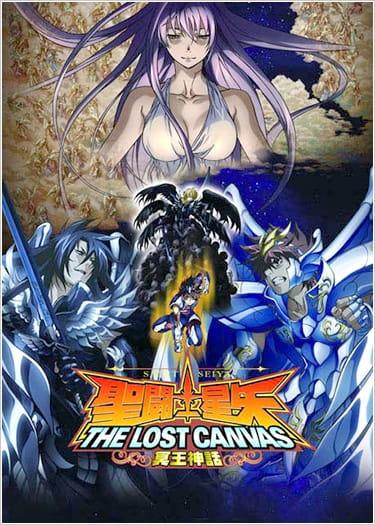
聖闘士星矢 THE LOST CANVAS 冥王神話 (Saint Seiya: The Lost Canvas - Meiou Shinwa)
- Action
- Adventure
- Fantasy
- Historical
- Mythology
- Episodes
- 13
- Duration
- 24 min per ep
- Aired
- Jun 24, 2009 to Apr 21, 2010
- Status
- Finished Airing
Synopsis
Set in 18th-century Europe—243 years before *Saint Seiya*—*Saint Seiya: The Lost Canvas* revisits the recurring Holy War in which Athena and Hades clash for the fate of Earth, a conflict said to return across the centuries. At the heart of the story are three children who once shared a peaceful upbringing: the hotheaded yet principled Tenma, the gentle painter Alone, and Sasha.
Their paths diverge as Tenma leaves for Sanctuary to train as a Saint and later reunites with Sasha, only to learn she is Athena’s reincarnation. Meanwhile, Alone is chosen as the vessel for Hades, turning a kind friend into the enemy king. As Tenma rises as the Pegasus Saint, the three are drawn into a fated confrontation that serves as a prologue to the original saga.
Otaku Consensus
Saint Seiya: The Lost Canvas earns its reputation as the franchise’s strongest modern-era detour by pairing Osamu Nabeshima’s brisk direction with TMS Entertainment’s cleaner, faster action language and a more emotionally legible take on Athena, Hades, and Pegasus mythology. Critics and fans consistently praise its 2009 production polish, dramatic betrayals, and upgraded character focus, while the most persistent knocks are its non-canonical status and the familiar Saint Seiya rhythm of backstory-driven duels escalating into inspirational reversals.
Why You Should Watch
Watch The Lost Canvas if you want Saint Seiya’s constellation armor, god-war melodrama, and screaming super-powered duels without the slower cadence of 1980s television shounen. It scratches the same itch as classic Saint Seiya and early Bleach: named fighters, mythic stakes, emotional rivalries, and battles that treat conviction as a weapon. The difference is presentation. TMS Entertainment gives the franchise a sharper 2009 finish, and the 13-episode structure keeps the first run dense instead of sprawling. It also works unusually well for viewers who are not already loyal to the Kurumada canon, because the appeal rests less on continuity homework and more on clean dramatic setup, high-impact fights, and a version of Athena who feels active rather than ornamental.
Key Characters
- PPegasus Tenma(VA: Tetsuya Kakihara)
Tenma carries the classic hot-blooded Pegasus role, but his appeal comes from how the prequel frames that shounen stubbornness as personal loyalty rather than simple hero posturing.
- AAlone(VA: Hiro Shimono)
Alone is frequently singled out by viewers as one of this version’s biggest improvements, because his gentleness makes the Hades material feel tragic before it feels grandiose.
- SSasha(VA: Aya Hirano)
Sasha stands out as an Athena who is treated less like a distant symbol and more like a participant in the war, a point several fan reviews highlight as a major upgrade.
- CCrane Yuzuriha(VA: Sanae Kobayashi)
Crane Yuzuriha gives the main group a cooler, more tactical presence beside the louder Pegasus and Unicorn energy, helping the cast avoid becoming a single-note hero squad.
What Makes It Stand Out
- 1
TMS Entertainment’s production modernizes the franchise’s battle language with quicker cuts, brighter effects work, and more fluid impact beats than viewers associate with older Saint Seiya television entries.
- 2
The 13-episode structure gives the first Lost Canvas anime run a compressed, OVA-like intensity: character conflict, Sanctuary politics, and divine warfare advance without the long tournament-style pauses common to vintage battle shounen.
- 3
The staff combination is unusually clear in its division of labor: Masami Kurumada provides the original Saint Seiya foundation, Shiori Teshirogi supplies the original character design identity for Lost Canvas, and Yuuko Iwasa adapts that look for animation.
- 4
Its reception is stronger than its franchise-side status might suggest: the series holds an 8/10 MAL score from 63,987 votes and a 76/100 AniList score, despite being widely discussed as outside the main Kurumada canon.
- 5
AniList’s tags capture its specific flavor better than genre labels alone: Shounen at 100%, Super Power and War at 79%, Gods at 75%, Mythology at 72%, plus a 40% Gore tag that signals a harsher edge than a purely heroic adventure.
Fun Facts & Trivia
- Fun fact 1
- The Lost Canvas is often described by reviewers as “well-produced fanfiction” because it is not treated as canonical to the original Saint Seiya timeline, yet its craft is strong enough that the label usually reads as praise rather than dismissal.
- Fun fact 2
- Director Osamu Nabeshima and series composition writer Yoshiyuki Suga are the key names behind the anime’s tighter dramatic pacing, while Shunichirou Yoshihara handled art direction and Fusako Nakao handled color design.
- Fun fact 3
- The anime aired from June 24, 2009 to April 21, 2010, placing it in the same late-2000s wave of shounen revivals and upgrades that reintroduced older properties with cleaner digital-era production values.
- Fun fact 4
- Fan reviews repeatedly point to Sasha/Athena, Alone/Hades, and Pandora as beneficiaries of this version’s character writing, with particular attention paid to Athena being placed closer to the front line than many viewers expected.
- Fun fact 5
- Among database metrics, The Lost Canvas has a notable gap between approval and visibility: it ranks #754 by MAL score but only #2172 by MAL popularity, making it a high-rated title that sits outside the mainstream anime discovery lane.
Studios
- TMS Entertainment
No community data yet. Be the first to add Saint Seiya: The Lost Canvas to your list!