Infinite Stratos
IS 〈インフィニット・ストラトス〉 (IS: Infinite Stratos)
- Action
- Comedy
- Ecchi
- Romance
- Sci-Fi
- Harem
- School
- Episodes
- 12
- Duration
- 24 min per ep
- Aired
- Jan 7, 2011 to Apr 1, 2011
- Status
- Finished Airing
Synopsis
Japan’s Infinite Stratos is a formidable powered exoskeleton designed for combat—and for reasons that reshape global politics, it can be operated only by women. Its overwhelming capabilities lead to an international agreement that forbids its deployment as a military weapon.
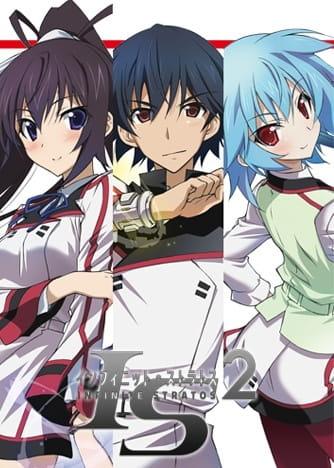
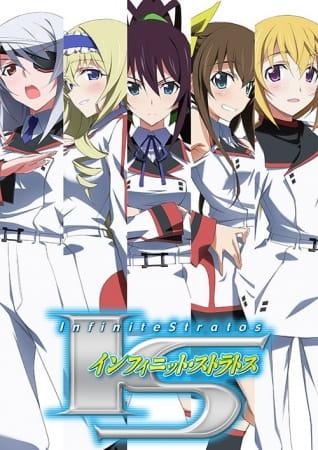
That balance is disrupted when 15-year-old Ichika Orimura is revealed to be the lone exception: the only male able to pilot an IS. He’s compelled to enroll at Infinite Stratos Academy, an all-girls boarding school that trains future IS pilots, where he reconnects with childhood friends Houki Shinonono and Lingyin Huang and meets Cecilia Alcott, the United Kingdom’s IS representative. Under the stern guidance of famed pilot Chifuyu Orimura—Ichika’s older sister and their homeroom teacher—Ichika and his classmates navigate training, rivalry, and unexpected threats that put both their school and their skills to the test.
Otaku Consensus
Infinite Stratos remains a high-popularity, mid-score harem artifact: its MAL popularity ranking of #360 and 378,701 votes testify to how widely it traveled, while its 6.6 MAL score and 61/100 AniList score reflect a fandom that enjoys it more as a genre machine than as hard sci-fi. Yasuhito Kikuchi’s brisk direction, 8bit’s clean academy-action packaging, and the rapid rotation of rival girls, training bouts, and comedy keep the 12 episodes moving. The recurring criticism is equally consistent: the powered-suit geopolitics and real-robot premise are far more interesting than the series’ reliance on familiar harem archetypes and ecchi escalation allows them to become.
Why You Should Watch
Watch Infinite Stratos if you want a compact, very 2011 mix of school harem comedy and powered-armor action without the homework of a dense mecha war epic. It scratches a similar itch to Date A Live’s heroine-driven romantic chaos and The Asterisk War’s academy-combat format, but with a cleaner “real robot” flavor and more emphasis on rivalry, uniforms, and training-room sparks than world-ending mythology. The appeal is in the contrast: ojou-sama posturing, tsundere clashes, and accidental intimacy are staged around sleek exoskeleton duels rather than ordinary clubroom banter. Viewers who enjoy female-harem shows as a catalog of personalities, national motifs, and escalating misunderstandings will get exactly the efficient, fan-service-forward version of that formula here.
Key Characters
- IIchika Orimura
Ichika is remembered less as a strategic ace than as the archetypal oblivious harem lead whose social blind spots generate much of the show’s comedy and fan debate.
- HHouki Shinonono
Houki anchors the cast’s childhood-friend and tsundere energy, with swordplay giving her a sharper physical identity than the usual first-girl template.
- LLingyin Huang
Lingyin adds a second childhood-friend pressure point to the romance dynamic, turning familiarity with Ichika into open rivalry rather than passive nostalgia.
- CCecilia Alcott
Cecilia channels the series’ international representative-pilot concept into a haughty British rival whose pride makes her one of the clearest early genre archetypes.
What Makes It Stand Out
- 1
8bit produced the series as a 12-episode Winter 2011 TV anime, making Infinite Stratos one of the studio’s early identity-forming projects before it became more broadly associated with glossy light-novel and action-fantasy adaptations.
- 2
The staff pairing of Yasuhito Kikuchi as director and Fumihiko Shimo on series composition gives the anime a fast, modular structure: comedy beats, romantic rivalry, and IS training conflicts cycle quickly rather than building into a slow military drama.
- 3
AniList’s tag profile is unusually explicit about the show’s hybrid identity: Female Harem at 97%, Robots at 78%, Real Robot at 77%, Nudity at 71%, and School at 79%. That data captures why the series is discussed as both mecha-adjacent and unapologetically harem-first.
- 4
Tomoyasu Kurashima is credited as both character designer and chief animation director, giving the adaptation a unified character look built around polished heroine designs rather than the grittier mechanical emphasis common to older mecha anime.
- 5
The soundtrack is credited to Masumi Itou under the name Hikaru Nanase, a detail that connects the show’s light, polished sci-fi atmosphere to a composer working under an alias rather than a separate production identity.
Fun Facts & Trivia
- Fun fact 1
- Infinite Stratos has a striking gap between reach and critical standing: it sits at MAL popularity #360 with 378,701 votes, yet its MAL rank is #7284 with a 6.6/10 score.
- Fun fact 2
- The anime aired from January 7, 2011 to April 1, 2011, placing it squarely in the early-2010s boom period for light-novel-style school battle harems.
- Fun fact 3
- The original creator is Izuru Yumizuru, while the original character designs are credited to okiura; the TV anime’s final character-design translation was handled by Tomoyasu Kurashima.
- Fun fact 4
- The production lists two sound directors, Toshihiko Nakajima and Masafumi Mima, an uncommon credit split that points to a more layered audio-production setup than viewers usually notice in a fan-service comedy.
- Fun fact 5
- Marina Inoue is credited for theme song performance in the staff data, tying the show’s music presence directly to a major anime voice and song performer.
Studios
- 8bit