Date A Live
デート・ア・ライブ
- Action
- Fantasy
- Romance
- Sci-Fi
- Harem
- School
- Urban Fantasy
- Episodes
- 12
- Duration
- 25 min per ep
- Aired
- Apr 6, 2013 to Jun 22, 2013
- Status
- Finished Airing
Synopsis
Three decades ago, a supermassive “spatial quake” tore through the Eurasian continent—mysterious vibrations in space that claimed more than 150 million lives. The phenomenon never truly disappeared; smaller quakes continue to strike without warning, keeping the world on edge.
Shidou Itsuka, an ordinary high schooler living with his younger sister Kotori, is pulled into the danger when a quake is about to hit Tengu City. Caught in the chaos, he encounters a lone girl at the epicenter and learns she is a “Spirit,” an otherworldly being whose arrival triggers these disasters. Before he can make sense of it, Shidou is swept into a confrontation between the Spirit and the Anti-Spirit Team, a force determined to eliminate Spirits outright.
Another organization, Ratatoskr, argues that Spirits can be saved rather than destroyed—and to Shidou’s shock, it’s led by Kotori. Recruited into their plan, he’s given an unconventional mission: stop the quakes by making Spirits fall in love with him, turning dating into the world’s most delicate peacekeeping strategy.
Otaku Consensus
Date A Live endures because Keitarou Motonaga’s brisk direction and Hideki Shirane’s clean series structure make its dating-sim logic, urban-fantasy battles, and school-harem comedy feel like one unified machine rather than three competing shows. Fans responded to the sharp heroine archetypes, Gou Sakabe’s melodramatic action-romance scoring, and the AIC PLUS+ adaptation’s pace across 12 episodes, while critics most often fault its uneven writing focus and reliance on fan service when the sci-fi premise could support heavier drama.
Why You Should Watch
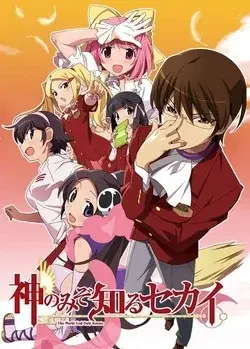
Watch Date A Live if you want a harem anime that treats romance mechanics like tactical equipment, not just wish fulfillment. It scratches the same itch as The World God Only Knows in its game-like approach to courtship, but swaps that series’ otaku puzzle-box comedy for aerial combat, henshin energy, and urban-fantasy spectacle. The appeal is in the tonal whiplash: command-room absurdity, tsundere and kuudere archetypes, school-life slapstick, and sincere power-sealing melodrama all run at TV-anime speed. If you want a compact 12-episode first season with recognizable light-novel character design, clear heroine marketing, and a male lead built more for negotiation than domination, this is one of the defining early-2010s genre hybrids.
Key Characters
- SShidou Itsuka
Shidou stands out among harem leads because the show frames his emotional intelligence as an actual crisis-response skill rather than a passive reward magnet.
- KKotori Itsuka
Kotori became a fan-favorite contrast character: cute younger-sister energy on the surface, command authority and hard strategic judgment underneath.
- TTohka
Tohka anchors the season’s appeal with a blend of otherworldly power, guarded vulnerability, and the kind of iconic heroine silhouette Tsunako’s designs are known for.
What Makes It Stand Out
- 1
AIC PLUS+ compresses the first TV season into 12 episodes, giving the adaptation a fast courtship-to-conflict rhythm that fits its dating-sim structure better than a slower dramatic build.
- 2
The production pairs Tsunako’s original character designs with Satoshi Ishino’s animation-ready character design work, which is why the heroines read immediately as collectible light-novel icons with distinct silhouettes and archetype signals.
- 3
Mechanical designer Mika Akitaka gives the Anti-Spirit side a harder sci-fi texture, helping the series separate military hardware from the more magical, henshin-coded Spirit imagery.
- 4
Gou Sakabe’s music leans into the show’s hybrid identity, moving between romantic melodrama, command-room urgency, and action scoring instead of treating the series as a pure school comedy.
- 5
The anime’s reception profile is unusually split: it holds broad mainstream visibility with MAL Popularity #164 and 626,821 MAL votes, while its MAL score of 7.14 and AniList score of 68/100 reflect the persistent divide over its writing and fan-service balance.
Fun Facts & Trivia
- Fun fact 1
- Date A Live aired from April 6 to June 22, 2013, placing it in the same anime season that critics often remember for Attack on Titan, a contrast that helps explain why some reviewers called it overshadowed despite its later franchise staying power.
- Fun fact 2
- The core creative chain is easy to trace: Koushi Tachibana created the original work, Tsunako supplied the original character designs, and Hideki Shirane handled the TV series composition for the AIC PLUS+ adaptation.
- Fun fact 3
- Keitarou Motonaga directed the season with Kaoru Suzuki as assistant director, while Yasunori Ebina served as sound director, giving the first season a staff profile built around speed, vocal comedy timing, and action-romance escalation.
- Fun fact 4
- Iori Nomizu is credited for theme song performance, connecting the season’s musical identity to the same character-forward marketing ecosystem that made the franchise popular with light-novel and harem-anime fans.
- Fun fact 5
- AniList’s tag distribution captures the show’s exact niche: Heterosexual at 97%, Female Harem at 93%, Henshin at 90%, Super Power at 86%, and Urban Fantasy at 83%, with Slapstick, Love Triangle, Nudity, School, Kuudere, and Tsundere all scoring strongly enough to define the viewing experience.
Studios
- AIC PLUS+