Princess Princess
プリンセス・プリンセス
- Comedy
- Crossdressing
- School
- Episodes
- 12
- Duration
- 24 min per ep
- Aired
- Apr 6, 2006 to Jun 22, 2006
- Status
- Finished Airing
Synopsis
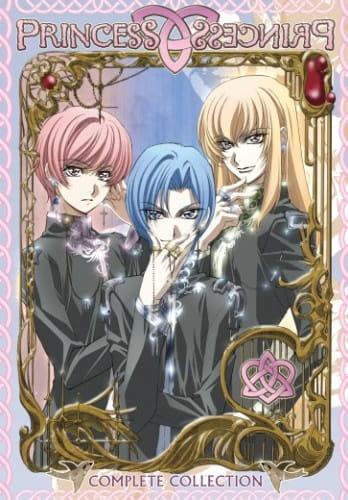
Tooru Kouno arrives at an all-boys school and immediately finds his good looks making him the center of attention—an awkward welcome for someone already frustrated by transferring to a campus with no girls. His hopes briefly lift after spotting a cute pink-haired “girl” on the grounds, only for confusion to set in when the same face seems to appear again.
Guided to the dorms by classmate Yuujirou Shihoudani, Tooru meets Mikoto Yutaka, who bears an uncanny resemblance to the person he saw earlier. The truth comes out quickly: Mikoto (and Yuujirou) crossdress as part of a school tradition where select attractive first-years are appointed as morale-boosting idols known as “Princesses.” Before Tooru can process it, the student council names him the third Princess.
Otaku Consensus
Princess Princess lands as a compact Studio Deen school comedy whose best asset is the chemistry among its three leads, with Keitarou Motonaga’s direction and Akemi Omode’s series structure keeping the 12-episode run light, brisk, and safely suggestive rather than explicit. Fans tend to remember its literalized “pretty privilege” economy and bishi banter more than its plot mechanics, while the most repeated criticism is that many episodes lean on cheesy, predictable setups and occasional melodramatic pretty-boy angst.
Why You Should Watch
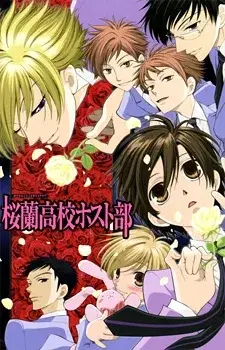
Watch Princess Princess if you want a 2000s shoujo-flavored school comedy about performance, status, and pretty-boy social politics without the heavier eroticism people often expect from crossdressing or boys’ love-adjacent titles. It scratches a gentler, more theatrical itch than Ouran High School Host Club: less romantic farce, more campus institution satire, where beauty is treated like a school resource with benefits, rules, and labor attached. Viewers who enjoy Cute Boys Doing Cute Things with a sharper social gimmick will get the most out of it, especially if the appeal is hearing Jun Fukuyama, Romi Park, and Tetsuya Kakihara play off one another in an all-boys-school ecosystem built around absurd incentives.
Key Characters
- TTooru Kouno(VA: Jun Fukuyama)
Tooru gives the series its outsider lens, and Jun Fukuyama sells the mix of irritation, vanity, and quick adaptation that makes him more than a passive newcomer.
- YYuujirou Shihoudani(VA: Romi Park)
Yuujirou is the polished operator of the trio, the kind of character fans latch onto because his composure makes the school’s ridiculous traditions feel almost professional.
- MMikoto Yutaka(VA: Tetsuya Kakihara)
Mikoto is the loudest source of friction in the main cast, bringing comic resistance and embarrassment to a role the school otherwise treats as glamorous.
What Makes It Stand Out
- 1
Studio Deen’s adaptation is a single-cour 12-episode series that aired from April 6 to June 22, 2006, giving it the tight rhythm of mid-2000s TV comedy rather than the sprawl of a long school-life adaptation.
- 2
Atsuko Nakajima handled both character design and chief animation direction, a notable double role for a series where the visual distinction between elegant presentation and everyday male student life is central to the joke.
- 3
The production leans into shoujo-coded male beauty rather than action spectacle, matching AniList’s high tag weights for Crossdressing, Primarily Male Cast, Shoujo, Cosplay, and Boys’ Love-adjacent appeal.
- 4
Its reception profile is unusually specific: a MAL score of 6.99 from over 30,000 votes and an AniList score of 65/100 place it as a niche favorite rather than a consensus classic, with fans defending its humor while critics flag formulaic episode writing.
- 5
The show’s comedy is built around institutional absurdity, not raunch; viewer commentary specifically notes that it stays safe-for-work despite its suggestive relationships and gender-performance premise.
Fun Facts & Trivia
- Fun fact 1
- Princess Princess is based on work by Mikiyo Tsuda, and the anime keeps the source’s shoujo identity visible through its emphasis on bishounen aesthetics and interpersonal performance.
- Fun fact 2
- Akemi Omode is credited for series composition and script, while Toshizou Nemoto wrote episodes 3, 6, and 9, giving the short run a small but clearly divided writing staff.
- Fun fact 3
- Romi Park voices Yuujirou Shihoudani, an inspired casting choice for a character whose charm depends on sounding poised, sharp, and theatrically self-possessed.
- Fun fact 4
- Sound direction was handled by Yasunori Ebina, with Kiyotaka Kawada on sound effects, a division of labor that matters in a comedy where reactions, entrances, and social embarrassment carry much of the timing.
- Fun fact 5
- The show’s database footprint reflects cult visibility: MAL lists it at popularity rank #3051 with 30,611 votes, while AniList records 124 favorites.
Studios
- Studio Deen