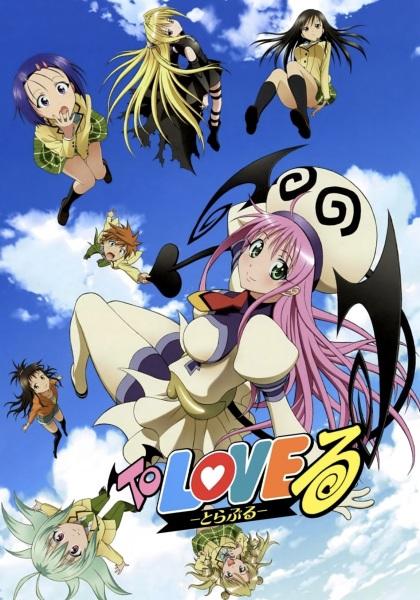
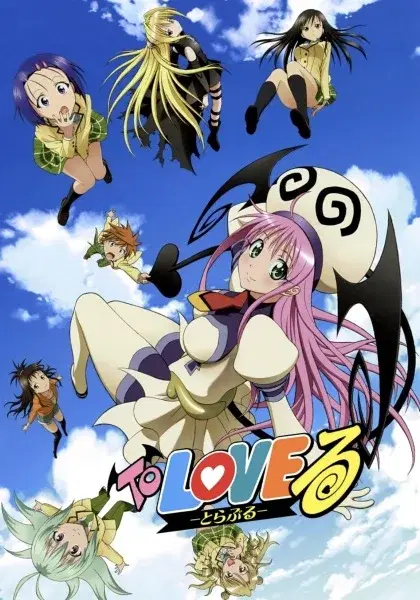
Motto To LOVE Ru
もっと To LOVEる -とらぶる- (Motto To LOVE-Ru)
- Comedy
- Ecchi
- Romance
- Sci-Fi
- Harem
- School
- Episodes
- 12
- Duration
- 24 min per ep
- Aired
- Oct 6, 2010 to Dec 22, 2010
- Status
- Finished Airing
Synopsis
Rito Yuuki can’t seem to go a day without stumbling into another compromising situation, especially with the growing number of girls around him. Even as his feelings remain tied to Haruna, the girl he’s loved since childhood, he finds himself increasingly conflicted thanks to Lala—an alien princess who suddenly arrived on Earth and announced she intends to marry him. The chaos escalates when Lala’s younger twin sisters, Momo and Nana, come to meet their sister’s fiancé and, before long, end up living under the same roof as Rito.
As Rito tries to navigate awkward accidents and complicated emotions, trouble follows from another direction: Yami, a girl engineered as a living weapon, sets her sights on him. Between romantic uncertainty, constant misunderstandings, and a determined pursuer with lethal intent, Rito’s school life becomes anything but ordinary.
Otaku Consensus
Motto To LOVE Ru is the point where the anime’s reputation starts to catch up with the manga: Atsushi Ootsuki’s faster episodic direction, Xebec’s cleaner character-forward staging, and the short-form adaptation rhythm make the comedy land more consistently than the 2008 season. Its appeal remains narrow but durable, reflected in a 7.25 MAL score and strong popularity despite mixed critical writing; the recurring complaint is that the accidental ecchi formula is repetitive, technically plain, and less graceful with age.
Why You Should Watch
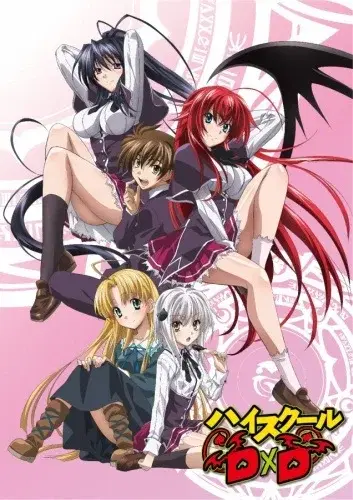
Watch Motto To LOVE Ru if you want ecchi comedy built like rapid-fire sketch television: quick setups, immediate embarrassment, then another character-driven gag before the joke overstays its welcome. It scratches the same harem-chaos itch as Rosario + Vampire or the lighter side of High School DxD, but with less battle escalation and more school-life slapstick. The draw is not romantic resolution; it is seeing Kentarou Yabuki’s character designs, Xebec’s glossy 2010 TV look, and a large ensemble engineered for escalating misunderstandings. Viewers who bounced off the first season’s looseness may find this one easier to digest because its 12-episode run is tighter and more manga-chapter-like. Viewers who need emotional payoff over fanservice mechanics should skip ahead cautiously.
Key Characters
- LLala Satalin Deviluke(VA: Haruka Tomatsu)
Lala remains the series’ chaos engine, with Haruka Tomatsu selling her cheerfully invasive energy as something closer to sci-fi slapstick than standard harem sweetness.
- HHaruna Sairenji(VA: Sayuri Yahagi)
Haruna is the emotional counterweight fans point to when defending the show’s softer romantic side, giving the comedy a gentler school-crush texture.
- RRito Yuuki(VA: Akeno Watanabe)
Rito’s popularity rests on his function as the genre’s ultimate accident-prone straight man, a protagonist defined less by assertiveness than by how spectacularly the world misreads him.
What Makes It Stand Out
- 1
Xebec produced this 12-episode second season for the Fall 2010 window, airing from October 6 to December 22, 2010, which gives it a compact cour structure compared with longer harem comedies of the previous decade.
- 2
The season leans into an episodic, sketch-like rhythm rather than long serialized arcs, matching AniList’s high Episodic tag at 84% and making individual comedy beats the main unit of adaptation.
- 3
Original character designer Kentarou Yabuki’s appeal is central to the production, with Yuuichi Oka handling anime character design and sharing chief animation director duties with Akio Takami to keep the cast visually consistent.
- 4
The sound team pairs Jin Aketagawa as sound director with Takeshi Watanabe on music, giving the series the clean, gag-timed audio profile typical of late-2000s TV ecchi comedies rather than a dramatic sci-fi score.
- 5
Its audience identity is unusually transparent in the tag data: Female Harem at 91%, School at 86%, Surreal Comedy at 86%, and Nudity at 85%, which accurately signals that the show prioritizes absurd escalation over romantic closure.
Fun Facts & Trivia
- Fun fact 1
- Motto To LOVE Ru holds a stronger fan footprint than its critical rank suggests: MAL lists it at 7.25 from over 201,000 votes, with popularity at #782 despite a rank around #3457.
- Fun fact 2
- AniList’s numbers are slightly cooler than MAL’s, giving the season a 69/100 score while still logging 812 favorites, a split that fits the franchise’s niche-but-loyal reputation.
- Fun fact 3
- The staff list is unusually design-focused: Yuuichi Oka is credited both for character design and as chief animation director, while Akio Takami also serves as chief animation director.
- Fun fact 4
- Contemporary viewer commentary often frames this season as an improvement point for the anime line, especially for fans who felt the 2008 adaptation was lackluster but heard later entries sharpened the fanservice and character dynamics.
- Fun fact 5
- Akeno Watanabe voices Rito Yuuki, meaning the central male harem protagonist is performed by a veteran female voice actor, a common but notable casting approach in school romantic comedies.
Studios
- Xebec