The Take
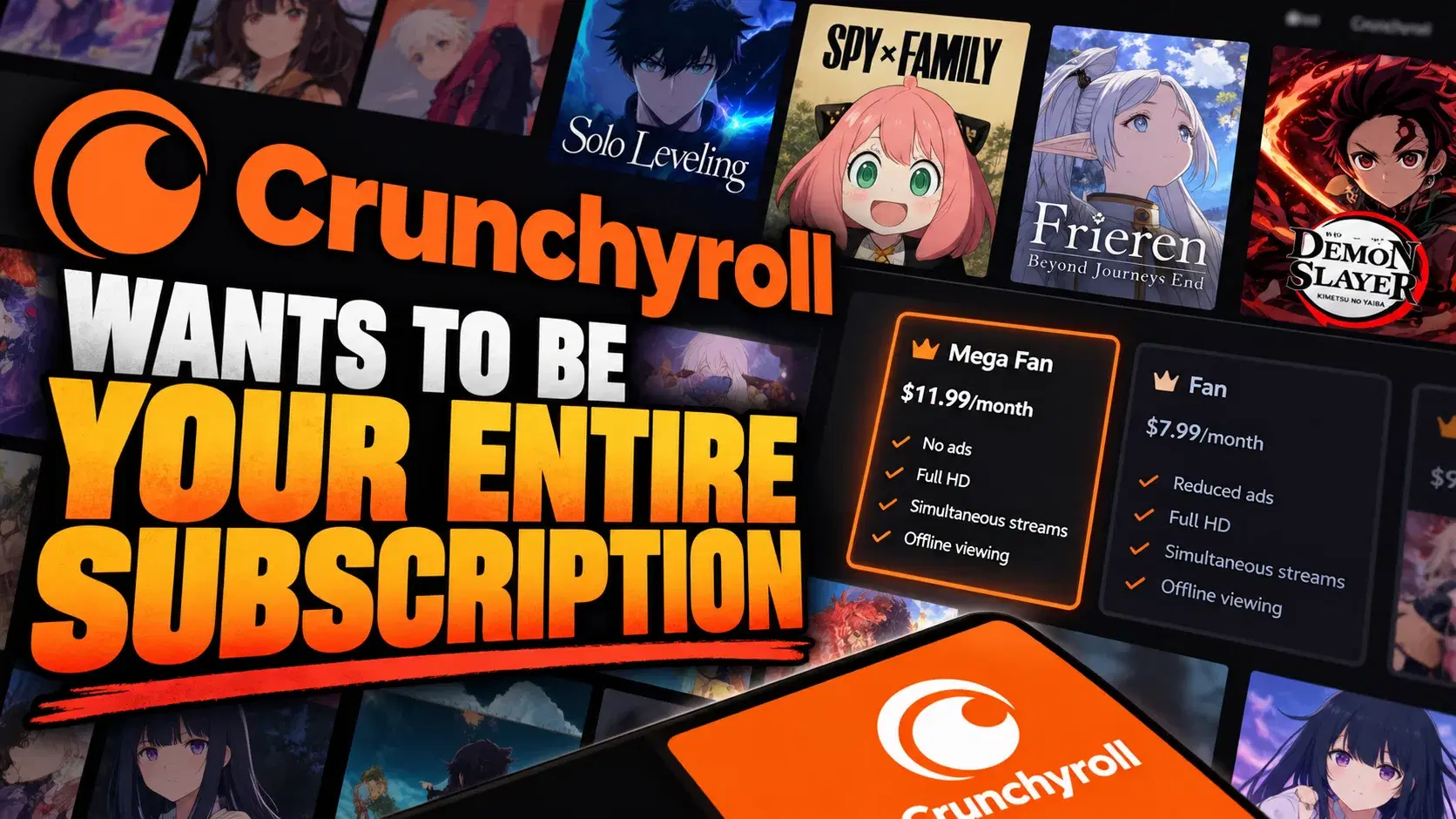
Anime fans are divided over Crunchyroll’s new members-only store plan because the move sits at the collision point of two very different fandom realities: convenience and control. On paper, a curated shop for Mega Fan and Ultimate Fan subscribers sounds like a reasonable loyalty perk. Exclusive drops, convention-style merchandise, and limited-release collectibles are exactly the kind of extras many paying fans already expect from a premium anime platform in 2026. But in practice, Crunchyroll is not just another shop adding a VIP lane. It is the company that absorbed Funimation’s streaming footprint, integrated Right Stuf’s retail legacy, and now sits at the center of how many North American fans watch, buy, and collect anime.
Otaku Insider’s take: the backlash is not simply “fans hate change.” The problem is trust. When a dominant anime platform turns an open retail channel into a subscription-gated experience, even if the selection changes, fans are right to ask whether this is a perk or a precedent.
The Evidence
Crunchyroll’s own support notice frames the August 2026 store transition as a “brand-new shopping experience” for Mega Fan and Ultimate Fan members. The company says the revamped Crunchyroll Store will focus on convention-exclusive merchandise, collectibles, curated drops, and limited-release products. That language matters. This is not being pitched as a basic replacement for the old storefront; it is being positioned as a premium, scarcity-driven shopping layer attached to subscription status.
The timing makes the announcement more sensitive. Crunchyroll says a Summer Sale begins July 14, 2026, with 50% off select items, while select products became final sale starting July 13 at 11:59 p.m. PT, with refunds or returns limited to damaged or defective goods. The company has also said existing open orders and preorders should continue processing normally, including items releasing after the transition, and customers will be contacted if anything cannot be fulfilled. Gift cards remain supported through August 14, 2026, after which users with balances are told to contact support. Those details are practical and important, but they also create an unmistakable “closing era” feeling.
The fan split is easy to understand. If you mainly subscribe for weekly streams of Jujutsu Kaisen, Demon Slayer: Kimetsu no Yaiba, One Piece, Spy x Family, or Chainsaw Man, the store may feel secondary. A members-only shop might even sound like a nice bonus: pay more, get access to exclusive merchandise. That is how premium plans work across entertainment. Crunchyroll’s Mega Fan tier is currently listed at $13.99 per month, while Fan is $9.99 per month, following a February 2026 pricing update in the U.S. Ultimate Fan sits higher at $17.99 per month. From a corporate product perspective, encouraging upgrades through merchandise access is predictable.
But anime collecting is not just an add-on hobby. For many fans, home video, manga, figures, soundtracks, and limited editions are how they preserve the shows they love beyond licensing windows. A fan who buys a boxed set for Cowboy Bebop, a figure from My Hero Academia, or movie goods tied to Demon Slayer: Kimetsu no Yaiba - The Movie: Mugen Train is participating in a different part of anime culture than someone casually browsing a merch tab after an episode. Locking the most attractive version of that shopping experience behind higher subscription tiers feels, to critics, like converting collector access into another recurring fee.
That concern is sharpened by history. Sony Pictures Entertainment completed its acquisition of Crunchyroll from AT&T in August 2021 through Funimation Global Group. In March 2022, the companies began moving Funimation content to Crunchyroll, promoting the unified service as a single anime destination with more than 40,000 subtitled and dubbed episodes. Funimation’s app and website then officially closed in April 2024. For many viewers, the consolidation was convenient. For others, it reduced meaningful choice.
Right Stuf is the emotional core of this debate. Crunchyroll acquired the anime superstore in August 2022, and Right Stuf was merged into the Crunchyroll Store in October 2023. Crunchyroll described that integration as a way to make its store an expanded destination for anime merchandise, manga, and home video. Longtime collectors, however, remember Right Stuf as more than inventory. It was a specialist retailer with its own sales culture, packaging expectations, preorder habits, and deep catalog identity. When fans on Reddit react to the 2026 store change by invoking Right Stuf, they are not being nostalgic for no reason. They are pointing to a pattern: independent or semi-independent anime infrastructure gets absorbed, then restructured around a larger platform’s subscription ecosystem.
This is why the phrase “members-only store” hits differently in anime than it might in fashion, gaming, or sneakers. The anime market already runs on scarcity: limited Blu-ray runs, convention exclusives, preorder bonuses, retailer variants, and delayed reprints. A show like Attack on Titan can live forever in discourse, but a particular collector’s edition can vanish quickly. A title like Violet Evergarden may be widely admired, yet physical availability and premium editions can be complicated depending on region and distributor. Anime fans have learned that access is never guaranteed.
There is also a broader streaming-era anxiety here. Anime fandom used to involve juggling fansubs, imports, local DVD labels, specialty retailers, and convention booths. The legal market improved dramatically because platforms like Crunchyroll made simulcasts easy and centralized. That helped series like Mob Psycho 100, Kaguya-sama: Love is War, and Vinland Saga reach bigger audiences faster. But centralization has a tradeoff: when one company controls more of the pipeline, its business model changes ripple through more of fan life. A store redesign is no longer just a store redesign. It becomes a referendum on whether anime fandom is being bundled into one subscription stack.
The strongest evidence of division is not that every fan is angry. It is that fans are arguing from different definitions of fairness. Some ask, “Why should non-subscribers get access to member perks?” Others ask, “Why should shopping for anime goods require a streaming subscription at all?” Both questions are logical. The controversy exists because Crunchyroll is trying to make merchandise access function like a loyalty benefit while many collectors still see retail as a separate, open marketplace.
The Counterargument
The fairest defense of Crunchyroll is that the company has not said every anime product in existence is disappearing behind a paywall. Its current language emphasizes curated drops, convention-exclusive merchandise, collectibles, and limited-release products. If the new store is genuinely a premium boutique for subscribers rather than the only practical place to buy key releases, the outrage may prove premature. Fans who never used the store, or who mostly watch anime digitally, may reasonably shrug at the change.
There is also a business reality: anime is no longer a niche side category for global entertainment companies. Crunchyroll faces aggressive competition from broader streamers, and anime licensing, dubbing, events, physical goods, and e-commerce all cost money. A platform dedicated entirely to anime has to find revenue beyond basic monthly viewing. If exclusive merchandise helps fund better apps, stronger simulcast infrastructure, same-day dubs, or broader catalog support, some fans will see the tradeoff as acceptable.
And yes, paid tiers should probably feel different. Mega Fan and Ultimate Fan subscribers pay more than Fan-tier users. If higher tiers never receive meaningful benefits, they become cosmetic upsells. A members-only store could be a more tangible perk than vague “premium access” language. The counterargument is strongest if Crunchyroll can prove that the change adds something special without removing too much from everyone else.
The problem is that Crunchyroll’s announcement leaves too many unanswered questions. What happens to standard manga and home-video availability? Will non-members have any route to buy ordinary catalog goods? Will limited editions tied to major titles like Fullmetal Alchemist: Brotherhood, Death Note, or Neon Genesis Evangelion become subscriber bait if they appear through Crunchyroll’s channel? Until the company clarifies the boundaries, skepticism is not only understandable; it is rational.
The Conclusion
Crunchyroll’s members-only store plan is divisive because it is not happening in a vacuum. It follows years of consolidation, a recent pricing increase, the absorption of Right Stuf, and the end of Funimation as a separate service. For casual viewers, the new store may become a harmless premium perk. For collectors, it raises a bigger question: is anime access being narrowed into an ecosystem where watching, buying, and collecting all depend on the same subscription ladder?
Otaku Insider’s position is clear: Crunchyroll can make this work, but only with transparency. The company should spell out what remains available to non-members, how existing preorders will be protected, what happens to gift card balances, and whether core home-video and manga retail will stay broadly accessible. Anime fans are not wrong to be divided. They are reacting to a real tension in the 2026 anime market: convenience keeps getting better, but independence keeps getting smaller.
So where do you land? Is a members-only anime store a fair subscriber perk, or a worrying step toward paywalled collecting? The answer may depend on whether you see Crunchyroll as a service you use—or an ecosystem you increasingly cannot avoid.
Sources
- [1] A new Crunchyroll Store and Member experience is coming soon – Support & Customer Service | Crunchyroll Help (help.crunchyroll.com)
- [2] Premium Free Trial Offer - Crunchyroll (crunchyroll.com)
- [3] Crunchyroll Closes Deal to Acquire Anime Superstore Right Stuf - Crunchyroll News (crunchyroll.com)
- [4] Crunchyroll Store Becomes Ultimate Destination for Anime Merch, Manga and More Following Right Stuf Integration - Crunchyroll News (crunchyroll.com)
- [5] Sony’s Funimation Global Group Completes Acquisition of Crunchyroll from AT&T | Sony Pictures Entertainment (sonypictures.com)
- [6] Anime Fans Win As Funimation Global Group Content Moves to Crunchyroll Starting Today | Sony Pictures Entertainment (sonypictures.com)
- [7] Funimation End of Services – Support & Customer Service | Crunchyroll Help (help.crunchyroll.com)
- [8] Major Crunchyroll Store Changes : r/anime (reddit.com)
- [9] Crunchyroll Updates Membership Pricing to Give Fans More of What They Love - Crunchyroll News (crunchyroll.com)
- [10] The Crunchyroll Store is Changing : r/Crunchyroll (reddit.com)
- [11] Crunchyroll Store news : r/AnimeCollectors (reddit.com)
- [12] Crunchyroll elimina su mayor ventaja: este es el último día para ver anime gratis en streaming (as.com)
- [13] Crunchyroll's CEO admits the competition from Netflix and Amazon is "aggressive" but remains "confident" in attracting anime viewers: "This is not just one genre for us, this is the entire thing" (gamesradar.com)
- [14] Crunchyroll manga app coming this October, and for a $4 add-on I might have a new place to read everything from One Piece and Jujutsu Kaisen to My Dress-Up Darling (gamesradar.com)
- [15] Summer 2026 Anime Rankings - Week 1 (ANIME_CORNER)
- [16] Chitose Is in the Ramune Bottle Anime Cour 2 Broadcasts in October (CRUNCHYROLL)
- [17] Hono no Tokyujo: Dodge Danko Anime Shares Explosive Creditless Opening, Ending Videos (CRUNCHYROLL)
- [18] KAIJU GIRL CARAMELISE Anime Shares Big Feelings in Creditless Opening, Ending Videos (CRUNCHYROLL)
- [19] Queen Bee Shares Jaadugar: A Witch in Mongolia Anime Ending Song Music Video (CRUNCHYROLL)
- [20] Dannie May Drops Yoroi-Shinden Samurai Troopers Cour 2 Anime Opening Song Music Video (CRUNCHYROLL)
- [21] Even the Student Council Has Its Holes! Anime Reveals Hisako Kotobuki Cast (CRUNCHYROLL)
- [22] Anime Expo 2026 Wraps its 35th Edition With Attendees from Over 65 Countries and Over 1,4000 Hours of Programming (ANN)
- [23] Chitose Is in the Ramune Bottle Anime's 2nd Part Debuts in October (ANN)
- [24] Crunchyroll Reveals Cast, Staff for Same-Day English Dub of Hanaori-san Still Wants to Fight in the Next Life Anime (ANN)
- [25] Kagurabachi Anime Expo Premiere Review: Bloody and Brilliant (ANIME_CORNER)
- [26] Mebius Dust Anime Releases 2nd Main Trailer (CRUNCHYROLL)
- [27] The Elusive Samurai Season 2 Anime Reveals Ending Theme Song Performer (CRUNCHYROLL)
- [28] Imase Releases Smoking Behind the Supermarket with You Anime Ending Song Collab Music Video (CRUNCHYROLL)
- [29] Red River Anime Begins Its Journey with Creditless Opening Video (CRUNCHYROLL)
Written by Ranen with AI support — Ranen picks every story, shapes the angle, and reviews each article before it's published. Learn more in our editorial policy.