The Take
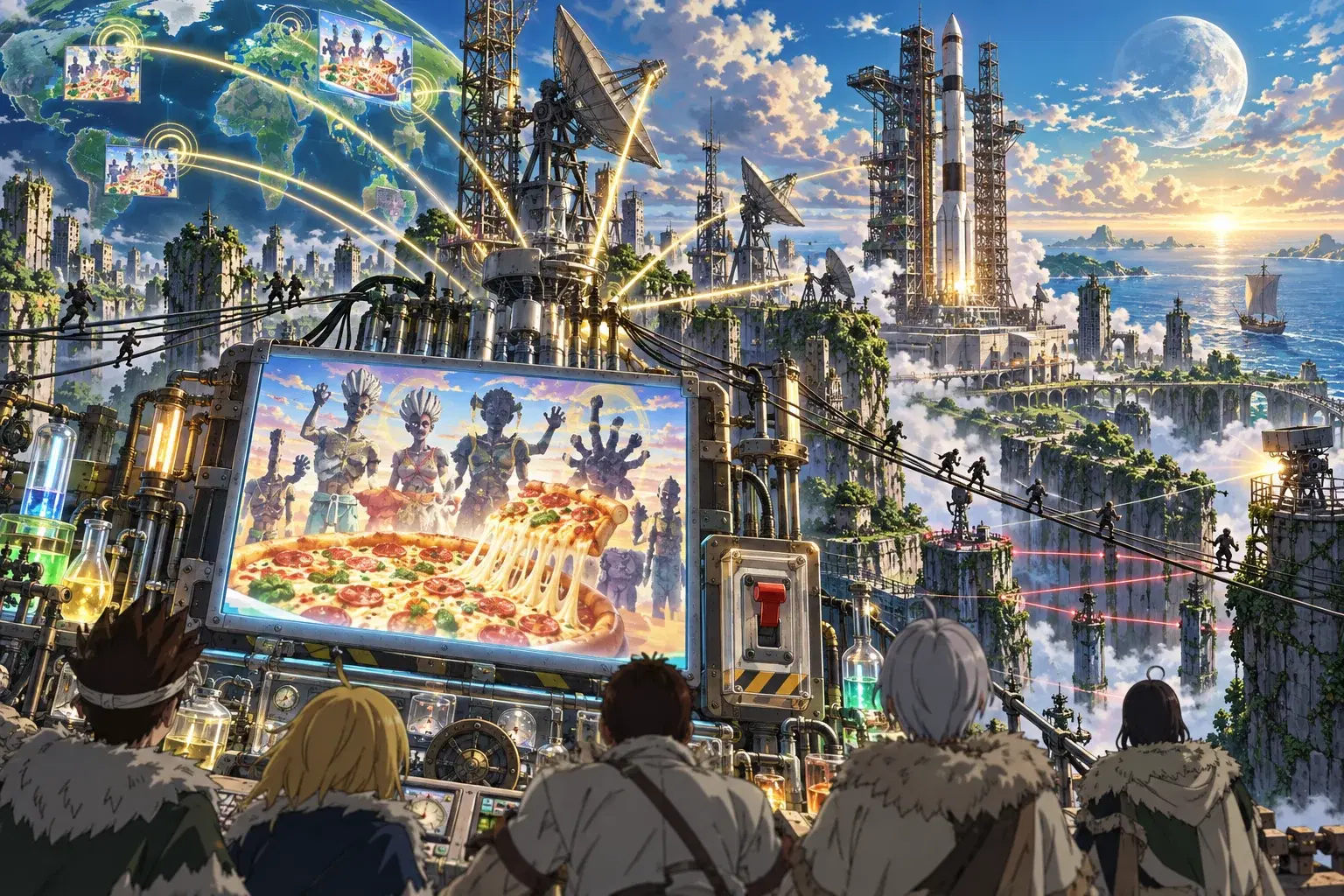
The unauthorized Dr. Stone advertisement served through PIZZA-LA’s official TikTok account is exactly the kind of failure artists and rights holders have warned about: not necessarily a company deliberately replacing an illustrator, but an automated system quietly creating new versions of licensed characters before a human realizes it is happening.
PIZZA-LA operator Four Seeds apologized on November 6, 2026—not November 7—and said a staff settings error left an AI-powered automatic generation and delivery function enabled. The resulting collaboration video had not been supervised or approved by the television anime’s production committee. Four Seeds stopped the disputed video, suspended all PIZZA-LA advertising on TikTok, reported the incident to the committee, and promised to review its controls.
That response is appropriate, but the explanation should not reassure the anime industry. It reveals that generative alteration is being folded into ordinary advertising infrastructure so deeply that a legitimate licensee can apparently cross beyond its approved assets without intentionally commissioning a new image. Anime licensing is built around exact permissions: which artwork may be used, how characters may be posed, what products they may endorse, and which materials require committee review. A machine-generated variation is still a variation, even when it emerges from a campaign dashboard rather than an artist’s brief.
Otaku Insider’s take: this is not primarily an argument about whether every use of AI is theft. It is a governance failure. Any advertising platform capable of modifying third-party characters should default to human approval, not require an advertiser to discover and disable automation after unauthorized material has already been served.
The Evidence
The underlying PIZZA-LA collaboration was legitimate. It ran from October 1 through November 1 and included a themed pizza, limited goods, and newly drawn artwork featuring six characters. What remains unknown is when the disputed video ran, how many users saw it, what source assets were supplied, whether it carried an AI-generated-content label, and which specific TikTok product created it. The company referred generally to an AI automatic-generation and delivery function, so attributing the incident to a named TikTok tool would go beyond the available evidence.
Viewers reportedly noticed that poses, expressions, and aspects of the art treatment differed from the official collaboration visual. That distinction matters. Fans were not merely objecting to compression artifacts or a poorly cropped banner; they identified apparent changes to the approved character presentation. Because the material came from an official brand account during a real collaboration, an ordinary viewer had good reason to assume it represented authorized promotional art.
TikTok’s own advertising documentation shows how this category of failure can occur. Its automated systems can optimize uploaded assets, generate creative variations, draw material from destination pages or account content, and refresh advertisements during delivery. Some workflows offer an approval requirement before generated creatives are added. TikTok also tells advertisers to review final outputs and places responsibility for legal and regional compliance on them.
In other words, the relevant capabilities are not hypothetical. The unresolved question is whether safeguards are designed for licensed entertainment properties. A system optimized to produce more ad variants may treat a character image as flexible input, while an anime production committee treats every new expression, pose, composition, and product association as a separate approval decision.
That distinction becomes more important as franchises grow. Dr. Stone: New World Part 2, Dr. Stone: Science Future Part 2, and Dr. Stone: Science Future Part 3 demonstrate how one property can accumulate different installments, marketing periods, character groupings, and visual packages. A brand’s right to use artwork from one approved campaign does not logically become permission to generate unlimited derivative promotional material across the franchise.
The same risk would apply to heavily controlled commercial properties such as Demon Slayer: Kimetsu no Yaiba, Attack on Titan, or Spy x Family. These are not interchangeable collections of recognizable faces. Character presentation is part of their economic value. An altered expression can change tone; a generated gesture can imply an endorsement; and an invented composition can make official art appear cheaper or off-model. With enough automation, a minor settings error could produce dozens of unauthorized variants before a licensing manager sees one.
Japanese creative organizations have already described this danger. A 2025 joint statement involving anime, manga, and publishing groups called for permission, transparency, and remuneration while warning that users may unknowingly generate and publish material that harms creators’ rights. The Japan Animation Film Culture Association has similarly argued that generative AI enables rapid imitation of characters and voices, potentially damaging both reputation and economic value. PIZZA-LA’s explanation closely resembles that predicted scenario: the user says it did not sufficiently recognize what the system was doing, yet the output still reached the public.
There is also an important legal distinction. The production committee’s lack of approval is confirmed, but no court has ruled that this advertisement infringed copyright. Japanese government guidance treats AI training and the publication of a particular output as separate legal questions, with infringement depending on facts including similarity, reliance, and protected expression. The private licensing agreement is not public either, so claims about breach, damages, or indemnification would be speculative.
But legal uncertainty does not erase the operational failure. An advertiser can violate an approval workflow or exceed a license’s practical scope without the public having enough evidence to declare copyright infringement. For fans and artists, waiting for litigation is an absurdly low standard. The safer standard is simple: no generated character variation should be published until the relevant rights holder affirmatively approves it.
The Counterargument
The strongest defense is that this was an accidental configuration problem, not a calculated attempt to avoid paying artists. Four Seeds acknowledged the mistake, removed the advertisement, suspended its TikTok campaigns, and contacted the production committee. Automation can also be useful: it may resize creative, test layouts, assist with routine production, or reduce repetitive work without replacing the people responsible for an anime’s core visual identity.
That is all fair. Treating every AI-assisted process as equally unethical would obscure meaningful differences between generating a new character pose and automating a technical task. Government guidance itself recognizes lower-risk uses of AI in planning, coloring, and parts of production, provided rights and oversight are respected.
Yet lack of intent is not a sufficient defense for commercial advertising. Brands are responsible for understanding tools that publish material under their names. Platforms are responsible for designing predictable controls around third-party intellectual property. If an optional checkbox is all that separates licensed artwork from automatically generated derivatives, the workflow is poorly matched to entertainment licensing.
There is also a temptation to say the system worked because fans spotted the problem and PIZZA-LA apologized. It did not. Detection after publication is damage control, not approval. TikTok reportedly reviews paid advertising before it goes live, while its policies restrict unauthorized third-party media and require disclosure for substantially AI-generated or modified ads. We do not know whether the disputed video was labeled, but a label would not have granted permission anyway. Transparency can tell viewers that an image was generated; it cannot authorize the generator to alter a protected character.
The Conclusion
The Dr. Stone incident should become a turning point for anime advertising in 2026. It shows that the next licensing crisis may not begin with a rogue counterfeit seller or an openly unlicensed campaign. It may begin inside an approved advertiser’s dashboard, where a performance-optimization feature silently converts licensed assets into unapproved creative.
Anime committees and advertisers should now require automation disclosures in contracts, prohibit generative modification unless expressly authorized, retain logs of every generated asset, and mandate human approval before delivery. Advertising platforms should make that review compulsory whenever third-party characters, logos, or entertainment footage are detected. They should also preserve generated outputs so rights holders can audit what ran and when.
PIZZA-LA’s apology addresses one campaign, but pausing advertisements does not solve the design problem. As properties ranging from One Piece to My Hero Academia become increasingly valuable collaboration partners, licensed artwork cannot be treated as raw material for an optimization engine. The industry does not need to reject every AI tool. It does need to establish that permission belongs ahead of generation and publication—not after fans notice that something looks wrong.
Was suspending every TikTok advertisement a sufficient response, or should platforms bear more responsibility when their automated tools alter licensed anime characters? That is the debate the industry should be having now.
Sources
- [1] ピザーラ、『Dr.STONE』コラボめぐり謝罪 AI機能の設定ミスで“非許諾動画”配信 | オリコンニュース(ORICON NEWS) (oricon.co.jp)
- [2] ピザーラ、『Dr.STONE』コラボめぐり謝罪 AI機能の設定ミスで“非許諾動画”配信 | オリコンニュース(ORICON NEWS) (oricon.co.jp)
- [3] animeanime.jp (animeanime.jp)
- [4] 「AI使っている?」ピザーラの「Dr.STONE」広告に疑義→謝罪 公式サイトと異なるポーズや表情のイラスト配信 - ライブドアニュース (news.livedoor.com)
- [5] Automate Creativeについて (ads.tiktok.com)
- [6] About Recommended Creatives (ads.tiktok.com)
- [7] Misleading and false content | TikTok Advertising Policies (ads.tiktok.com)
- [8] 制作工程における利用想定と留意点(広告) (meti.go.jp)
- [9] AIと著作権について | 文化庁 (bunka.go.jp)
- [10] 生成AI時代の創作と権利のあり方に関する共同声明 | 漫画家協会WEB (nihonmangakakyokai.or.jp)
- [11] 「知的財産推進計画2026」に対する意見 | NAFCA 一般社団法人日本アニメフィルム文化連盟 (nafca.jp)
- [12] Create Upgraded Smart+ Campaign | TikTok for Business (ads.tiktok.com)
- [13] 『Dr.STONE』|少年ジャンプ公式サイト (shonenjump.com)
- [14] アニメ「Dr.STONE TERRAFORMING」制作決定! - NEWS|アニメ「Dr.STONE(ドクターストーン)」公式HP (dr-stone.jp)
- [15] TOP | NOMORE無断生成AI (nomore-mudan.com)
- [16] TikTok World 2026:“発見”をビジネス成長へつなげる最新のマーケティングソリューションを発表 | TikTok For Business ブログ (ads.tiktok.com)
- [17] Wound & Bandage Anime Trailer Reveals MIYAVI Opening Theme Song, More Cast (CRUNCHYROLL)
- [18] He Does a Body Good Webtoon Gets AnimeFesta Anime in January 2027 (ANN)
- [19] Booty Royale: Never Go Down Without a Fight! Manga Gets TV Anime in January (ANN)
- [20] Manga 'Hagure Idol: Jigoku-hen' Gets TV Anime in Winter 2027 (MAL_RSS)
- [21] 33-sai Dokushin Onna Kishi Taicho. Anime Adaptation Announced (CRUNCHYROLL)
- [22] Amahara's 33 Years Old Single Girl Knight Captain Manga Gets Anime (ANN)
- [23] Expelled from Paradise: Resonance of the Heart Anime Film and Girls Band Cry the Movie Share Collab Video, Visuals (CRUNCHYROLL)
- [24] Manga '33-sai Dokushin Onna Kishi Taichou.' Gets Anime Adaptation (MAL_RSS)
- [25] NINJA SKOOLER Anime Releases Pilot Film (CRUNCHYROLL)
- [26] Chakura Releases A Wild Last Boss Appeared! Season 2 Anime Ending Song Music Video (CRUNCHYROLL)
- [27] Ninja Skooler Anime Unveils Pilot Film, Images, Song (ANN)
- [28] Anime Frontier Goes Big in Texas in 2026 (ANN)
- [29] Ankama Animations' Welsh & Shedar Premieres Today on YouTube (ANN)
- [30] Crunchyroll to Stream Dragon Ball Super: Beerus Anime's English Dub on November 12 (ANN)
- [31] The Apothecary Diaries Anime Collabs with Real Escape Games in January 2027 (CRUNCHYROLL)
Written by Ranen with AI support — Ranen picks every story, shapes the angle, and reviews each article before it's published. Learn more in our editorial policy.