Paranoia Agent
妄想代理人 (Mousou Dairinin)
- Avant Garde
- Award Winning
- Drama
- Mystery
- Supernatural
- Suspense
- Adult Cast
- Detective
- Psychological
- Episodes
- 13
- Duration
- 24 min per ep
- Aired
- Feb 3, 2004 to May 18, 2004
- Status
- Finished Airing
Synopsis
Musashino City is gripped by fear as an elusive attacker known as Shounen Bat strikes without warning—gliding in on rollerblades and leaving victims injured with a golden baseball bat. The first reported target is Tsukiko Sagi, a celebrated yet timid character designer who soon finds herself under suspicion, with only her pink stuffed mascot, Maromi, seemingly on her side.
Detectives Keiichi Ikari and Mitsuhiro Maniwa take up the case, but each new incident only deepens the mystery. As reports spread and the list of victims grows, rumors ripple through the community, and unease takes hold of adults and children alike—threatening to overwhelm reason long before the truth is uncovered.
Otaku Consensus
Paranoia Agent’s MAL 7.66 and AniList 76 reflect a show admired more intensely by experimental-anime viewers than by audiences seeking a frictionless thriller. The critical consensus centers on Satoshi Kon’s direction, Madhouse’s controlled unease, and the standalone victim-episode structure that makes the series feel like linked short films rather than standard TV suspense. Its most common real criticism is pacing: the anthology detours are thematically rich, but they can frustrate viewers waiting for the detective case to advance.
Why You Should Watch
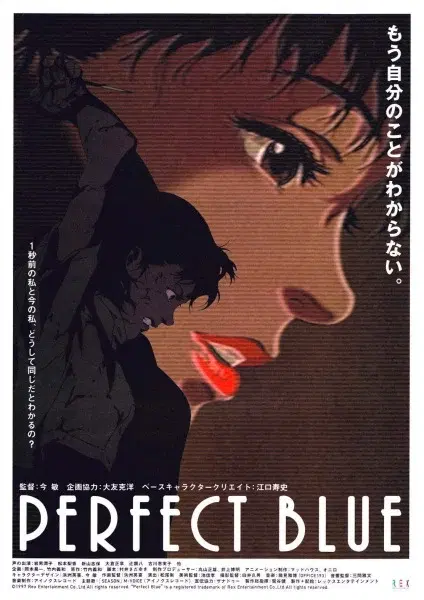
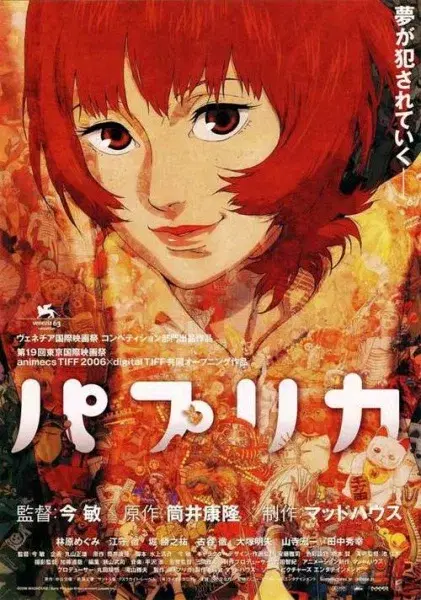
If you want Perfect Blue’s identity anxiety expanded from one performer to an entire city, Paranoia Agent is Kon at his most abrasive. It scratches the same itch as Paprika in its attacks on rational reality, but trades dream-carnival spectacle for adult workplaces, police rooms, school hierarchies, and public rumor. The ideal viewer wants psychological mystery without tidy clue-box satisfaction, horror without monster-of-the-week mechanics, and satire that treats cute commercial mascots as part of the nightmare. Its 13-episode run makes room for ensemble detours that feel like compact short films, so the reward is not just solving a case; it is watching social pressure, denial, and escapism mutate from episode to episode.
Key Characters
- TTsukiko Sagi
A celebrated character designer whose timid public presence lets Kon turn creative labor, suspicion, and commercial cuteness into psychological pressure.
- KKeiichi Ikari
The older detective grounds the surreal material in weary police-procedural logic, making him the clearest measure of how badly ordinary explanations are failing.
- MMitsuhiro Maniwa
Ikari’s younger partner becomes the series’ bridge between methodical investigation and the stranger symbolic reading the case increasingly demands.
- SShounen Bat
Less a conventional antagonist than a pop-cultural silhouette, Shounen Bat is discussed by fans as a figure onto which fear, blame, and relief are projected.
What Makes It Stand Out
- 1
This is Satoshi Kon’s only television anime series, with Kon credited as both Original Creator and Chief Director rather than adapting an existing manga or novel.
- 2
The structure is deliberately episodic: reviews repeatedly note that many episodes play like short films, connected by recurring investigative threads and shared social paranoia rather than by a simple case-of-the-week formula.
- 3
Madhouse’s production is built around major craft leads: Masashi Andou on character design, Nobutaka Ike as art director, Satoshi Hashimoto on color design, Katsutoshi Sugai on photography, and Masafumi Mima as sound director.
- 4
AniList’s tag profile captures its unusual hybrid identity: Denpa at 97%, Crime at 90%, Philosophy at 89%, Detective at 86%, Urban Fantasy at 83%, and Satire at 70%.
- 5
The series’ most distinctive visual tension is the contrast between Maromi, described in criticism as a Hello Kitty-type mascot icon, and the harsher urban fear imagery surrounding Shounen Bat.
Fun Facts & Trivia
- Fun fact 1
- Paranoia Agent aired for 13 episodes from February 3, 2004 to May 18, 2004, placing it after Kon had already built his reputation with Perfect Blue, Millennium Actress, and Tokyo Godfathers.
- Fun fact 2
- Seishi Minakami handled series composition, while editing duties were credited to both Takeshi Seyama and Kashiko Kimura, underscoring how tightly the show’s fragmented structure depends on assembly and rhythm.
- Fun fact 3
- The show’s database identity is unusually split: MAL files it under Avant Garde, Award Winning, Drama, Mystery, Supernatural, and Suspense, while AniList users emphasize Denpa, philosophy, crime, and police elements.
- Fun fact 4
- Its popularity has outpaced its raw ranking: on MAL it sits at #552 in popularity while ranking #1576 by score, and on AniList it has 3,911 favourites.
- Fun fact 5
- Contemporary and later reviews often frame the series as a stronger artistic achievement than its average ratings suggest, especially for viewers already invested in Kon’s experimental approach to perception and social anxiety.
Studios
- Madhouse