Dragon Ball
ドラゴンボール
- Action
- Adventure
- Comedy
- Fantasy
- Martial Arts
- Episodes
- 153
- Duration
- 24 min per ep
- Aired
- Feb 26, 1986 to Apr 12, 1989
- Status
- Finished Airing
Synopsis
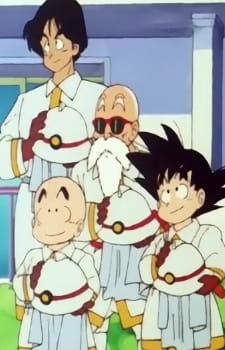
Son Goku is a boy living alone in the wilderness when he crosses paths with Bulma, a sharp-minded girl searching for the seven Dragon Balls—mystical orbs said to summon a dragon that can grant any single wish. Bulma dreams of using that power to wish for the perfect boyfriend, but one of the Dragon Balls already belongs to Gokuu, and he won’t give it up easily. They strike a bargain: Gokuu will travel with her, and she can make use of the Dragon Ball he carries as they begin their long trek to find the rest. Along the way, the pair pick up unlikely companions, including the eccentric martial arts master Muten-Roshi and the eager trainee Kuririn. As Gokuu hones his skills and prepares for the World Martial Arts Tournament, the quest grows more dangerous—because a wish that can change anything attracts people with far darker intentions than Bulma’s. With rivals closing in, their journey becomes as much about protecting others as it is about gathering the legendary Dragon Balls.
Otaku Consensus
Dragon Ball earns its classic status through Daisuke Nishio and Minoru Okazaki’s clean handling of tonal escalation: gag adventure, training comedy, and tournament combat build into a coherent shounen blueprint rather than feeling like separate shows. Toei Animation’s adaptation is strongest when the World Martial Arts Tournament framework turns character quirks into readable fight choreography, while Shunsuke Kikuchi’s score gives even the sillier stretches a mythic pulse. The genuine caveat is that viewers raised on Dragon Ball Z’s urgency may find the original’s episodic travel pacing and juvenile comedy looser than the franchise’s later, higher-stakes identity.
Why You Should Watch
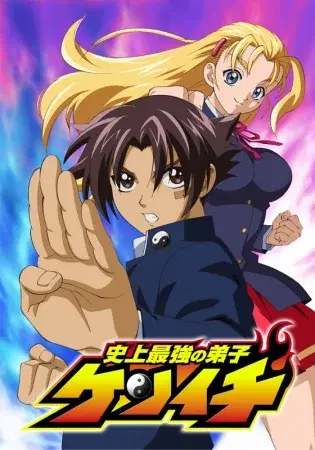
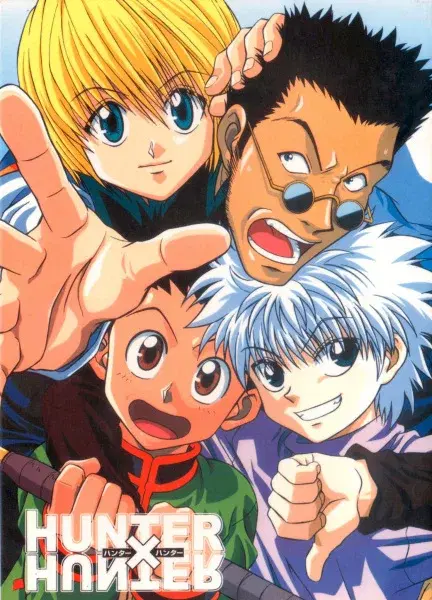
Watch Dragon Ball if you want the roots of modern battle shounen without the arms-race fatigue that later power-scaling series can develop. It scratches the same “training, rivalry, tournament bracket” itch as Naruto and Hunter x Hunter, but with a lighter road-trip structure, stranger comic timing, and a world where dinosaurs, capsule tech, martial artists, and talking animals casually share the same frame. The pleasure is not only in seeing Gokuu get stronger; it is in watching Akira Toriyama’s gag-manga instincts harden into the grammar that decades of action anime would reuse. If Dragon Ball Z is the franchise’s arena-rock phase, this is the garage-band record: rougher, funnier, more adventurous, and often more inventive.
Key Characters
- GGokuu Son(VA: Masako Nozawa)
Gokuu is compelling because Masako Nozawa plays his innocence and competitive instinct as the same impulse, making his growth feel less like destiny and more like curiosity turned into discipline.
- BBulma(VA: Hiromi Tsuru)
Bulma remains one of the series’ sharpest engines because her intelligence, vanity, impatience, and technical confidence keep the adventure from becoming a simple martial-arts pilgrimage.
- KKuririn(VA: Mayumi Tanaka)
Kuririn stands out as the human-scale counterweight to Gokuu, a rival and friend whose anxieties make the training and tournament material feel grounded.
- MMuten-Roushi(VA: Jouji Yanami)
Muten-Roushi is memorable because the show lets him be both ridiculous and legitimately formative, turning the comic old-master archetype into a key part of its martial-arts identity.
What Makes It Stand Out
- 1
Toei Animation produced 153 episodes from 1986 to 1989, giving the adaptation enough runway to shift from travel comedy into structured martial-arts competition without abandoning its gag-manga rhythm.
- 2
The series’ recurring World Martial Arts Tournament material is one of its defining structural choices, using bracket-style confrontations to make training payoffs, rival dynamics, and comic reversals immediately legible.
- 3
Shunsuke Kikuchi’s music gives Dragon Ball a distinct pre-digital adventure sound, with heroic brass, playful cues, and suspense motifs that separate the original series from the heavier mood fans often associate with Dragon Ball Z.
- 4
Minoru Maeda served as both character designer and chief animation director, helping preserve Akira Toriyama’s rounded silhouettes, expressive faces, and comic body language in a long weekly TV production.
- 5
Its setting stands out through deliberate anachronism: the show comfortably mixes rural wilderness, urban fantasy, advanced gadgets, anthropomorphic characters, dragons, and dinosaurs instead of separating them into neat genre zones.
Fun Facts & Trivia
- Fun fact 1
- Akira Toriyama is credited as the original creator, and the anime’s longevity helped establish the on-screen version of his martial-arts comedy before Dragon Ball Z reshaped the franchise’s global image.
- Fun fact 2
- The production had two credited directors across its run, Daisuke Nishio and Minoru Okazaki, reflecting the challenge of maintaining tone and momentum across 153 weekly episodes.
- Fun fact 3
- Takao Koyama is credited with series composition specifically for episodes 131-153, meaning the final stretch of the anime had a distinct writing-structure credit from the earlier run.
- Fun fact 4
- Tadanao Tsuji is credited as chief designer for episodes 1-153, while Yuuji Ikeda joined that chief designer role for episodes 102-153, marking a documented design-handling shift in the later portion of the series.
- Fun fact 5
- Among database users, Dragon Ball remains unusually durable for an eighties TV anime: it holds a 7.98 MyAnimeList score from over 727,000 votes and an AniList score of 78/100 with 9,352 favourites.
Studios
- Toei Animation