Final Fantasy VII: Advent Children Complete
ファイナルファンタジーVII アドベントチルドレンコンプリート
- Action
- Fantasy
- Martial Arts
- Episodes
- 1
- Duration
- 2 hr 6 min
- Aired
- Apr 16, 2009
- Status
- Finished Airing
Synopsis
Two years after the world’s salvation, the former members of Avalanche have drifted into separate lives. Tifa Lockhart runs a new bar, while her childhood friend Cloud Strife makes a living as a motorcycle courier. Though their old comrades are mostly out of contact, Cloud and Tifa share a tenuous calm as they care for Marlene and Denzel.
That fragile stability falters when a spreading illness and Cloud’s unresolved grief drive him to withdraw from the home he’s built. On the road, he’s confronted by three silver-haired men in black who unsettlingly echo his old enemy, Sephiroth. As the trio closes in and endangers those closest to him, Cloud is forced to face his past and fight to keep his family safe—and to stop Sephiroth’s will from taking hold again.
Otaku Consensus
Advent Children Complete is the defensible cut of a famously divisive Final Fantasy VII film: the added 26 minutes give Denzel, Geostigma, and the climactic fight more breathing room, while Square Enix Visual Works’ full-CGI action remains the production’s clearest selling point. Its weakest link is still adaptation clarity; the direction and pacing assume deep familiarity with the original game, leaving newcomers with a glossy, emotionally opaque sequel rather than a self-contained anime film.
Why You Should Watch
Watch Advent Children Complete if you want a high-budget, full-CGI action showcase built for Final Fantasy VII devotees rather than a beginner-friendly franchise entry. It scratches the same itch as Appleseed-style CG spectacle and the escalation-heavy combat of Fate/stay night: Heaven’s Feel, but with JRPG iconography: oversized blades, gunplay, motorcycles, magic, and a soundtrack lineage tied to Nobuo Uematsu. The Complete version matters because it is not just a cleaner transfer; it adds character and illness-related context that fans singled out as making Denzel and the Geostigma material more legible, while also expanding the final battle. If your ideal anime film is a sleek, melancholic reunion concert for characters you already care about, this is the cut to pick.
Key Characters
- CCloud Strife(VA: Takahiro Sakurai)
Cloud is framed less as a standard action lead than as a withdrawn survivor, which gives the film’s swordplay a bruised, guilt-heavy texture fans either find cathartic or frustratingly internalized.
- TTifa Lockhart(VA: Ayumi Ito)
Tifa anchors the film’s found-family side, and her martial-arts choreography gives the otherwise weapon-heavy production one of its most physically readable fighting styles.
- KKadaj(VA: Shoutarou Morikubo)
Kadaj stands out as the film’s most theatrical new presence, designed to feel both adolescent and uncanny within the Sephiroth-shaped mythology around him.
- SSephiroth(VA: Toshiyuki Morikawa)
Sephiroth functions as iconography as much as character here, with Morikawa’s performance leaning into the calm, ritualized menace that made him a franchise fixture.
What Makes It Stand Out
- 1
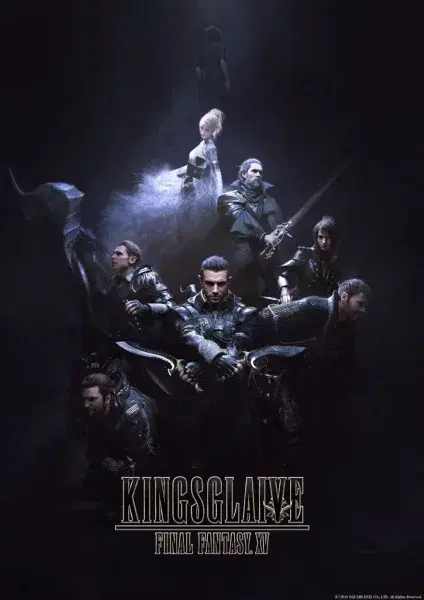
Square Enix Visual Works handles the film as a full-CGI production, making it part of the studio’s long-running push to translate Final Fantasy’s pre-rendered game aesthetics into feature-length animation.
- 2
The Complete cut adds 26 minutes over the earlier version, with user reception specifically noting more attention to Denzel, the Geostigma material, and an extended final battle.
- 3
Tetsuya Nomura is credited for original character design and animation direction, giving the movie a direct visual connection to Final Fantasy VII’s most recognizable character silhouettes.
- 4
Nobuo Uematsu’s music credit ties the film’s soundscape back to the composer most associated with Final Fantasy’s classic era, while the ending theme credits unusually include Gerard Way for performance, composition, and lyrics.
- 5
The film’s reputation is unusually split between technical admiration and narrative frustration: web criticism repeatedly praises the CGI and voice acting while faulting the plot clarity, pacing, and dependence on prior game knowledge.
Fun Facts & Trivia
- Fun fact 1
- AniList classifies the movie with high-confidence tags including Full CGI, Guns, Cyberpunk, Magic, Pandemic, Martial Arts, Clone, and Swordplay, which captures how far it leans into genre hybridity beyond a simple fantasy-action label.
- Fun fact 2
- Gerard Way, best known outside anime as the frontman of My Chemical Romance, is credited on the ending theme for performance, composition, and lyrics, with Kyousuke Himuro also credited as an ending performer.
- Fun fact 3
- Takeshi Nozue is listed as co-director, while Tetsuya Nomura’s credits span both original character design and animation direction, reflecting the film’s close overlap between game art identity and CG filmmaking.
- Fun fact 4
- The Complete version’s extra material is one of the main reasons fans recommend it over the earlier cut; the added scenes are cited as clarifying emotional and illness-related context rather than merely padding the runtime.
- Fun fact 5
- Its reception metrics show a cult-favorite ceiling rather than universal acclaim: MAL records a 7.89 score from 86,010 votes, while AniList lists a 74/100 score and 353 favourites.
Studios
- Square Enix Visual Works