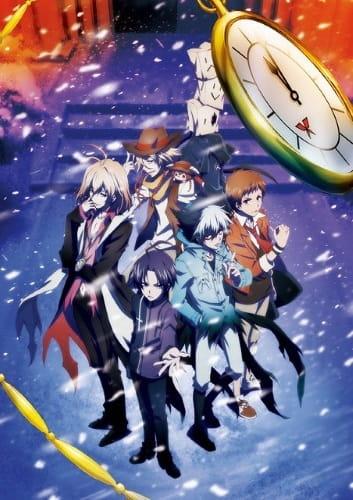
Servamp
SERVAMP(サーヴァンプ)
- Action
- Supernatural
- Vampire
- Episodes
- 12
- Duration
- 24 min per ep
- Aired
- Jul 5, 2016 to Sep 20, 2016
- Status
- Finished Airing
Synopsis
Mahiru Shirota lives by a simple rule: avoid complications whenever possible. Yet he also believes it’s worse to do nothing and regret it later—a mindset that leads the 15-year-old to take in a stray cat on his walk home from school. He names the cat Kuro, unaware that the small act of kindness is about to upend his ordinary routine.
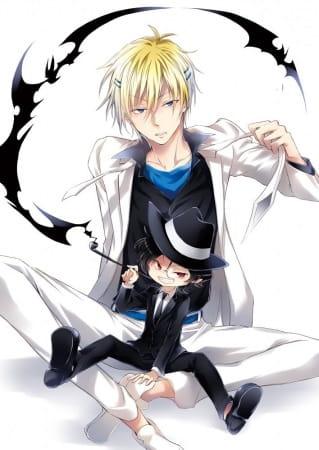
Not long after, Mahiru comes home to find an unfamiliar young man in his house. In the confusion, the intruder is exposed to sunlight and, to Mahiru’s disbelief, turns into Kuro. The truth comes out: Kuro is a vampire who prefers the life of a lazy shut-in, and he intends to leave once night returns. But a chain of escalating trouble ends with Mahiru accidentally entering a contract with him, pulling both into dangerous clashes involving supernatural “servants” and violent, blood-seeking foes—anything but the uncomplicated life Mahiru wanted.
Otaku Consensus
Servamp is a stylish but compressed supernatural action adaptation: Junko Yamanaka’s sharp character designs, Kenji Kawai’s music, and the Brain’s Base/Platinum Vision production give it enough identity to stand apart from routine vampire anime. The critical verdict is that its 12-episode structure moves too quickly for the ensemble and philosophy-of-friendship material to land with full force, making it more satisfying as a fast character sampler than as a complete adaptation.
Why You Should Watch
Watch Servamp if you want urban vampire action with contract mechanics, animal transformations, and a mostly male ensemble without the heavier melodrama of a long-running battle shounen. It scratches a similar itch to Noragami in the way supernatural partnerships collide with modern city life, while its character-first energy sits closer to Blue Exorcist than to traditional gothic vampire fiction. The appeal is not slow-burn worldbuilding; it is the quick hit of distinctive designs, bantering personalities, and Kenji Kawai’s punchy musical presence inside a compact 12-episode package. Viewers who like adaptations that function as an introduction to a larger manga world will get more out of it than viewers demanding a fully resolved standalone story.
Key Characters
- MMahiru Shirota
Mahiru stands out less as a standard school protagonist than as a character defined by clashing instincts: he wants simplicity, but his conscience keeps dragging him toward responsibility.
- KKuro
Kuro is the show’s tonal hook, turning vampire power into a deadpan, avoidant, low-energy presence that gives the action a built-in comic counterweight.
What Makes It Stand Out
- 1
The anime is a Brain’s Base and Platinum Vision production, a pairing that gives the series a cleaner, character-design-forward look rather than leaning into gothic horror texture.
- 2
Kenji Kawai composed the music, and the soundtrack is one of the recurring positives in mixed reception, with viewers more likely to remember its energy than the adaptation’s compression.
- 3
The 12-episode TV run is central to how the anime is received: reviewers frequently describe it as material that feels like it needed closer to a two-cour structure, especially for its ensemble and thematic beats.
- 4
Servamp’s tag profile is unusually busy for a vampire series, combining Vampire, Urban Fantasy, Shapeshifting, Adoption, Animals, Super Power, and even Werewolf elements rather than staying in a single supernatural lane.
- 5
The series uses a primarily male ensemble and shoujo-leaning character appeal, which helps explain why fan discussion often centers on cast chemistry and design favorites as much as on action scenes.
Fun Facts & Trivia
- Fun fact 1
- Strike Tanaka is credited as the original creator, and several reviewers specifically point to the manga as handling the material more fully than the anime’s rushed adaptation.
- Fun fact 2
- The TV anime aired as a Summer 2016 series from July 5 to September 20, finishing at 12 episodes.
- Fun fact 3
- The direction credits are split between chief director Shigeyuki Miya and director Hideaki Nakano, with Kenji Konuta handling series composition.
- Fun fact 4
- Junko Yamanaka handled character design, a production credit that lines up with one of the most common positives in reception: the series’ distinctive-looking cast.
- Fun fact 5
- Animator Isuta is credited on key animation for the opening, ending, and episodes 1, 7, 11, and 12, while Mizuki Takahashi contributed key animation to episode 1.
Studios
- Brain's Base
- Platinum Vision