Fate/stay night
Fate/stay night
- Action
- Fantasy
- Romance
- Urban Fantasy
- Episodes
- 24
- Duration
- 24 min per ep
- Aired
- Jan 7, 2006 to Jun 17, 2006
- Status
- Finished Airing
Synopsis
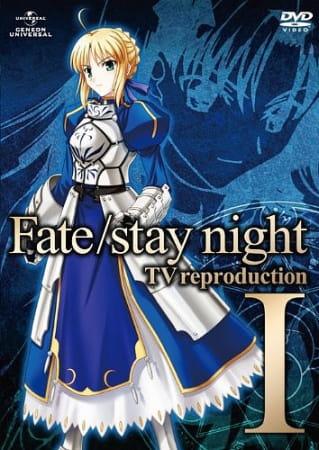
Shirou Emiya survives a devastating fire that takes his family and is later taken in by Kiritsugu Emiya, who raises him while imparting his own ideals of justice and the basics of magecraft. Years after Kiritsugu’s death, an ordinary night at school turns dangerous when Shirou stumbles upon a violent clash between superhuman familiars known as Servants.
Gravely wounded and pursued, Shirou is pushed to the brink and ends up summoning his own Servant: the knight Saber. Thrust into the Fifth Holy Grail War, he and Saber join a ruthless contest where seven mages and their Servants fight for the chance to claim the Holy Grail, a legendary wish-granting relic. As the battles escalate, Shirou is forced to confront how far his convictions can survive in a world where heroism and killing often blur into the same act.
Otaku Consensus
Fate/stay night earns its place as the franchise’s rough but important first anime gateway: Yuuji Yamaguchi’s atmospheric direction, Studio Deen’s moody 2006 urban-fantasy palette, and the frequently praised battle music give it a distinct identity apart from later Fate productions. The common knock is adaptation quality, with many viewers finding it less satisfying than Kinoko Nasu’s visual novel and later Fate anime, but its characters, designs, and historical role keep it more than a disposable curiosity.
Why You Should Watch
Watch Fate/stay night if you want a mythic battle royale with romance, school-life quiet, and early-2000s supernatural atmosphere rather than the colder military fatalism of Fate/Zero. Studio Deen’s version is best approached as the franchise’s formative anime: slower, moodier, and more character-centered than the later spectacle-driven adaptations. It scratches the same urban-occult itch as Shakugan no Shana or early Bleach arcs, but with Type-Moon’s specific fascination for contracts, heroic legends, and ideals pushed into combat. Viewers who care about where Fate’s anime identity began will get more from it than viewers only chasing modern animation polish. Its 24-episode length also gives the cast room for domestic pauses, magical explanations, and uneasy alliances instead of nonstop tournament escalation.
Key Characters
- SShirou Emiya
Shirou remains one of Fate’s most debated leads because his heroic idealism is written less as a power fantasy than as a psychological inheritance that the story keeps testing.
- SSaber
Saber became one of Type-Moon’s defining icons through a mix of knightly restraint, battlefield authority, and a character design that stayed recognizable across the franchise’s later explosion.
- KKiritsugu Emiya
Kiritsugu’s presence gives the series a generational weight, making Shirou’s worldview feel like the aftermath of an adult’s unfinished moral argument rather than a simple teenage dream.
What Makes It Stand Out
- 1
This is Studio Deen’s 24-episode 2006 TV adaptation, the version that introduced many anime-only viewers to Type-Moon before Fate became a sprawling multimedia franchise.
- 2
The core Type-Moon creative identity is unusually visible in the credits: Kinoko Nasu is credited for the original story, Tomotaka Takeuchi for the original character designs, and Takeuchi also served as a supervisor.
- 3
Critical discussion repeatedly singles out the show’s atmosphere and battle themes, which helped preserve its reputation even among viewers who criticize it as an uneven visual-novel adaptation.
- 4
Its fantasy vocabulary is weapon-forward rather than spell-only: the listed production roles include Norikatsu Nakano on weapon design and Tomochi Kosaka on prop design, matching the show’s emphasis on swords, spears, and legendary armaments.
- 5
Its reception profile is split in a revealing way: it sits at a modest 7.27 MAL score and 68/100 AniList score, yet remains highly visible with MAL Popularity #190, showing how many viewers still treat it as a Fate entry point.
Fun Facts & Trivia
- Fun fact 1
- Anime Obscura frames the 2006 series as a once-prominent adaptation now overshadowed by newer remakes and spin-offs, but also credits it with helping launch a former indie visual novel property into the larger Fate phenomenon.
- Fun fact 2
- The production aired from January 7 to June 17, 2006, giving it a continuous two-cour run rather than the split-season model that later became common for major fantasy-action anime.
- Fun fact 3
- The AniList tag profile is unusually concentrated: Magic is listed at 96%, Battle Royale at 95%, and Death Game at 94%, while Mythology, Spearplay, Samurai, and Swordplay also rank highly.
- Fun fact 4
- The show has a large review footprint for an older TV anime, with MyAnimeList listing more than 200 user reviews in the provided data, reflecting how contested its reputation remains among Fate viewers.
- Fun fact 5
- Tomotaka Takeuchi appears twice in the key staff data, both as original character designer and supervisor, which helps explain why the anime’s visual identity stays closely tied to Type-Moon’s source-material branding.
Studios
- Studio Deen
![[C] CONTROL - The Money and Soul of Possibility](/_next/image?url=https%3A%2F%2Fd111jwrw4u3bt.cloudfront.net%2Fanime-posters%2Fposter-10163.webp&w=1920&q=75)