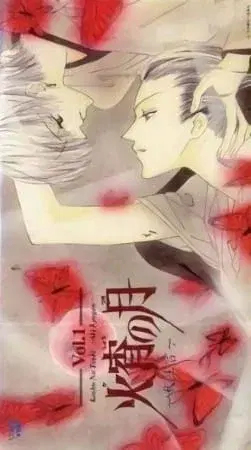
Descendants of Darkness
闇の末裔 (Yami no Matsuei)
- Boys Love
- Fantasy
- Horror
- Mystery
- Detective
- Vampire
- Episodes
- 13
- Duration
- 23 min per ep
- Aired
- Oct 2, 2000 to Dec 18, 2000
- Status
- Finished Airing
Synopsis
Even in the afterlife, bureaucracy and crime don’t stop. Tsuzuki Asato is a cheerful, slightly scatterbrained shinigami tasked with ensuring the dead stay where they belong. Though he’s been on the job for over 70 years, he’s stuck in the worst division with meager pay—and a reputation for going through partners far too quickly.
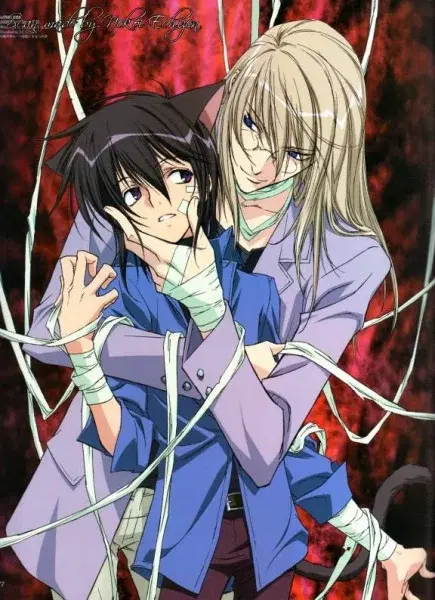
That pattern shifts when he’s paired with Kurosaki Hisoka, a sharp-tongued, guarded 16-year-old who takes the work seriously. As the two investigate case after case, their partnership deepens while drawing them into a larger mystery tied to the elusive Dr. Muraki Kazutaka, a serial killer at the center of a growing conspiracy. At the same time, Tsuzuki is forced to confront the unresolved darkness surrounding his own death—something that refuses to let him rest, even now.
Otaku Consensus
Descendants of Darkness endures less as a complete thriller than as a compact gothic shoujo mood piece: Hiroko Tokita’s direction, J.C.Staff’s character-forward visuals, and Yumi Nakayama’s bishonen designs make its disturbing psychosexual material more memorable than its mystery mechanics. Critics and fans consistently single out Tsuzuki and Hisoka’s chemistry, the elegant menace of Muraki, and the show’s willingness to get morally ugly; the common criticism is that the 13-episode adaptation rushes its final stretch and lands without the closure its buildup deserves.
Why You Should Watch
Watch Descendants of Darkness if you want occult detective work filtered through 2000-era shoujo gothic sensibility: jeweled eyes, elegant killers, office-afterlife absurdity, and BL tension that shapes the emotional stakes without turning the series into a conventional romance. It scratches a similar itch to Pet Shop of Horrors or Tokyo Babylon: short-form supernatural cases where beauty and cruelty sit uncomfortably close together. The appeal is not airtight plotting; it is the friction between light banter, bureaucracy, gore, and psychosexual horror. Viewers who prefer modern pacing or a fully sealed ending may bounce off it, but anyone drawn to pretty-boy horror, morally contaminated villains, and character intimacy that feels dangerous rather than cute will find it unusually specific.
Key Characters
- AAsato Tsuzuki(VA: Shinichiro Miki)
Tsuzuki is remembered less as a standard supernatural lead than as a disarming mix of comic warmth, professional exhaustion, and buried self-loathing, with Miki’s performance selling both the sweetness and the fracture lines.
- HHisoka Kurosaki(VA: Mayumi Asano)
Hisoka’s guarded severity gives the series its emotional counterweight, and fans often point to his slow-building trust with Tsuzuki as the anime’s most rewarding relationship.
- KKazutaka Muraki(VA: Show Hayami)
Muraki stands out as a polished, predatory antagonist whose calm voice and refined presentation make the show’s horror feel intimate rather than merely violent.
What Makes It Stand Out
- 1
J.C.Staff produced the 13-episode series during the fall 2000 season, giving it the glossy, cel-era television look associated with turn-of-the-millennium shoujo adaptations rather than the flatter digital polish of later supernatural procedurals.
- 2
Yumi Nakayama served as both character designer and chief animation director, which helps explain the anime’s consistent emphasis on expressive eyes, slim silhouettes, and visual glamour even when the material turns grisly.
- 3
The structure uses compact supernatural casework to build toward Muraki rather than treating every investigation as isolated filler, a choice that makes the series feel more serialized than many one-cour occult shows of its period.
- 4
Tsuneyoshi Saitou’s music supports the tonal whiplash between office comedy, gothic melodrama, and horror, giving the show a more theatrical atmosphere than its limited episode count might suggest.
- 5
The show’s tag profile is unusually revealing: AniList marks it strongly for Gods, Afterlife, Magic, Detective work, LGBTQ+ themes, Psychosexual content, and Gore, a combination that captures why it feels stranger than a simple boys-love mystery label implies.
Fun Facts & Trivia
- Fun fact 1
- Descendants of Darkness aired from October 2 to December 18, 2000, making it a single-cour adaptation with only 13 episodes to cover Youko Matsushita’s source material.
- Fun fact 2
- Yumi Nakayama’s dual role as character designer and chief animation director is a major production detail for a series whose fan reputation leans heavily on character beauty and visual mood.
- Fun fact 3
- The sound department was split between Hideyuki Tanaka as sound director and Yasuyuki Konno on sound effects, an important pairing for a show that moves between workplace comedy, occult ritual, and body-horror punctuation.
- Fun fact 4
- Its reception remains notably middle-weight rather than cult-megahit: MAL lists it at 7.03 from 25,170 votes, while AniList records a 64/100 score and 119 favorites.
- Fun fact 5
- Although often remembered through its boys-love appeal, AniList’s strongest tag in the supplied data is Gods at 84%, with Shoujo and Afterlife both at 80%, pointing to how central its spiritual cosmology and demographic style are to its identity.
Studios
- J.C.Staff