The Take
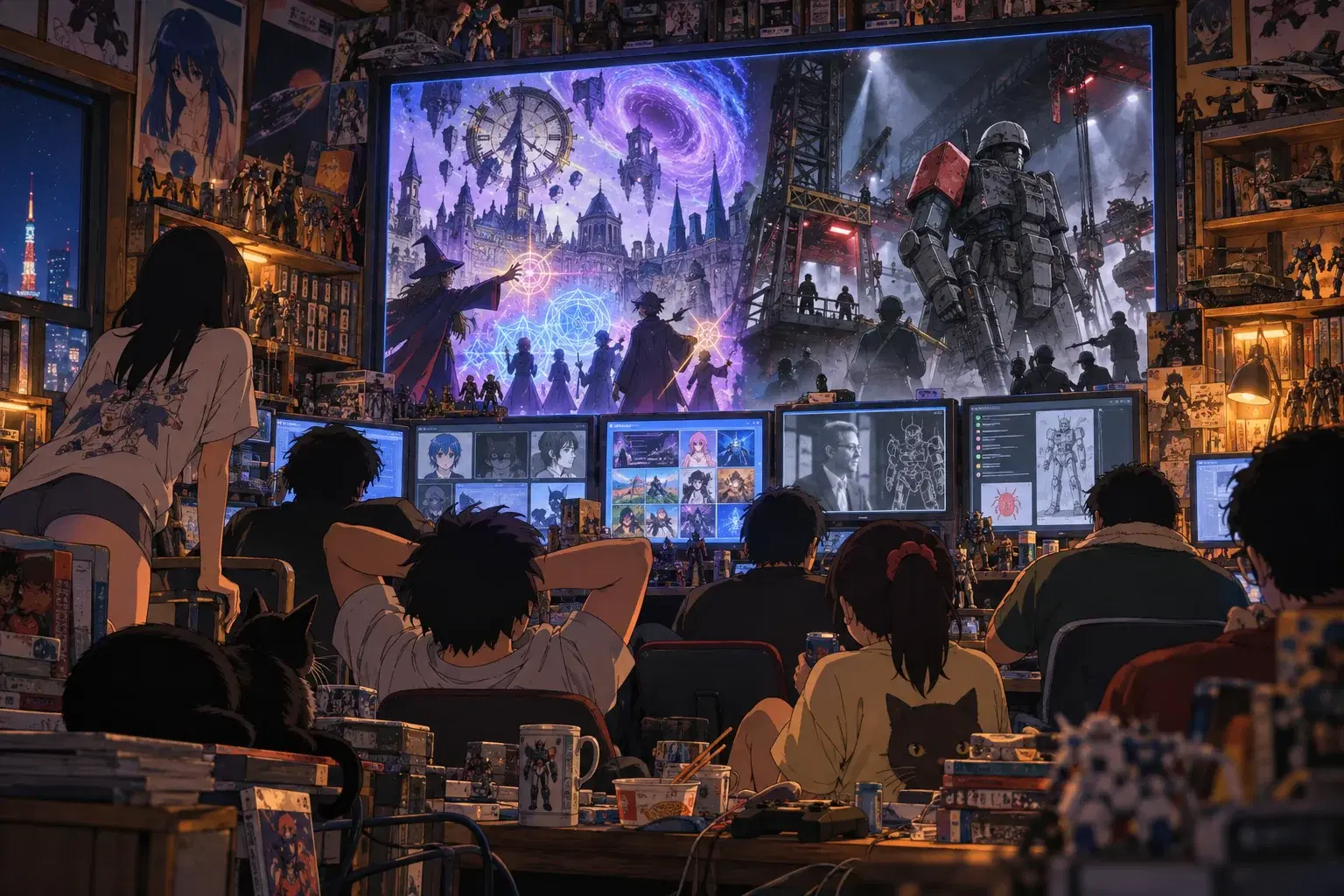
Yes: anime reaction channels as we know them are in real danger in 2026. Not the idea of reacting to anime, not the joy of watching a creator emotionally implode during a twist, and not the legitimate criticism that makes fandom smarter. I mean the business model that has quietly become normal on YouTube: episode footage on-screen, heavy audio use, a face-cam in the corner, and a paid version somewhere else promising the fuller experience. That version of anime reaction content is standing on a trapdoor.
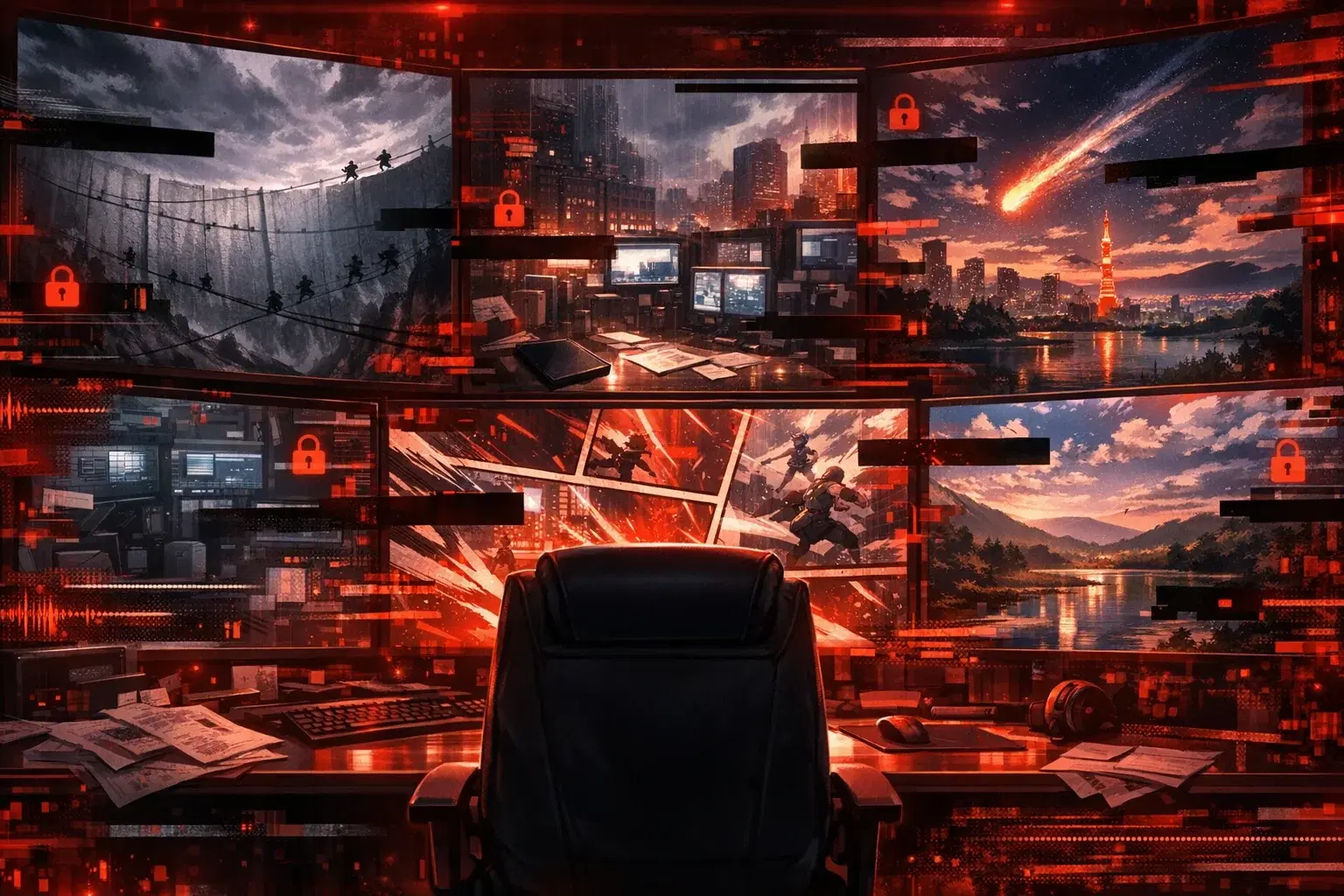
The recent takedown wave connected to Remove Your Media did not come out of nowhere. It exposed a tension the fandom has been pretending is theoretical: some reaction channels are criticism, while others are functionally communal redistribution with extra facial expressions. When creators react to shows like Attack on Titan, Demon Slayer: Kimetsu no Yaiba, Jujutsu Kaisen, Chainsaw Man, One Piece, and Death Note, they are handling valuable copyrighted works, not disposable internet clips. The old bargain was informal: rights holders tolerated fan hype because it helped discovery. That bargain is cracking.
Otaku Insider's take: the anime reaction channel is not sacred just because fans like it. If a viewer can follow most of an episode through your upload, your content is not merely fandom; it is competing with the thing you claim to celebrate. And if the industry keeps pushing enforcement this aggressively, a lot of channels could vanish before they learn the difference.
The Evidence
The immediate flashpoint is the Remove Your Media controversy, first widely reported after multiple anime reaction YouTubers said their channels had been hit with large numbers of copyright takedown requests. Nicholas Light, a creator with roughly 1.3 million subscribers, said more than 60 videos were temporarily removed after over a dozen copyright strikes tied to Remove Your Media requests. He posted a panic-inducing video suggesting his channel could be deleted, then followed up days later saying YouTube had restored the videos and strikes and that the channel would not be terminated.
Rice & Ginger, run by Ron and Michelle Jackson, described a similar scare, saying their channel had been flagged hundreds of times and was at risk of deletion. Their channel was still online after the reported deadline, which matters: this is not a simple story of instant mass extinction. But it is also not harmless. YouTube's copyright strike system is designed to be existential. According to YouTube's own policy, three copyright strikes within 90 days can lead to channel termination, and associated channels may be affected too. That means even a creator who believes they are protected by fair use can suddenly be forced into legal-defense mode just to keep years of work alive.
The counter-notice process is not a friendly appeal button. YouTube says a valid counter notification gives the claimant 10 U.S. business days to show evidence of legal action; otherwise, the content can be restored. But filing one requires real legal information, including a creator's name and address, which YouTube must share with the claimant. For a full-time YouTuber, that is not a minor inconvenience. It is a choice between surrendering videos, exposing personal information, or risking a lawsuit.
Remove Your Media's side of the argument is also more serious than some reaction fans want to admit. Its legal representative told The Verge that the company works for major anime clients including Crunchyroll and VIZ Media, though The Verge noted that those companies had not independently confirmed those relationships on record. That caveat is important. Still, the rights-holder theory is clear: some reaction creators allegedly show works in their entirety, and some free YouTube videos drive viewers toward paywalled full-episode reactions. If a channel uses a cut-down upload as an advertisement for a Patreon-style version containing full synchronized footage or audio, rights holders are going to see that less as criticism and more as an unauthorized distribution funnel.
Fair use does not give creators a magic shield here. The U.S. Copyright Office identifies criticism, comment, news reporting, teaching, scholarship, and research as areas where fair use may apply, but courts weigh four factors: purpose and character, nature of the work, amount used, and market effect. Anime episodes are highly creative works. Using large portions of them weighs against the uploader. And market substitution is the killer question: could a viewer use the reaction video instead of watching legally? If the answer is yes, the creator is in dangerous territory.
That is why anime is a uniquely combustible category for YouTube reaction culture. A reaction to a trailer or a short clip is one thing. A reaction to a plot-heavy episode of Steins;Gate, a climactic fight in My Hero Academia, a mystery turn in Erased, or a carefully staged emotional sequence in Violet Evergarden is different. The value is not just the image. It is the timing, music, voice performance, reveal, and animation acting. Show too much of that, and the reaction starts carrying the same entertainment payload as the original.
The bigger industry pattern makes the crackdown feel inevitable. Remove Your Media previously appeared in anime anti-piracy enforcement involving GitHub, where more than 900 anime piracy-related repositories and forks were removed after a takedown request, though GitHub reportedly rejected part of the circumvention argument. CODA, Japan's Content Overseas Distribution Association, is also surveying piracy losses for Japan-origin content across major international markets. Meanwhile, a California federal court recently rejected a fair-use argument from anime recap operators and ordered YouTube to reveal identities behind certain channels. Recap channels are not identical to face-cam reaction channels, but the signal is obvious: courts and rights holders are increasingly skeptical of low-transformative anime uploads that summarize, reproduce, or replace the original viewing experience.
The economics have changed too. Anime is no longer a niche overseas hobby industry relying on fansubs and word of mouth to reach global viewers. International streaming, licensing, theatrical releases, merchandise, and platform exclusives are central to the business. A reaction channel covering Spy x Family, Naruto, Fullmetal Alchemist: Brotherhood, or Cowboy Bebop might honestly drive new viewers to legal platforms. But from a rights-holder perspective, that promotional upside no longer excuses every use. Once global revenue becomes mature, tolerance shrinks.
The most revealing contrast is KADOKAWA's recent publication of secondary-use guidelines for certain titles, allowing some clip or cutout videos under specific conditions. That is the future fans should be asking for: clear rules, not DMCA roulette. The fact that one publisher is experimenting with controlled fan use shows the industry is not allergic to fandom. It is allergic to losing control of distribution.
The Counterargument
The best defense of anime reaction channels is not silly. Good reaction creators absolutely add value. A thoughtful upload can function like a post-episode watch party, a criticism session, and a recommendation engine all at once. Many fans discovered shows because a trusted creator broke down why Mob Psycho 100 was more than a flashy action series, why Kaguya-sama: Love is War works as comedy craft, or why Neon Genesis Evangelion still inspires arguments decades later. At their best, reaction channels expand fandom rather than cannibalize it.
There is also a real danger in over-enforcement. Mass takedowns can hit transformative videos along with lazy ones. YouTube's system favors claimants because the platform has to process huge volumes of copyright requests at scale. If an enforcement vendor files aggressively, creators may lose income and visibility before any nuanced fair-use analysis happens. That is bad for criticism, bad for fan culture, and frankly bad for anime marketing. International fandom has always relied on evangelists, and some reaction creators are among the loudest evangelists the medium has.
The rights-holder side also needs to stop pretending every unauthorized use is equally harmful. A tightly edited, heavily commented 12-minute analysis using brief clips is not the same as a near-complete watch-along. A creator crying at a famous scene is not automatically piracy. The industry should not nuke the entire ecosystem just because some channels built legally flimsy revenue streams. Clear clipping policies, creator programs, approved watch-along formats, and licensing pathways would do more good than making everyone guess where the invisible line is.
But here is where I land: the counterargument saves the best creators, not the old format. The existence of transformative reactions does not protect non-transformative ones. Fans should defend criticism. They should not defend uploads that make legal viewing feel optional.
The Conclusion
So, are anime reaction channels about to die? Here is the promised reveal: no, it will not actually be that bad. But the format is about to grow up fast.
The channels most at risk are the ones built around showing too much, saying too little, and using YouTube as a funnel toward full-episode paid reactions. That model could absolutely die out, and honestly, it probably should. The creators who survive will use less footage, lean harder into commentary, rely on timers and legal watch-alongs, document their transformative purpose, and treat anime as art to analyze rather than content to repackage.
For fans, the practical answer is simple: watch the anime legally, then reward creators who add something meaningful. If your favorite reaction channel makes you appreciate A Silent Voice, Your Name., Vinland Saga, or KonoSuba: God's Blessing on This Wonderful World! more deeply, that is worth protecting. If it lets you experience the episode without paying for the episode, that is the problem.
Otaku Insider's take, sharpened to one sentence: anime reaction channels are not dying, but the lazy version of them is. The fandom should not mourn that too hard. It should demand something better.
Sources
- [1] Anime reaction YouTubers are at war with copyright enforcers | The Verge (45179bb5-2a1f-4bc9-a93f-f86df27a1ff5.atarimworker.io)
- [2] Understand copyright strikes - Computer - YouTube Help (support.google.com)
- [3] Submit a copyright counter notification - Computer - YouTube Help (support.google.com)
- [4] U.S. Copyright Office Fair Use Index (copyright.gov)
- [5] GitHub Nukes 900+ Anime Piracy Repos and Forks, But Rejects 'Circumvention' Claims * TorrentFreak (torrentfreak.com)
- [6] Survey on Losses from Online Piracy of Japan-Origin Content in 2025 - Content Overseas Distribution Association(CODA) (coda-cj.jp)
- [7] KADOKAWAの7月放送・配信アニメ4タイトルの「二次利用ガイドライン」公開、切り抜き動画等の公開が可能に | KADOKAWA (kadokawa.co.jp)
- [8] Source (aja.gr.jp)
- [9] www.sec.gov (sec.gov)
- [10] Court Rejects Fair Use Claim, Orders YouTube to Unmask Anime Recap Channels * TorrentFreak (torrentfreak.com)
- [11] Copyrights — VIZ Media - Brands (cpg.viz.com)
- [12] Manga 'Eat-Man' Gets New Anime Adaptation (MAL_RSS)
- [13] Sparks of Tomorrow Anime Reveals New Story Visual Ahead of Final Episodes (ANIME_CORNER)
- [14] Unnamed Memory -after the end- Light Novel Ending With 8th Volume (ANIME_CORNER)
- [15] Adieu Galaxy Express 999 Anime Film Celebrates 45th Anniversary with 4K Theatrical Screenings (CRUNCHYROLL)
- [16] Magical Girl Lyrical Nanoha EXCEEDS Gun Blaze Vengeance Episode 10 Insert Song Anime Music Video Streamed (CRUNCHYROLL)
- [17] Muramasa: Revenant Blades Cuts a Path Towards a 4 Feb 2027 Launch on PlayStation®5, PC, Nintendo Switch™ 2, and Nintendo Switch™ (ANN)
- [18] Tokyo Gap-Financing Market Highlights 5 Animation Projects Seeking More Funding (ANN)
- [19] Xbox Game Studios Takes Over Publishing Hideo Kojima's Physint Action Espionage Game (ANN)
- [20] Live-Action Sins of Kujo Film's Teaser Reveals More Cast (ANN)
- [21] Xenoblade Chronicles 3 Game's Switch 2 Edition Highlights New Character, New Mode in Video (ANN)
- [22] Millennium Family TV Anime Casts Ryōta Suzuki (ANN)
- [23] Akihito Yoshitomi's Eat-Man Manga Gets New Anime Project (ANN)
- [24] Witch on the Holy Night Anime Movie Hits Theaters Worldwide in January 2027, in North America on January 29 (ANIME_CORNER)
- [25] A Certain Item of Dark Side Anime Reveals Key Visual (ANIME_CORNER)
- [26] A certain dark item Anime Gets New Visual Featuring the Dark Side Members (CRUNCHYROLL)
Written by Ranen with AI support — Ranen picks every story, shapes the angle, and reviews each article before it's published. Learn more in our editorial policy.