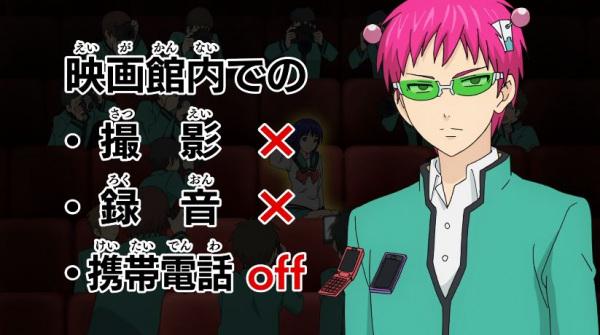
The Disastrous Life of Saiki K.
斉木楠雄のΨ難 (Saiki Kusuo no Ψ-nan)
- Comedy
- Gag Humor
- School
- Super Power
- Episodes
- 120
- Duration
- 5 min per ep
- Aired
- Jul 4, 2016 to Dec 26, 2016
- Status
- Finished Airing
Synopsis
Kusuo Saiki has a full arsenal of psychic powers—telepathy, x-ray vision, and more—but none of it feels like a gift. Every ability brings its own set of headaches, and all he wants is a quiet, perfectly ordinary school life where he can keep his head down and enjoy a little peace.
Keeping his powers hidden from his classmates proves easier said than done. Despite his efforts to avoid attention, Saiki keeps getting pulled into the orbit of eccentric classmates like the dim-witted Riki Nendou and the self-styled, delusion-prone Shun Kaidou. With chaos constantly finding its way to him, the “normal” life Saiki craves becomes the hardest feat of all.
Otaku Consensus
The Disastrous Life of Saiki K. earns its strong 8.41 MAL score by turning Shuuichi Asou’s manga into a precision-engineered gag machine: Hiroaki Sakurai’s direction and Michiko Yokote’s series composition keep the 120 short episodes fast, modular, and unusually rewatchable. Critics and fan comments consistently single it out as a fresh, highly effective comedy rather than a superpower show with jokes attached. The main criticism is real but narrow: its relentless episodic rhythm and punchline density can feel repetitive or lightweight for viewers who want long-form dramatic escalation.
Why You Should Watch
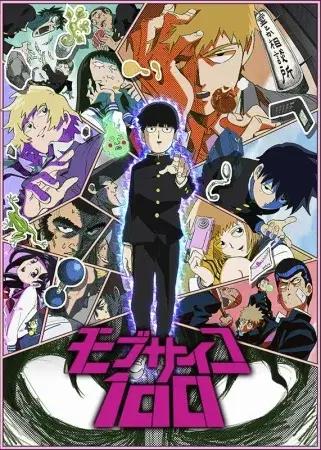
Watch Saiki K. if you want superpower comedy without tournament arcs, melodrama, or the usual “chosen one” self-importance. It scratches a similar itch to Gintama’s rapid parody and Mob Psycho 100’s psychic absurdity, but compresses the chaos into bite-size school-sitcom setups where the punchline usually arrives before another show would finish explaining the joke. The appeal is in the editing rhythm: scenes are built like comedy sketches, with deadpan narration, social sabotage, and meta jokes firing in quick succession. Viewers who like ensemble casts, parody-heavy shounen, and aro/ace-coded leads will find it especially distinctive. If your ideal comfort anime is loud, clever, and low-commitment rather than plot-heavy, this is one of the genre’s safest recommendations.
Key Characters
- KKusuo Saiki
Kusuo Saiki stands out as a shounen comedy lead whose funniest trait is not ambition but refusal, with AniList’s aromantic and asexual tags reflecting how central emotional detachment is to his appeal.
- RRiki Nendou
Riki Nendou is the kind of gloriously dense gag character fans remember because his stupidity does not just create jokes; it disrupts the show’s own psychic logic.
- SShun Kaidou(VA: Nobunaga Shimazaki)
Shun Kaidou turns chuunibyou self-mythology into a running performance, giving the ensemble one of its most reliable sources of parody and melodramatic overreaction.
What Makes It Stand Out
- 1
The series uses a 120-episode short-form structure across its July to December 2016 run, which explains why its comedy feels closer to a stacked sketch reel than a conventional half-hour school anime.
- 2
Hiroaki Sakurai’s direction emphasizes speed and interruption, making the show’s meta, parody, and surreal-comedy elements feel integrated rather than scattered.
- 3
Michiko Yokote’s series composition supports an episodic format rated highly on AniList, with jokes built to reset quickly while still letting the ensemble become familiar through repetition.
- 4
The production pairs Egg Firm with J.C.Staff, giving the anime a clean, readable TV-comedy style that prioritizes reaction timing and visual clarity over spectacle animation.
- 5
The music credits are unusually characterful for a gag anime: Psychic Lover handles music, while Dempagumi.inc and Natsuki Hanae perform opening and ending themes across the season.
Fun Facts & Trivia
- Fun fact 1
- The anime adapts work by original creator Shuuichi Asou, whose name is central to the series’ identity rather than being hidden behind the studio branding.
- Fun fact 2
- Its broadcast window was compact for a 120-episode listing: the show aired from July 4, 2016 to December 26, 2016 and finished within the same calendar year.
- Fun fact 3
- Episode 90 is notable in the music credits for featuring insert songs by Ai Kayano with “Angel Wink” and Nobunaga Shimazaki with “Bloody Moon.”
- Fun fact 4
- On AniList, the show’s highest tags are Super Power at 96%, Surreal Comedy at 95%, Satire at 91%, Episodic at 89%, and Parody at 87%, which maps closely to why fans discuss it as a gag-first anime rather than a school-superpower hybrid.
- Fun fact 5
- Its audience footprint is unusually large for a pure comedy: MAL lists it at 8.41 from 706,773 votes with a #131 popularity rank, while AniList records an 83/100 score and 21,784 favourites.
Studios
- Egg Firm
- J.C.Staff