Asobi Asobase: Workshop of Fun
あそびあそばせ (Asobi Asobase)
- Comedy
- Gag Humor
- School
- Episodes
- 12
- Duration
- 23 min per ep
- Aired
- Jul 8, 2018 to Sep 23, 2018
- Status
- Finished Airing
Synopsis
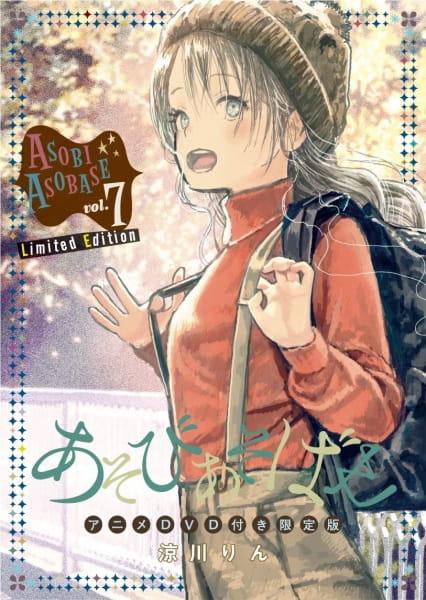
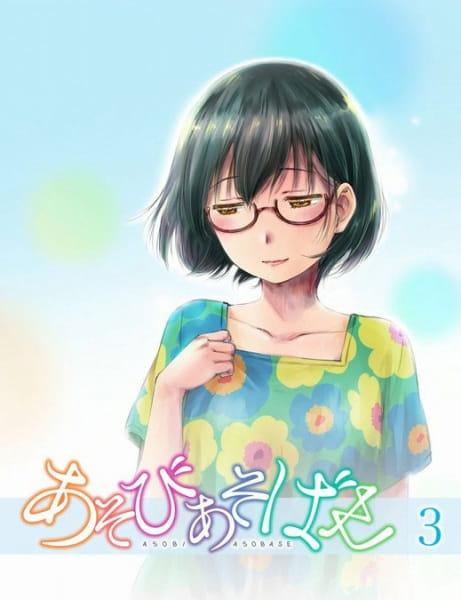
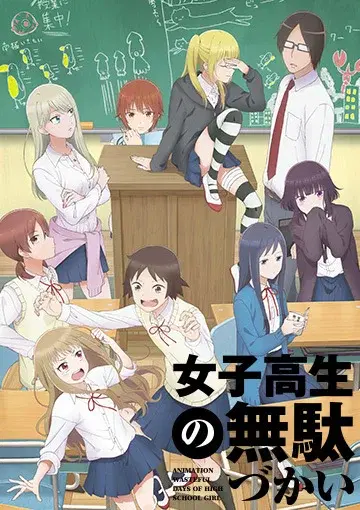
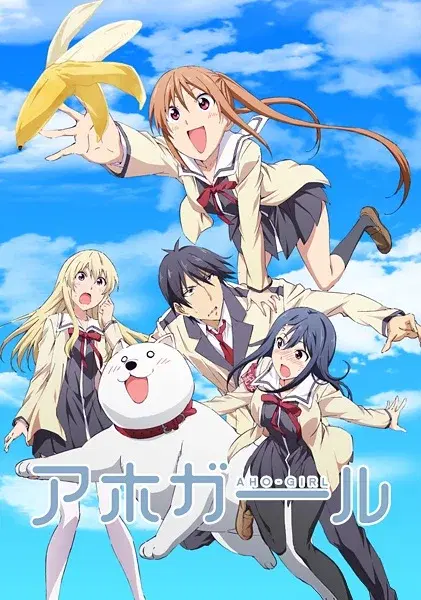
At recess, Olivia—a transfer student from abroad who can’t speak English—ends up playing “look-the-other-way” with Hanako Honda, an outspoken, scatterbrained classmate. Their noisy games quickly draw the attention of Kasumi Nomura, a blunt, solitary girl who’s often mocked by her older sister for always losing. Kasumi tries to stay out of it, but Olivia’s invitations and the chaos around her gradually pull her into the fun—along with her own sharp brand of troublemaking.
Before long, the three form an unlikely bond and create the “Pastime Club,” a place where they can indulge in their daily mischief. Between botched attempts at learning English, awkward efforts to seem popular, and narrowly avoiding teachers at the worst possible moments, their school days are anything but quiet.
Otaku Consensus
Asobi Asobase lands as one of 2018’s most enduring gag comedies because Seiji Kishi’s direction and Lerche’s visual timing turn simple school-club sketches into precision-engineered eruptions of facial horror, slapstick, and social sabotage. Critics and fans consistently single out its expression work, abrupt pacing, and unapologetically crude punchlines as the adaptation’s strengths; the real caveat is that its sketch-comedy structure can feel uneven when a bit runs longer than its shock value.
Why You Should Watch
Watch Asobi Asobase if you want the “cute girls doing cute things” setup stripped of comfort and weaponized into noise, humiliation, and grotesque reaction faces. It scratches the same escalation itch as Nichijou, but with less warmth and more middle-school pettiness; it also shares Seitokai Yakuindomo’s appetite for socially inappropriate jokes without becoming a one-lane innuendo machine. The appeal is in the hard cuts from delicate character art to feral expressions, the way every ordinary pastime becomes a psychological trap, and the confidence to make its heroines genuinely awful without asking you to find them aspirational. At 12 episodes, it is compact enough to binge, but dense enough that individual gags became the show’s real calling card.
Key Characters
- OOlivia
Olivia is the show’s most elegantly stupid contradiction: an “international” image wrapped around one of its most chaotic social instincts.
- HHanako Honda
Hanako is the engine of escalation, a loud, bright disaster whose confidence makes every bad idea feel like a formal club proposal.
- KKasumi Nomura
Kasumi’s deadpan hostility gives the trio its sharp edge, turning her reluctance into some of the series’ most satisfying counterattacks.
What Makes It Stand Out
- 1
Lerche’s adaptation is built around visual whiplash: soft, polished school-comedy designs collapse into grotesque faces and body language at the exact moment a punchline detonates.
- 2
Director Seiji Kishi and assistant director Yuu Kinome push the pacing toward rapid sketch escalation rather than sitcom comfort, which is why many scenes feel engineered around the last half-second of a reaction.
- 3
Yuuko Kakihara’s series composition favors an episodic gag rhythm over a long dramatic spine, making the 12-episode run function like a curated set of escalating bits rather than a conventional club-anime arc.
- 4
Keiko Kurosawa’s character designs are central to the joke: the girls remain recognizable even when the animation distorts them into exaggerated, ugly, or panicked expressions.
- 5
Its AniList tag profile captures its unusual lane: Surreal Comedy and Slapstick both sit at 96%, while Parody is 77% and Meta is 52%, placing it closer to gag-anime assault than ordinary school comedy.
Fun Facts & Trivia
- Fun fact 1
- The anime is based on Rin Suzukawa’s original work, with the TV series credited to studio Lerche and airing as a 12-episode Summer 2018 title from July 8 to September 23.
- Fun fact 2
- The production credits include a separate title logo designer, Shibata Masafusa, a small but telling detail for a comedy that leans heavily on presentation and tonal misdirection.
- Fun fact 3
- Its visual team is unusually well documented in the core credits: Yuki Umino served as art director, Nobuhito Sue handled art design, Sakiko Itou handled color design, and Shinyo Kondou was director of photography.
- Fun fact 4
- Fan response has remained strong across databases: the series holds an 8.19 MAL score from over 253,000 votes and an AniList score of 79/100 with 5,480 favourites.
- Fun fact 5
- Contemporary review coverage repeatedly singled out the facial expressions as funny before the dialogue even lands, a reception pattern that helped define the show’s reputation more than any single storyline.
Studios
- Lerche