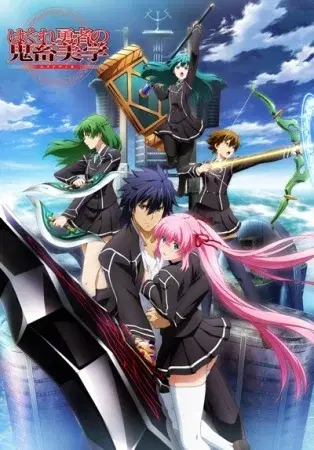
Trinity Seven
トリニティセブン
- Action
- Comedy
- Ecchi
- Fantasy
- Romance
- Harem
- School
- Episodes
- 12
- Duration
- 24 min per ep
- Aired
- Oct 8, 2014 to Dec 24, 2014
- Status
- Finished Airing
Synopsis
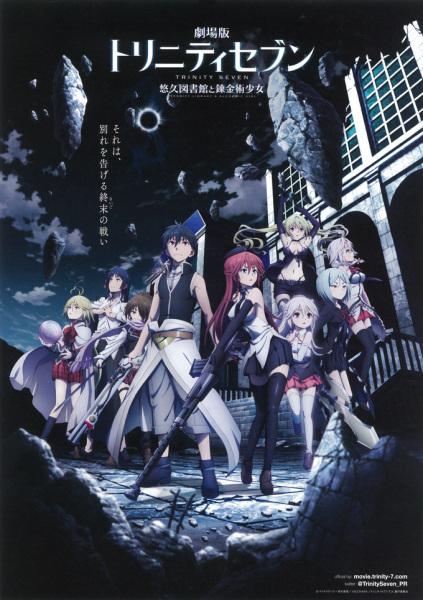
A crimson sun triggers the “Breakdown Phenomenon,” wiping out Arata Kasuga’s town and leaving its residents vanished. Clinging to a magical grimoire entrusted to him by his childhood friend and cousin, Hijiri Kasuga, Arata manages to recreate his world through artificial means—until that fragile reconstruction begins to collapse.
As Arata searches for answers, Lilith Asami confronts him with an ultimatum: surrender the grimoire or face death. Refusing both options, he enrolls at the secretive Royal Biblia Academy, a magic school where six powerful users—alongside Lilith—make up the elite group known as the Trinity Seven. Determined to find Hijiri and stop the catastrophe from repeating, Arata throws himself into their world of spells, rivalries, and growing bonds.
Otaku Consensus
Trinity Seven endures because Hiroshi Nishikiori treats its magic-school harem material as a quick, self-aware 12-episode ride: the pacing is brisk, Arata’s unfazed comic timing lands, and Seven Arcs Pictures gives the grimoires, weapons, and transformation beats a clean occult-pop identity. Its 7.02 MAL score and 67/100 AniList score reflect the ceiling: fans reward the confidence and cast chemistry, while the recurring criticism is that the ecchi harem formula and open-ended adaptation keep the magic system and drama from becoming as memorable as the banter.
Why You Should Watch
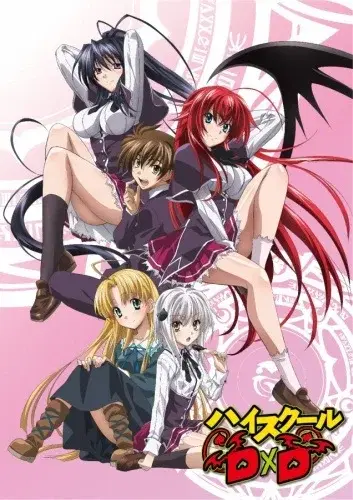
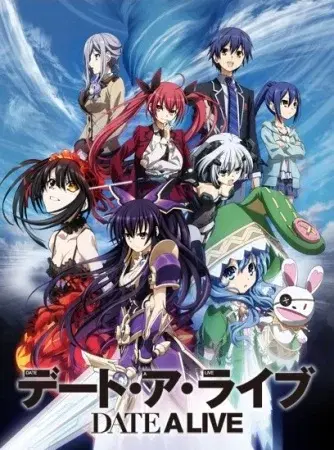
Watch Trinity Seven if you want High School DxD-style battle-school horniness without a helpless lead, or Date A Live’s girl-driven supernatural setup with a sharper, more teasing comic rhythm. Its best hook is Arata Kasuga’s attitude: he rarely collapses into standard harem panic, so the ecchi jokes play more like deadpan sparring than accidental embarrassment. The 12-episode run also helps; it moves through magic terminology, transformations, rivalries, and flirtation without settling into long training detours. Viewers who like occult aesthetics, female-heavy casts, and comedy that knowingly pokes at shounen-harem conventions will get the most out of it. Viewers looking for restrained romance or a fully resolved adaptation should know exactly what they are walking into.
Key Characters
- AArata Kasuga
Arata stands out in the harem field because his default response to danger, fanservice, and authority is calm provocation rather than flustered retreat.
- LLilith Asami
Lilith gives the series its strongest straight-woman energy, balancing magical authority with the kind of easily punctured composure that fuels much of the comedy.
- HHijiri Kasuga
Hijiri functions less like a standard absent love interest and more like the emotional and mythological pressure point behind Arata’s choices.
What Makes It Stand Out
- 1
Seven Arcs Pictures produced the TV anime as a compact 12-episode Fall 2014 series, which gives it a fast, gag-forward rhythm rather than the longer escalation structure common to battle-school adaptations.
- 2
Director Hiroshi Nishikiori and series composer Hiroyuki Yoshino anchor the adaptation around tonal whiplash as a feature: magical confrontations, flirtation, and parody beats often arrive in the same scene instead of being separated into neat genre lanes.
- 3
AniList’s tag profile is unusually revealing: Magic sits at 96%, Female Harem at 87%, Nudity at 70%, and Parody at 40%, accurately signaling a show that sells occult battle mechanics and self-aware ecchi comedy in nearly equal measure.
- 4
The production credits separate prop design, creature design, weapon design, title logo design, and broader design works across different staff members, a level of visual-specialty crediting that suits a series built around grimoires, arsenals, and magical iconography.
- 5
The character pipeline preserves a clear source-to-anime handoff: Nao Akinari is credited for original character design, while Shinpei Tomooka handled the anime character designs for the Seven Arcs Pictures production.
Fun Facts & Trivia
- Fun fact 1
- Trinity Seven aired from October 8, 2014 to December 24, 2014, ending its original TV run on Christmas Eve with 12 episodes completed.
- Fun fact 2
- Its reception profile is split in a telling way: on MyAnimeList it has a mid-7 score of 7.02, but its popularity rank of #232 and 490,113 votes show far broader viewer reach than its ranking position suggests.
- Fun fact 3
- AniList lists 3,153 favourites for the anime, a strong signal that its fanbase is more devoted than its 67/100 aggregate score alone would imply.
- Fun fact 4
- The staff credits include Hidekazu Goshima specifically for title logo design, a small but notable credit for a series whose branding leans heavily on occult-school iconography.
- Fun fact 5
- The official genre and theme mix places Action, Comedy, Ecchi, Fantasy, Romance, Harem, and School side by side, which explains why the series is discussed less as pure fantasy and more as a genre-stacked harem vehicle.
Studios
- Seven Arcs Pictures