Sailor Moon Sailor Stars
美少女戦士セーラームーン セーラースターズ (Bishoujo Senshi Sailor Moon: Sailor Stars)
- Adventure
- Comedy
- Drama
- Romance
- Mahou Shoujo
- Episodes
- 34
- Duration
- 24 min per ep
- Aired
- Mar 9, 1996 to Feb 8, 1997
- Status
- Finished Airing
Synopsis
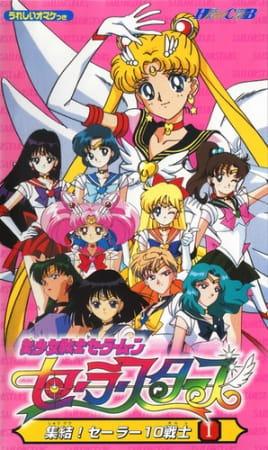
*Sailor Moon Sailor Stars* follows a two-part structure. The opening arc ties up lingering tensions from *SuperS* and brings the Outer Senshi back into the fight—Haruka, Michiru, Setsuna, and Hotaru, now reborn as a young child.
The latter half shifts as Usagi says goodbye to Mamoru when he leaves for America to study. Around the same time, the idol trio Three Lights—Seiya, Taiki, and Yaten—arrive, and a new threat emerges: Galaxia, who seeks dominion over the galaxy by gathering the Star Seeds within humans. Standing against her are the Sailor Starlights, new Senshi driven by their own motives and determined to stop Galaxia—even without Sailor Moon at their side.
Otaku Consensus
Sailor Moon Sailor Stars remains the franchise’s most polarizing 1990s stretch: admirers point to Takuya Igarashi’s heightened finale staging, Takanori Arisawa’s music, and the sharper late-series lore as reasons it feels more ambitious than a routine fifth season. The countercase is just as consistent: its pacing can lurch between hangout comedy and cosmic tragedy, and the Three Lights/Starlights divide viewers more than any prior replacement dynamic. As an adaptation endpoint, it lands as a fascinating, emotionally charged capstone rather than the cleanest or most universally loved Sailor Moon season.
Why You Should Watch
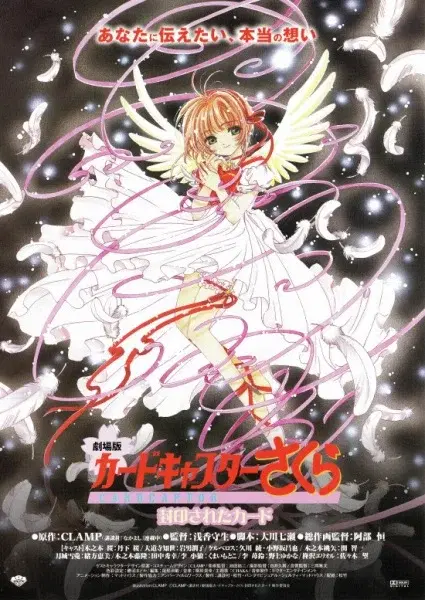
If you want magical-girl melodrama with more cosmic fatalism than Cardcaptor Sakura and more Saturday-morning accessibility than Revolutionary Girl Utena, Sailor Stars is the 90s Sailor Moon season to sample after the essentials. It pairs Toei’s bright slapstick grammar with idol-pop anxieties, long goodbyes, and a surprisingly philosophical fixation on whether hope is a strategy or a burden, without resetting the cast to beginner status. Viewers drawn to found-family teams, unrequited love, and gender-charged performance will get more out of it than anyone seeking tight episodic plotting. The appeal is not a perfect narrative machine; it is watching a beloved ensemble absorb late-series change while Takanori Arisawa’s music gives the battles and school-life interludes a polished, bittersweet pop sheen.
Key Characters
- UUsagi
This season leans into Usagi’s loneliness and emotional endurance more than her clumsiness, making her less a mascot of optimism than a shoujo heroine tested by distance, doubt, and responsibility.
- SSeiya
Seiya is the season’s lightning rod: an idol-character whose flirtatious directness and gender-coded performance made the Starlights both beloved and divisive among longtime fans.
- HHotaru
Hotaru’s child-rebirth status lets the Outer Senshi dynamic play as guardianship and found family rather than simply elite backup for the main team.
- GGalaxia
Galaxia gives Sailor Stars its cosmic-war texture, pushing the franchise toward colder mythology, conquest imagery, and a scale far beyond neighborhood monster comedy.
What Makes It Stand Out
- 1
The season’s 34-episode length makes it leaner than several earlier Sailor Moon TV seasons, and fan discussion often singles out that shorter run as a reason it drags less than the first two seasons.
- 2
Its two-part construction creates a hard tonal pivot: the early episodes function as franchise housekeeping after SuperS, while the later stretch centers the Three Lights, the Starlights, and Galaxia as the season’s defining controversy.
- 3
Takanori Arisawa’s score is one of the most consistently praised elements in reviews, with critics who dislike the pacing still noting that the music gives the season a grander, more polished late-90s shoujo atmosphere.
- 4
The production keeps Toei Animation’s familiar Sailor Moon mix of slapstick timing, transformation spectacle, and emotional close-ups, but the AniList tag profile highlights how far the season pushes into war, philosophy, space, LGBTQ+ themes, and unrequited love.
- 5
Ryouta Yamaguchi scripted 16 of the 34 episodes, including episodes 1, 33, and 34, giving the season a notable degree of writing continuity at both its opening and closing points.
Fun Facts & Trivia
- Fun fact 1
- Sailor Moon Sailor Stars aired from March 9, 1996 to February 8, 1997, closing out its 34-episode run less than a year after it began.
- Fun fact 2
- Junichi Satou, a key name in the broader Sailor Moon anime legacy, returned here as episode director for episodes 6, 15, and 32 rather than serving as overall series director.
- Fun fact 3
- The Italian version has its own notable staff footprint: Cristina D’Avena performed the Italian theme song, while Ryan Carrassi is credited for the Italian ADR script.
- Fun fact 4
- Sakurakko Club Sakura-gumi performed the second ending theme, tying the season’s musical identity to the idol-pop presence that also shapes its on-screen character dynamics.
- Fun fact 5
- Despite its divisive reputation, the season holds a 7.96/10 MAL score from 61,018 votes and a 77/100 AniList score, showing stronger audience retention than many critical summaries suggest.
Studios
- Toei Animation