The Take
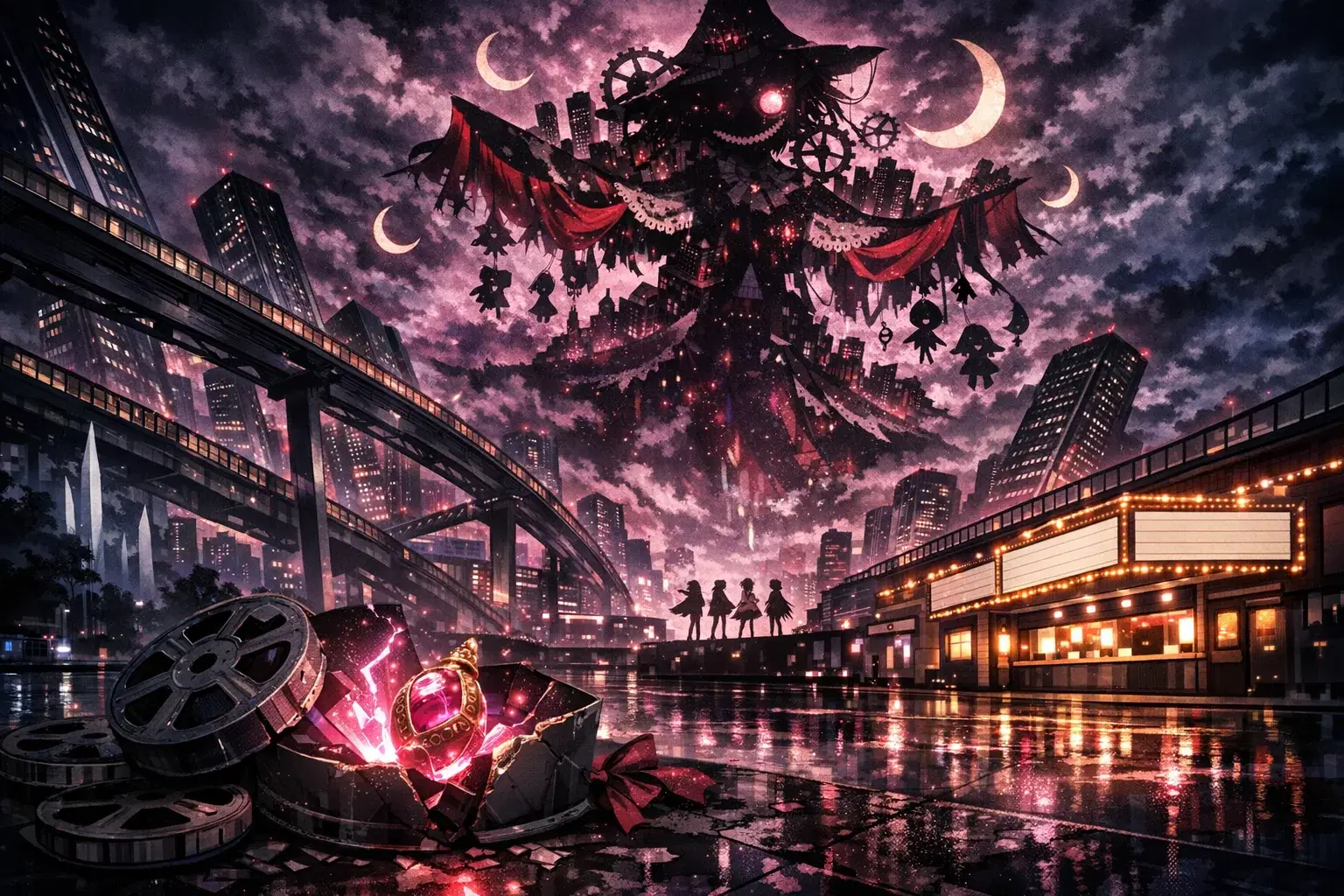
Puella Magi Madoka Magica the Movie - Walpurgisnacht: Rising did not merely have a strong opening. It made an argument. By crossing ¥1 billion in four days in Japan, the long-awaited sequel proved that an anime franchise can vanish from the mainline screen for more than a decade and still return like a current heavyweight.
That should change how we talk about “dead” anime. The old assumption was simple: if a series stopped producing new episodes or films, its cultural relevance slowly expired. But in 2026, that model feels outdated. Streaming libraries, social media fandom, anniversary campaigns, mobile games, theatrical event culture, and international audiences have turned hiatus into suspended animation. A franchise no longer needs to be constantly active to remain commercially powerful.
Otaku Insider’s take: anime does not die anymore — at least not the way it used to. It waits. And when the right sequel arrives with the right creative identity intact, the audience can come back all at once.
The Evidence
The numbers behind Puella Magi Madoka Magica the Movie - Walpurgisnacht: Rising are not vague hype. Japanese coverage reported ¥1,018,375,620 in box office revenue and 583,638 admissions in its first four days through August 31, 2026, with the film ranking No. 1 in both weekend admissions and weekend box office. That is not “fans showed up politely.” That is event-anime behavior.
The context makes it more impressive. Puella Magi Madoka Magica first aired in 2011, making the core anime about 15 years old in 2026. Its previous mainline anime film, Puella Magi Madoka Magica the Movie: Rebellion, premiered in 2013. In other words, Puella Magi Madoka Magica the Movie - Walpurgisnacht: Rising is not benefiting from annual television exposure or a recent weekly broadcast habit. It is a sequel arriving after roughly 13 years of mainline movie silence.
And yet the audience remembered exactly where to go.
That is partly because the franchise never truly disappeared. It lived through spinoff material, games, anniversary projects, merchandise, and the continued availability of Puella Magi Madoka Magica as one of the defining late-night anime of the 2010s. But the bigger point is that passive relevance has become more powerful than it used to be. A fan no longer has to own old discs, trade files, or rely on word of mouth at conventions to keep a series alive. A title can remain discoverable for years, circulating through recommendations, reaction clips, cosplay, essays, and tracking platforms like Otaku Den.
The release strategy for Puella Magi Madoka Magica the Movie - Walpurgisnacht: Rising also treated the film like a live cultural event rather than a nostalgic afterthought. The campaign included earliest screenings, stage greetings, nationwide live viewings, weekly theater bonuses, IMAX screenings, revival screenings, and Dolby Cinema plans. That matters because modern anime movie success is not only about awareness. It is about urgency. Theatrical anime has learned to create a “you had to be there” feeling, the same kind of event gravity that helped Demon Slayer: Kimetsu no Yaiba - The Movie: Mugen Train become more than just a continuation of Demon Slayer: Kimetsu no Yaiba.
There is another crucial reason this return worked: continuity of identity. Puella Magi Madoka Magica the Movie - Walpurgisnacht: Rising reunited many of the creative signatures fans associate with the franchise: Akiyuki Shinbo, Gen Urobuchi, Ume Aoki, Yuki Kajiura, SHAFT, and Gekidan Inu Curry’s visual imagination. For a dormant anime, that kind of continuity is not trivia. It is the product. Fans were not just buying a title; they were buying the promise that the strange, elegant, cruel machinery of Puella Magi Madoka Magica had not been sanded down into generic brand maintenance.
This is where the broader anime industry comes in. The Association of Japanese Animations’ Anime Industry Report 2025 put the 2024 anime market at a record ¥3.8407 trillion, up 14.8% year over year. More importantly, overseas revenue reportedly reached ¥2.1702 trillion, or 56.5% of the total. That international expansion changes the risk calculation for revivals. A dormant franchise is no longer limited to the domestic fans who watched it live. It can accumulate new viewers globally for years before a sequel arrives.
That is why Puella Magi Madoka Magica the Movie - Walpurgisnacht: Rising feels less like an anomaly and more like a signal. Bleach built a generation of fans before roaring back into active conversation. Blue Exorcist showed that a long gap does not automatically erase interest if the core premise still has pull. The Devil is a Part-Timer! remained a frequent “when is it coming back?” title long after its original run. Even projects like Naruto (Shinsaku Anime) and Akira (Shin Anime) reflect the same industry instinct: older anime brands are not dusty archive material; they are strategic reserves.
The economics of fandom have changed. In the 2000s, a five-year silence could make a series feel ancient. In 2026, five years can feel like a warm-up. Ten years can become a marketing hook. Fifteen years can become proof that the audience grew up, got jobs, and is now willing to buy premium tickets, limited goods, watches, art books, and multiple-format screenings.
That last part matters. Nostalgia is often dismissed as a lazy commercial force, but the success of Puella Magi Madoka Magica the Movie - Walpurgisnacht: Rising is not nostalgia alone. Nostalgia gets people to notice. Trust gets them to show up opening weekend. The franchise earned that trust because Puella Magi Madoka Magica was never just another magical-girl riff. It was a compact, emotionally brutal, visually distinct story that left a scar. Puella Magi Madoka Magica the Movie: Rebellion then complicated that scar rather than smoothing it over. The new film’s commercial launch suggests fans did not forget the wound — they kept checking whether it would reopen.
The Counterargument
The obvious counterargument is that Puella Magi Madoka Magica the Movie - Walpurgisnacht: Rising is an exceptional case. Not every dormant anime has the prestige, mystery, or unresolved narrative tension of Puella Magi Madoka Magica. Some old franchises return and discover that their fanbase was loud online but small in theaters. Others come back with different staff, flatter visuals, or a story that feels like an appendix rather than a necessary continuation.
That is fair. Dormancy is not magic. A long hiatus can preserve desire, but it can also raise expectations to impossible levels. The longer fans wait, the more they imagine the perfect sequel. When the real work arrives, it has to compete not only with the market but with a decade of private headcanon.
There is also a creative danger. If studios learn the wrong lesson, the industry could become too dependent on revivals, reboots, and delayed continuations. Anime still needs new shocks. The next Puella Magi Madoka Magica cannot exist if every production committee is too busy excavating the last one. A healthy industry needs both the comfort of return and the risk of invention.
But the counterargument does not erase the trend. It refines it. The lesson is not “bring everything back.” The lesson is “a dormant anime with a durable identity, accessible back catalog, and meaningful continuation can still dominate.” That is a narrower claim, but it is also a more useful one.
The Conclusion
Puella Magi Madoka Magica the Movie - Walpurgisnacht: Rising has made one thing difficult to deny: in 2026, anime relevance no longer depends on uninterrupted production. A franchise can pause, let its audience age, gather new viewers through streaming and online culture, and return when the market is larger than it was before.
That does not mean every old anime deserves a sequel. It means we should stop treating silence as death. Sometimes silence is just storage. Sometimes the fandom never left; it only stopped having new tickets to buy.
Otaku Insider’s take is simple: Puella Magi Madoka Magica has become the clearest proof yet that old anime can still dominate when the sequel feels necessary, not merely nostalgic. The real question now is which long-quiet franchise will be the next to remind us that the audience was waiting all along.
Sources
- [1] 『劇場版 魔法少女まどか☆マギカ〈ワルプルギスの廻天〉』公式サイト | 2026年8月28日(金)公開 (madoka-magica.com)
- [2] 〖まどマギ〗『ワルプルギスの廻天』公開4日で興収10億円突破で前作を超える大ヒット! 魔法少女たちの新規カットを使用したWebCMも公開 - 電撃オンライン (dengekionline.com)
- [3] 魔法少女まどか☆マギカ:13年ぶり新作「ワルプルギスの廻天」 公開4日で興収10億円突破の大ヒット 前作を上回るペース - MANTANWEB(まんたんウェブ) (mantan-web.jp)
- [4] Puella Magi Madoka Magica 10th Anniversary Official USA Website (10th.madokamagicausa.com)
- [5] 『劇場版 魔法少女まどか☆マギカ〈ワルプルギスの廻天〉』公式サイト | 2025年冬公開 (madoka-magica.com)
- [6] 制作決定「 劇場版 魔法少女まどか☆マギカ〈ワルプルギスの廻天〉」ティザーPV - YouTube (youtube.com)
- [7] Source (aja.gr.jp)
- [8] VIZ | Blog / Bleach’s Final Arc Is Streaming Now! (viz.com)
- [9] Mobile Suit Gundam SEED FREEDOM Contributing to IP Value Expansion | Integrated Report 2024 | IR library | IR Information | Bandai Namco Holdings Inc. (bandainamco.co.jp)
- [10] 〖NetFlix Anime〗 Kimi ni Todoke’s Sequel After 13 Years, Premieres on Netflix on August 1, PV Released with OP Theme Song by imase "Et Cetera" | Japan Anime News powered by ORICON NEWS (us.oricon-group.com)
- [11] 『劇場版 魔法少女まどか☆マギカ〈ワルプルギスの廻天〉』公式サイト | 2025年冬公開 (madoka-magica.com)
- [12] Aniplex of America (aniplexusa.com)
- [13] TVアニメ『狼と香辛料 MERCHANT MEETS THE WISE WOLF』 (spice-and-wolf.com)
- [14] Blue Exorcist -Shimane Illuminati Saga- Official Website (blueexorcist.com)
- [15] 第七期|作品概要|アニメ『夏目友人帳』公式サイト (natsume-anime.jp)
- [16] New Panty & Stocking with Garterbelt Premieres July 9—First New Series in 15 Years | Japan Anime News powered by ORICON NEWS (us.oricon-group.com)
- [17] Brand-New Anime Series 'Ranma1/2' Premieres on Netflix on October 5 PT - About Netflix (about.netflix.com)
- [18] INTRODUCTION | Rurouni Kenshin Official USA Website (rurounikenshin-anime.com)
- [19] FOR IMMEDIATE RELEASE (toei-animation-usa.com)
- [20] 「劇場版 魔法少女まどか☆マギカ〈ワルプルギスの廻天〉」SEIKOコラボレーションウォッチ(まどかモデル) (online.aniplex.co.jp)
- [21] Fungus and Iron Anime Unveils Teaser Visual, Main Staff (CRUNCHYROLL)
- [22] Original PlayStation Console Gets Blocky With Retro LEGO Set (CRUNCHYROLL)
- [23] Magic Knight Rayearth’s Rie Takahashi and Saori Hayami Are Ready to Be Whisked Away Into the Shojo Anime’s World (CRUNCHYROLL)
- [24] Inherit the Winds Anime Reveals New Poster for Advance Theatrical Screenings (CRUNCHYROLL)
- [25] Live-Action Look Back Film's Clip Highlights Kyōmoto, Fujino Creating Manga (ANN)
- [26] Tanuki to Kitsune Anime's Video Unveils Cast (ANN)
- [27] I'm Dating a Dark Summoner Anime's Video Reveals More Cast, Theme Songs, October 4 TV Debut (ANN)
- [28] Inherit the Winds Anime Gets Advanced 2-Week Screening in Japanese Theaters Starting on November 13 (ANN)
- [29] My Girlfriend's Friend TV Anime Reveals More Cast, October 4 Debut in Video (ANN)
- [30] TV Anime 'Kin to Tetsu' Announces Lead Staff (MAL_RSS)
- [31] 'Nippon Sangoku' Anime Sequel Announced (MAL_RSS)
- [32] NIPPON SANGOKU Sequel Anime Announced (ANIME_CORNER)
- [33] NIPPON SANGOKU: The Three Nations of the Crimson Sun Anime Sequel Announced (CRUNCHYROLL)
- [34] The Ramparts of Ice Season 2 Anime Reveals Theme Song Details (CRUNCHYROLL)
- [35] Fungus and Iron TV Anime Reveals Director, Yokohama Animation Lab Animation Studio (ANN)
Written by Ranen with AI support — Ranen picks every story, shapes the angle, and reviews each article before it's published. Learn more in our editorial policy.