Monogatari Series: Second Season
〈物語〉シリーズ セカンドシーズン
- Comedy
- Mystery
- Romance
- Supernatural
- Vampire
- Episodes
- 26
- Duration
- 25 min per ep
- Aired
- Jul 7, 2013 to Dec 29, 2013
- Status
- Finished Airing
Synopsis
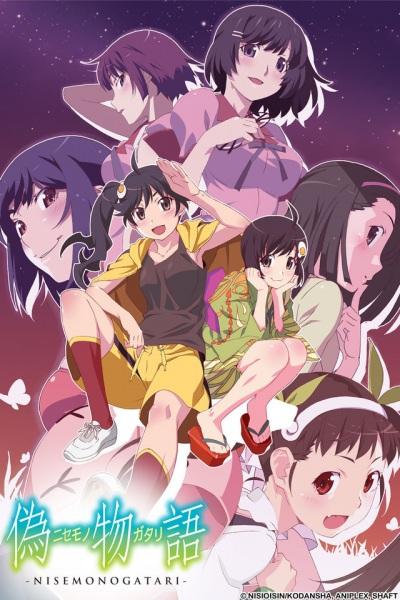
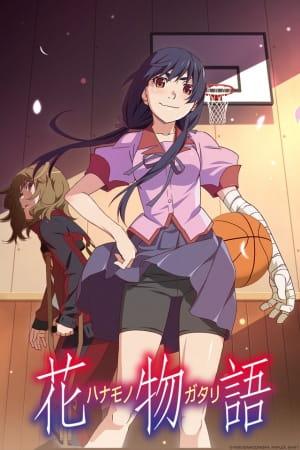
Apparitions, oddities, and even gods keep surfacing around Koyomi Araragi and the friends drawn into his orbit: the sharp yet unassuming Tsubasa Hanekawa; Shinobu Oshino, a doughnut-obsessed vampire; the athletic troublemaker Suruga Kanbaru; the quick-to-bite spirit Mayoi Hachikuji; Nadeko Sengoku, who harbors feelings for Koyomi; and Hitagi Senjougahara, his distinctive girlfriend.
With a new semester underway and graduation approaching, Koyomi faces choices about the future and the bonds he’ll hold onto. Yet as unsettling incidents begin to escalate, he vanishes, and a ferocious tiger apparition emerges in his absence—turning Hanekawa into its prey and leaving her to confront the threat on her own.
Otaku Consensus
Monogatari Series: Second Season is the franchise at its most critically validated: Shaft’s hyper-stylized direction, NISIOISIN’s dialogue-first adaptation, and the season’s shift toward an ensemble perspective turn its urban-fantasy cases into character trials rather than monster-of-the-week detours. Critics and fans especially praise the stronger arc-to-arc momentum, the opening themes, and Onimonogatari’s insistence that these characters’ lives do not simply orbit Koyomi Araragi. The consistent complaint is also the franchise’s barrier to entry: its dense verbal pacing can feel closer to a radio drama with avant-garde visuals than conventional television anime.
Why You Should Watch
Watch this if you want supernatural anime that treats curses, gods, vampires, and youkai as psychological arguments rather than combat encounters. Second Season is ideal for viewers who like Bunny Girl Senpai’s emotional oddity cases but want stranger direction, sharper wordplay, and less explanatory hand-holding; it also scratches the same formal itch as The Tatami Galaxy in how aggressively it uses narration, typography, and visual abstraction. The appeal is not plot escalation but perspective: the season repeatedly tests how much of Monogatari still works when Koyomi is not the gravitational center. If you enjoy anime where a conversation can be a duel, a confession can be a trap, and an opening song can reframe an entire arc, this is one of Shaft’s defining long-form showcases.
Key Characters
- KKoyomi Araragi
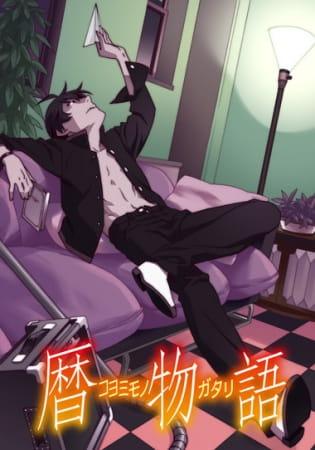
Koyomi is compelling here because the season weakens his usual protagonist privilege, making his absence and limited perspective as important as his interventions.
- TTsubasa Hanekawa
Tsubasa remains a fan-favorite study in composure under pressure, with Second Season pushing her beyond the role of the impossibly capable classmate.
- SShinobu Oshino
Shinobu’s appeal lies in the contrast between ancient vampire menace and deadpan doughnut-loving intimacy, a tonal contradiction Monogatari uses better than most supernatural comedies.
- HHitagi Senjougahara
Hitagi stands out for turning romance into verbal fencing, with affection, threat, and comedy often arriving in the same line.
What Makes It Stand Out
- 1
Shaft’s production identity is unmistakable: Akiyuki Shinbou serves as chief director while Tomoyuki Itamura directs, preserving the franchise’s trademark mix of hard cuts, graphic compositions, empty architectural spaces, and on-screen text as part of the storytelling grammar.
- 2
The season is structurally achronological, a choice reflected in its AniList tagging, and that ordering matters because emotional revelations often arrive before or after the expected causal explanation.
- 3
Second Season leans harder into an ensemble format than earlier entries, with critical discussion of Onimonogatari specifically noting how the season teaches viewers that the cast’s lives do not all revolve around Koyomi Araragi.
- 4
The opening themes are a major part of the season’s reputation; THEM Anime Reviews singled out the overall OP lineup as possibly the best in Second Season while naming “Happy Bite” as the weakest of the set.
- 5
Its genre blend is unusually specific: comedy, mystery, romance, and supernatural material are filtered through urban fantasy, coming-of-age drama, philosophy, denpa energy, gods, youkai, and vampire mythology rather than treated as separate modes.
Fun Facts & Trivia
- Fun fact 1
- The anime ran for 26 episodes from July 7, 2013 to December 29, 2013, making it one of the franchise’s major half-year television installments rather than a short bridge season.
- Fun fact 2
- The source pedigree is unusually visible in the credits: NISIOISIN is credited as original creator, VOFAN for original character design, and Akio Watanabe for adapting those designs into the anime’s recognizable character style.
- Fun fact 3
- Akiyuki Shinbou is credited twice in key creative roles, as chief director and for series composition, with Fuyashi Tou also credited on series composition.
- Fun fact 4
- The visual world was shaped by multiple art-side credits, including Hisaharu Iijima as art director, Seiji Oohara on art design, and Naoki Isogai on art board.
- Fun fact 5
- Its database standing reflects both prestige and reach: the season holds an 8.76/10 MAL score from 381,936 votes, a MAL rank of #47, a popularity rank of #327, an AniList score of 88/100, and 11,471 AniList favourites.
Studios
- Shaft