No-Rin
のうりん (Nourin)
- Comedy
- Ecchi
- Romance
- Parody
- School
- Episodes
- 12
- Duration
- 24 min per ep
- Aired
- Jan 11, 2014 to Mar 29, 2014
- Status
- Finished Airing
Synopsis
Kousaku Hata lives for idols, so when his beloved star Yuka Kusakabe abruptly announces her retirement at the height of her career, he takes it hard. The shock sends him into a slump and self-imposed isolation, and it takes his friends’ persistence to finally get him back through the school gates.
That return comes with an unbelievable twist: Yuka is now in his class, having transferred in under the name Ringo Kinoshita. With his teacher and friends in his corner, Kousaku throws himself into the chance he never thought he’d get—trying to draw closer to her while searching for the real reason she walked away from the spotlight.
Otaku Consensus
No-Rin lands as a high-energy SILVER LINK. comedy whose best asset is Shin Oonuma’s willingness to turn an agricultural school setting into slapstick, parody, and meta-anime chaos rather than cozy countryside slice-of-life. Critics and fans most often praise the rapid gag pacing, especially the early stretch of episodes, along with the cast’s chemistry and the show’s willingness to jump from body humor to recognizable references like Danganronpa. Its weakest point is the romance: the love-triangle material is less consistently sharp than the comedy, and the crass ecchi streak makes the series more divisive than its bright presentation suggests.
Why You Should Watch
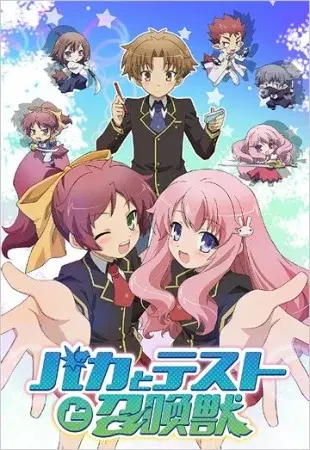
Watch No-Rin if you want a rural school comedy that treats farming, food, work, idol fandom, and classroom absurdity as ammunition for jokes rather than as calming slice-of-life texture. It scratches a similar itch to Baka and Test’s rapid-fire school chaos, but swaps test battles for agricultural-school weirdness and idol-parody whiplash. The appeal is not a slow-burn romance; it is the show’s eagerness to escalate a normal scene into slapstick, surreal comedy, or a reference gag before you can settle in. Viewers who like ecchi comedies with loud timing, meta humor, and a cast built for ricocheting off one another will get the most out of it. Viewers looking for gentle countryside realism or a romance-first structure should adjust expectations.
Key Characters
- KKousaku Hata
Viewer discussion often singles Kousaku out as a rare comedy lead who can swing between unhinged idol-otaku reactions and more grounded moments without flattening the ensemble around him.
- YYuka Kusakabe
As the idol-facing half of the series’ identity, Yuka gives No-Rin a built-in engine for parodying celebrity worship, fan obsession, and the gap between public image and classroom absurdity.
- RRingo Kinoshita
Ringo’s kuudere-coded restraint works as a deadpan counterweight to the show’s louder slapstick, letting the comedy bounce between idol mystique and rural-school ridiculousness.
What Makes It Stand Out
- 1
SILVER LINK. and director Shin Oonuma push the series toward high-energy gag staging rather than quiet school-life realism, matching the reviews that highlight vibrant animation and crass physical comedy.
- 2
The show’s structure leans episodic, with AniList tagging it 79% episodic, and fan discussion repeatedly points to the first five episodes as the sharpest run for pure comedy pacing.
- 3
No-Rin’s setting is not decorative: AniList’s highest tags are Rural at 100% and Agriculture at 96%, with Work, Food, and Educational tags also present, so farming-school material becomes part of the joke machinery.
- 4
The comedy is explicitly reference-heavy, with reviews noting parodies and at least one called-out Danganronpa gag, making it more of a meta otaku comedy than a conventional countryside school show.
- 5
The sound side has notable staff density for a 12-episode comedy: Youta Tsuruoka handled sound direction, while Akito Matsuda and Tomoki Kikuya are both credited for music.
Fun Facts & Trivia
- Fun fact 1
- No-Rin adapts work by original creator Shirow Shiratori, with original character designs credited to Kippu, a pairing that anchors the anime’s mix of idol gloss and rural-school caricature.
- Fun fact 2
- The series aired as a compact Winter 2014 run, broadcasting from January 11 to March 29, 2014, and finished at 12 episodes.
- Fun fact 3
- Michiko Yokote handled series composition, while Katsuhiko Takayama is specifically credited for scripts on episodes 6, 8, and 9, giving the mid-series stretch an additional named writer presence.
- Fun fact 4
- Chiwa Saitou and Kana Hanazawa are both credited for theme song performance in the production data, adding recognizable seiyuu names to the show’s music-side credits.
- Fun fact 5
- Database reception paints it as a cult-leaning comedy rather than a mainstream hit: MyAnimeList lists it at 6.74 from 83,981 votes with popularity rank #1372, while AniList records a 64/100 score and 349 favourites.
Studios
- SILVER LINK.