Strawberry Marshmallow
苺ましまろ (Ichigo Mashimaro)
- Slice of Life
- CGDCT
- Iyashikei
- Episodes
- 12
- Duration
- 24 min per ep
- Aired
- Jul 15, 2005 to Oct 14, 2005
- Status
- Finished Airing
Synopsis
Everyday moments—making friends, heading to school, scraping together a little spending money, or marking a holiday—shape the gentle rhythm of *Strawberry Marshmallow*.
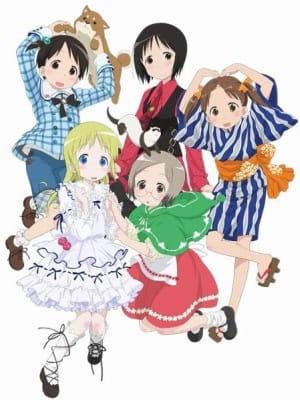
Set around Itou Chika, her older sister Nobue, and Chika’s friends Miu, Matsuri, and Ana, the story lingers on their relaxed day-to-day adventures and the small joys that come with simply spending time together.
Otaku Consensus
Critics and fans largely agree that Takuya Satou’s measured direction and control of series composition turn Barasui’s low-stakes manga material into unusually precise reaction comedy, with Kyuuta Sakai’s designs satisfying even viewers already attached to the print art. The early DVD run is widely considered the comic high point, and the ensemble’s timing gives the cuteness genuine bite rather than treating it as the entire joke. The recurring objections are equally clear: the later episodes can feel slower and less energetic, while Miu’s prank-driven cruelty is a deal-breaker for viewers who find her obnoxious rather than catalytic.
Why You Should Watch
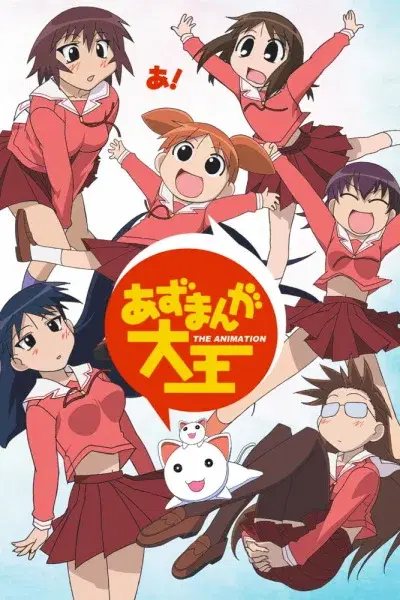
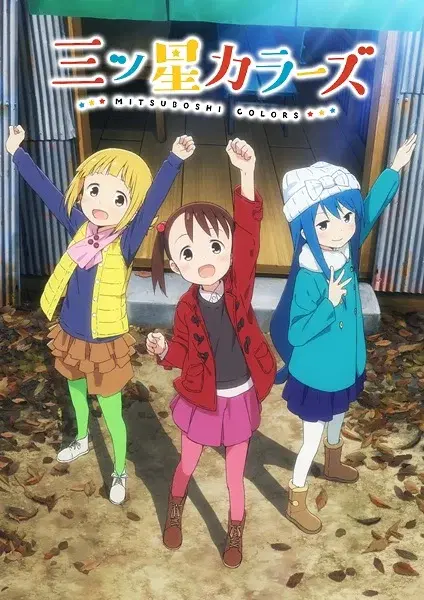
If you want schoolyard comedy without romance, battles, or continuity homework, Strawberry Marshmallow offers a compact 12-episode reset. It scratches the same itch as Azumanga Daioh’s reaction-based humor and Non Non Biyori’s restorative downtime, but its sharper edge comes from Miu: every quiet room can become a prank, argument, or exercise in deadpan endurance. Takuya Satou’s direction lets pauses, awkward manners, and tiny social miscalculations do more work than punchline-heavy scripting, while Ana’s linguistic insecurity supplies a durable comic device. Daume’s adaptation gives the cast room to sit, fidget, and interrupt rather than rushing toward a lesson. Choose it when you want CGDCT with genuine comic abrasion instead of uninterrupted sweetness; the tradeoffs are deliberately slow pacing and fanservice that can be more noticeable than its non-ecchi reputation suggests.
Key Characters
- MMiu Matsuoka(VA: Fumiko Orikasa)
Miu is the ensemble’s chaos engine, with invasive jokes and casual bullying that make her either the source of the show’s funniest disruptions or its most polarizing presence.
- AAna Coppola(VA: Mamiko Noto)
Ana turns the gap between her English identity and her linguistic confidence into an extended exercise in embarrassment, concealment, and exquisitely timed social panic.
- NNobue Itou(VA: Hitomi Nabatame)
Nobue provides the cast’s dry older perspective, reacting to childish escalation with a mixture of weary authority, complicity, and deadpan amusement.
- CChika Itou(VA: Saeko Chiba)
Chika’s comparative normality is functional rather than bland, giving the comedy a grounded observer whose restrained reactions make everyone else seem even stranger.
What Makes It Stand Out
- 1
Takuya Satou served as both director and series composer, giving the adaptation a unified sense of rhythm built around pauses, reaction shots, interruptions, and conversational discomfort rather than conventional narrative escalation.
- 2
Daume structures the 12 episodes as largely self-contained comic vignettes. One critic called the material on the first two DVD volumes the funniest anime comedy they had seen, while also noting a subsequent decline in comic energy.
- 3
Kyuuta Sakai was simultaneously character designer and chief animation director, then personally handled animation direction for the opening, ending, and episodes 11 and 12, providing unusually direct visual oversight at both ends of the series.
- 4
Ana’s language difficulties are not a one-off character quirk but a recurring comic mechanism; AniList’s audience taxonomy assigns the Language Barrier tag a substantial 45 percent relevance.
- 5
Its AniList tag profile captures the show’s tonal tension: Cute Girls Doing Cute Things reaches 100 percent, while Surreal Comedy registers at 40 percent, reflecting how ordinary settings repeatedly bend into exaggerated behavioral comedy.
Fun Facts & Trivia
- Fun fact 1
- Daume produced the television adaptation, which aired from July 15 to October 14, 2005, and completed its run at 12 episodes.
- Fun fact 2
- Even this domestic slice-of-life production carried a dedicated mechanical-design credit, assigned to Yoshihiro Watanabe, while Hiroshi Oono oversaw the background and environmental side as art director.
- Fun fact 3
- The audio production separated musical and dramatic responsibilities between composer Takeshi Watanabe and sound director Jin Aketagawa.
- Fun fact 4
- Its reception is consistent across major databases without reaching blockbuster visibility: MyAnimeList records a 7.64 score from 43,031 votes, rank 1637, and popularity rank 1984, while AniList lists a 74 score and 704 favourites.
- Fun fact 5
- THEM Anime Reviews awarded the series a 4.0 rating and emphasized that its appeal extends beyond surface-level cuteness to clever comedy that remains readable even for viewers unfamiliar with Japanese mannerisms.
Studios
- Daume