Magical Girl Lyrical Nanoha
魔法少女リリカルなのは (Mahou Shoujo Lyrical Nanoha)
- Action
- Comedy
- Drama
- Mahou Shoujo
- Episodes
- 13
- Duration
- 25 min per ep
- Aired
- Oct 3, 2004 to Dec 26, 2004
- Status
- Finished Airing
Synopsis
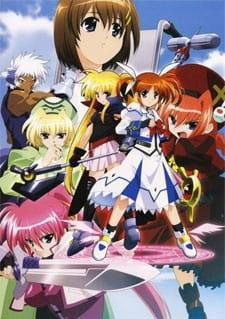
Nanoha Takamachi is a typical third-grader who cherishes quiet days with her family and friends—until she finds an injured ferret she had strangely seen in a dream the night before. Soon after, the animal reaches out to her telepathically, pleading for help. He introduces himself as Yuuno Scrya, a mage from another world who accidentally scattered 21 perilous artifacts known as the Jewel Seeds across Earth. To recover them, he entrusts Nanoha with the intelligent device Raising Heart and guides her in awakening her own magical abilities.
As the search progresses and several Jewel Seeds are reclaimed, Nanoha’s path crosses with another mage: Fate Testarossa. Far more powerful and unwilling to explain her motives, Fate keeps her distance despite the sadness Nanoha senses behind her eyes. Under director Akiyuki Shinbo, *Magical Girl Lyrical Nanoha* follows the emotional friction that arises when convictions collide.
Otaku Consensus
Magical Girl Lyrical Nanoha earns its durable reputation by letting Akiyuki Shinbou’s direction sharpen a child-led magical-girl setup into compact action-drama, with the Nanoha/Fate conflict giving the 13-episode season a clear emotional spine. Fan and database reception is solid rather than canonized—7.42 on MAL and 71/100 on AniList—so the recurring caveat is not quality collapse but niche appeal: viewers wanting either pure slice-of-life charm or a larger, more elaborate production may find this first season more like a focused franchise prototype than the final form.
Why You Should Watch
Watch Magical Girl Lyrical Nanoha if you want magical-girl iconography with the friction of a shounen duel series, without losing the emotional directness of a young cast. It scratches a different itch from Cardcaptor Sakura: less whimsical collection adventure, more tactical standoffs, intelligent weapons, and conversations that matter as much as the blasts. Akiyuki Shinbou’s direction gives the modest Seven Arcs production a sharper identity, especially in how silence, distance, and hesitation define rival encounters. The 13-episode length also matters: it is short enough to avoid procedural bloat, but long enough for Nanoha and Fate’s contrast to register as more than a gimmick. If you like urban fantasy that treats kindness as an active, confrontational force, this is the franchise gateway.
Key Characters
- NNanoha Takamachi
Nanoha stands out because the series frames her empathy as a discipline she practices under pressure, not as a passive magical-girl virtue.
- YYuuno Scrya
Yuuno functions as the series’ bridge between domestic calm and mage-world mechanics, giving the fantasy system a mentor figure with an unusually vulnerable presentation.
- FFate Testarossa
Fate is the character fans most often remember from this season: a restrained rival whose silence and efficiency make her sadness feel visible before it is explained.
What Makes It Stand Out
- 1
The season is a 13-episode Fall 2004 production by Seven Arcs, giving it a tighter footprint than many long-form magical-girl shows and making the central rivalry its structural anchor.
- 2
Akiyuki Shinbou directs the series, and the result leans into charged pauses, distance between characters, and duel-like confrontation rather than treating magic scenes as only transformation-pageantry.
- 3
The presence of Raising Heart and the AniList Artificial Intelligence tag mark the show’s magic as device-mediated combat, a major reason Nanoha feels closer to armed urban fantasy than fairy-tale spellcasting.
- 4
AniList tags such as Spearplay, Henshin, Urban Fantasy, and Coastal point to the show’s unusual blend: a recognizable modern setting with weaponized magical systems and battlefield grammar.
- 5
The female-led, primarily child cast is not used only for school-life comedy; the show’s action and drama depend on young characters making high-stakes decisions with limited emotional vocabulary.
Fun Facts & Trivia
- Fun fact 1
- Masaki Tsuzuki is credited as the original creator, while Akiyuki Shinbou directed the anime; that pairing helped define the franchise’s mix of sentimental character writing and unusually combative magical-girl staging.
- Fun fact 2
- The production staff separated character and prop responsibilities: Yasuhiro Okuda handled character design, while Yoshinari Saitou handled prop design, an important distinction for a series built around named magical devices.
- Fun fact 3
- The show aired in a single cour from October 3, 2004 to December 26, 2004, placing it in the same late-night 2000s environment where magical-girl anime were increasingly experimenting with older fan audiences.
- Fun fact 4
- Its database profile shows long-tail fandom rather than mainstream dominance: 44,267 MAL votes, a 7.42 score, and 478 AniList favourites indicate a series with a committed niche following.
- Fun fact 5
- Toshiki Kameyama served as sound director, while Tomoko Tasaki handled color design and Seiichi Morishita directed photography, reflecting a production pipeline where mood, effects, and combat readability were handled by distinct specialists.
Studios
- Seven Arcs